The Curious Case of Gabriel Martinelli: Is He Arsenal’s Weakest Link?
The Emirates Stadium is currently home to a symphony of footballing excellence. Under Mikel Arteta, Arsenal have assembled a squad of profound depth and quality, competing fiercely for the Premier League title and making a deep run in the Champions League. This elevated status, however, brings with it a microscope of intense scrutiny. In an orchestra where every instrument must be perfectly tuned, even the slightest discordant note is amplified. This season, that note—according to some critical metrics—has been struck by a player once considered untouchable: Gabriel Martinelli.
The High-Stakes Environment of a Title-Chasing Arsenal
Gone are the days of celebrating top-four finishes as a pinnacle achievement. Mikel Arteta has engineered a cultural and tactical revolution, building one of the finest Arsenal sides of the modern era. The standard is no longer about potential; it is about consistent, week-in, week-out delivery. Every pass, every tackle, and every attacking contribution is weighed against the ultimate prize: Premier League glory.
This environment creates a fascinating dynamic within the squad. Players are no longer judged on effort alone but on their tangible impact in the most pressurized moments. While the likes of Declan Rice, William Saliba, and Martin Ødegaard have set astonishingly high benchmarks, the gap between their consistent output and the fluctuating form of others becomes starkly visible. The question of “who is the worst player” is less about sheer incompetence and more about who has fallen furthest short of the team’s new, stratospheric expectations.
Dissecting the Domestic Struggle: Martinelli’s Premier League Paradox
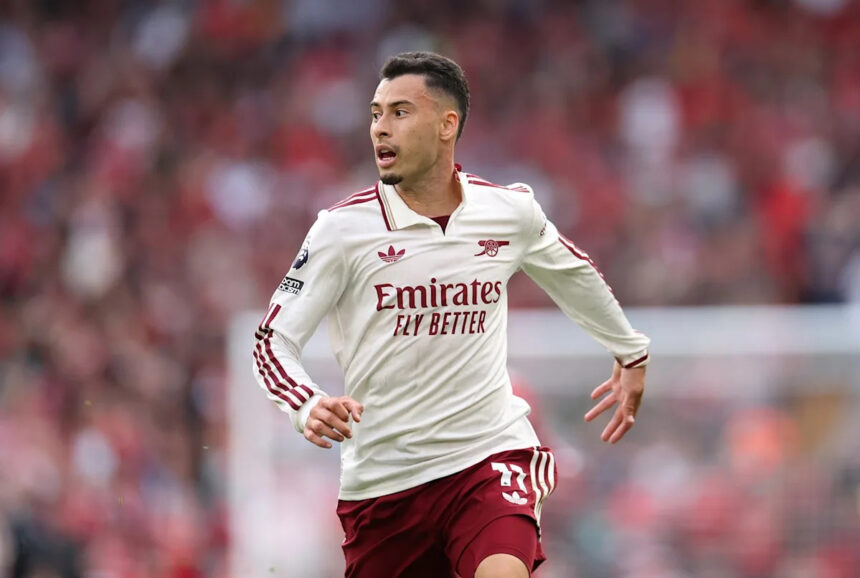
According to a detailed analysis by Football365, which aggregated performance ratings across the campaign, Gabriel Martinelli received the lowest overall rating among Arsenal’s leading stars in the Premier League. This statistical verdict aligns with the narrative observed by many fans. His domestic season has been a tale of frustration, characterized by:
- Diminished Goal Threat: A significant drop in goals and assists compared to his electrifying form last season.
- Ineffective Isolation: Often struggling to beat his full-back one-on-one, a previous hallmark of his game.
- Erratic Decision-Making: Final balls and shot selection frequently lacking the precision required at this level.
- Peripheral Involvement: Periods where games have passed him by, reducing Arsenal’s left-sided attacking potency.
This dip is puzzling. Martinelli, the relentless, high-octane winger, has at times looked hesitant and short of confidence in league fixtures. Whether due to tactical adjustments from opponents, a slight physical dip, or the psychological weight of expectation, his Premier League performances have not met the standard he himself set.
The European Alter Ego: A Star Reborn in the Champions League
Herein lies the most confounding part of the Martinelli conundrum. While he has labored domestically, he has been a revelation in Europe. In the Champions League, he has looked every bit the world-class forward Arsenal fans know he can be. His performances on the continent have been marked by:
- Direct and Decisive Play: Taking on defenders with his old fearlessness and providing crucial goals and assists.
- Clinical Finishing: Displaying a composure in front of goal that has often been missing in the Premier League.
- High-Intensity Pressing: Leading from the front as the first line of defense, a key part of Arteta’s European blueprint.
This Jekyll and Hyde act is rare. It suggests the issue is not one of ability, but perhaps of context, space, or mentality. The Champions League, with its different tactical rhythms and often more open games, seems to suit his explosive style. It proves unequivocally that the player is still there, capable of dominating the biggest stages.
Expert Analysis: Context, Competition, and the Road Ahead
Labeling Martinelli as Arsenal’s “worst player” requires heavy qualification. It is a title born from data in a specific competition, overshadowing his clear value in another. A more nuanced view is essential.
First, competition for places has intensified. Leandro Trossard’s intelligent, versatile performances have made him a frequent starter on the left, while Kai Havertz’s form as a #9 has changed the dynamic of the front three. Martinelli is no longer an automatic pick, and that pressure can affect form.
Second, tactical evolution plays a part. Arsenal’s control-oriented approach in the league can sometimes compress space, forcing wingers to operate in crowded areas. Martinelli’s game, based on pure pace and power, can be stifled without the room to run into.
Looking ahead, the prediction is not one of continued decline, but of a motivated resurgence. Martinelli possesses the raw talent and, now, the painful experience of a difficult season. This summer represents a critical reset. With reflection and targeted work, the challenge for him is to merge his European confidence with his Premier League application.
Conclusion: A Phrase of Motivation, Not Condemnation
To crown Gabriel Martinelli as Arsenal’s worst player this season is to tell only the bleakest half of the story. It is a verdict that ignores his vital contributions in the club’s return to the Champions League knockout stages. His season is a paradox of underperformance and excellence, separated only by the competition logo on his sleeve.
In the ruthless economy of a title race, his domestic struggles have stood out precisely because the team’s bar is so high. For Arteta, the task is to unlock the European version of Martinelli in every match. For the player, it is a stark lesson in the consistency required to be a legend at the very top. This label, therefore, should not be a tombstone on his Arsenal career, but a catalyst. The hardest seasons often forge the strongest players. The Emirates awaits the full, unified return of its Brazilian spark.
Source: Based on news from Yahoo Sports.