


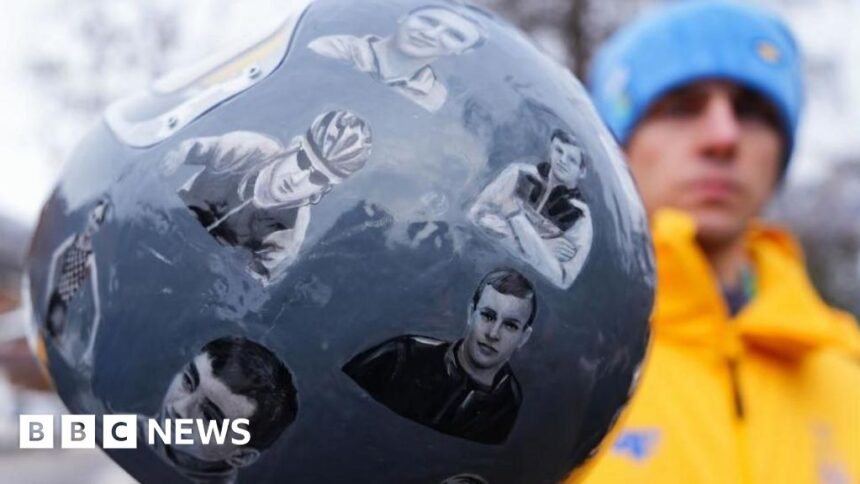
The Faces of Defiance: The Ukrainian Athlete, His Helmet, and the Olympic Ban That Shook the Games
The 2026 Milan-Cortina Winter Olympics promised a celebration of sport, unity, and peace. Instead, they have become the stage for one of the most politically charged and emotionally resonant controversies in recent Olympic history. At the center of the storm is Ukrainian skeleton slider Vladislav Heraskevych, whose disqualification over a custom-painted helmet has ignited a fierce global debate about the boundaries of protest, the memory of the fallen, and the very soul of the Olympic Charter.
A Helmet of Remembrance in a Zone of Silence
Vladislav Heraskevych, known for a previous protest at the Beijing Games where he held a “No War in Ukraine” sign, arrived in Cortina with a powerful, personal statement. His helmet was not adorned with national flags or personal logos, but with the faces of more than 20 Ukrainian athletes who have been killed since Russia’s full-scale invasion in 2022. The International Olympic Committee (IOC), citing a strict enforcement of Rule 50 which prohibits political, religious, or racial propaganda in Olympic venues, demanded he cease wearing it. Heraskevych refused. His subsequent disqualification from the men’s skeleton event and the denial of his appeal on Friday transformed him from a competitor into a global symbol.
“This is not propaganda. This is my reality,” Heraskevych stated in an emotional press conference. “These were not just names. Alina Peregudova, Pavlo Ishchenko, Oleksiy Loginov… some were my friends. They had the same dreams as me. The Olympics tells us to ‘build a better world.’ How can we build it if we are forced to forget those who were killed destroying ours?”
The Fallen Champions: Stories Behind the Faces
The power of Heraskevych’s protest lies in the individual stories of the athletes memorialized on his helmet. Each face represents a life of dedication cut short and a future stolen by war. Here are just a few of the champions remembered:
- Alina Peregudova (19, Weightlifting): A rising star in Ukrainian weightlifting, Peregudova was killed in a missile strike on her hometown of Dnipro in May 2023. She was a European Youth champion tipped for future Olympic glory.
- Pavlo Ishchenko (30, Boxing): A former member of the Ukrainian national boxing team, Ishchenko died fighting on the front lines in the Donetsk region in late 2023. Known for his relentless work ethic in the ring, he carried that same spirit into defense of his country.
- Oleksiy Loginov (28, Ice Hockey): A professional player for HC Kremenchuk, Loginov was killed during the defense of Mariupol in the spring of 2022. His story underscores how the war has devastated Ukraine’s sporting community across all disciplines.
- Other fallen on the helmet include promising young gymnasts, soccer players, track and field athletes, and coaches—a cross-section of a nation’s athletic potential, erased.
By presenting these specific, personal stories, Heraskevych’s helmet moved beyond abstract casualty figures, forcing the world to look into the eyes of the lost.
Expert Analysis: Rule 50, Neutrality, and the Weight of Context
The IOC’s decision has drawn a stark line in the sand, defended by some and condemned by many. Sports governance experts are deeply divided.
“The IOC is in an impossible position,” argues Dr. Elena Petrova, a professor of Olympic history. “Rule 50 exists to protect the field of play from becoming a chaotic platform for every global issue. If they make an exception for one cause, however justified it may seem, they must be prepared to do so for all, which risks fragmenting the Games.” She points to the precedent of maintaining the Olympic venue as a neutral zone, a principle tested repeatedly throughout history.
Conversely, human rights in sport advocate Michael Thorne offers a blistering critique: “This is a catastrophic misreading of the moment. The IOC has historically bent Rule 50—allowing Black Lives Matter gestures, for instance. To ban a memorial for war dead, especially when the IOC itself has barred Russian athletes from competing under their flag due to the invasion, reeks of hypocrisy. It prioritizes a sanitized notion of ‘peace’ over the lived reality of a participating nation. This isn’t political propaganda; it’s a solemn act of mourning directly relevant to the athlete’s participation.”
The key distinction, critics note, is that Heraskevych’s protest is directly linked to an ongoing war that has displaced and devastated his nation’s sporting infrastructure—a context the IOC itself has acknowledged in other rulings.
Predictions and Repercussions: A Lasting Stain on Cortina
The fallout from this decision will extend far beyond the skeleton track. We can anticipate several significant consequences:
- Intensified Scrutiny of IOC Neutrality: The narrative of the “Cortina Ban” will overshadow athletic achievements. Every future statement by the IOC on Ukraine or Russia will be measured against this action, potentially eroding its moral authority.
- A Catalyst for Wider Protest: While overt displays may be banned, expect subtle, powerful gestures from Ukrainian and allied athletes—black armbands, moments of silence, or pointed answers in interviews—keeping the story alive throughout the Games.
- Legacy for Heraskevych: Vladislav Heraskevych has instantly become one of the most recognizable figures of these Olympics. His future in sport may be complicated, but his place as a symbol of defiant memory is secure. The helmet itself is destined for a museum, not a locker.
- Pressure to Amend Rule 50: This controversy will fuel the ongoing debate about reforming Rule 50 to distinguish between hate speech or divisive propaganda and fundamental, context-driven human rights expressions.
Conclusion: The Victory That Wasn’t on the Track
Vladislav Heraskevych came to Cortina to compete, but he leaves having performed a far more consequential act. His helmet, a portable memorial, challenged the world to witness the specific cost of war on the Olympic family itself. The IOC, in choosing the letter of its rule over the profound human spirit behind the protest, may have won a bureaucratic battle but is losing the battle for perception. In attempting to shield the Games from politics, they have magnified them, ensuring that the stories of Alina Peregudova, Pavlo Ishchenko, Oleksiy Loginov, and their fellow fallen athletes are now known to millions. The biggest controversy of the 2026 Winter Olympics will not be a doping scandal or a judging dispute, but a question of conscience: In the pursuit of peace, are we required to silence the memory of those who died for it? Heraskevych’s empty sled on the track is a more powerful statement than any finish time could ever be.
Source: Based on news from BBC Sport.


