Why the 2026 Winter Olympics Could Be Great Britain’s Greatest Winter Ever
For decades, Great Britain’s relationship with the Winter Olympics has been defined by plucky underdogs and fleeting moments of glory against the odds. The narrative was one of charming eccentricity—Eddie the Eagle soaring into folklore, the Jamaican bobsleigh team capturing imaginations, and a nation celebrating simply being there. But a profound and quiet revolution has been taking place. As the world turns its gaze to Milan-Cortina 2026, a new chapter is ready to be written. This time, the story isn’t about just participating; it’s about dominating. Could it be that Great Britain—a land of no ice track and an average of 13 days of snow per year—is morphing into a genuine winter sports powerhouse? The evidence suggests a resounding yes, and 2026 could shatter all records.
- From Niche to Podium: The New British Winter Blueprint
- The Vanguard: World Champions Leading the Charge
- Depth and Breadth: The Supporting Cast for Record Hauls
- Overcoming the Geography Problem: Innovation as an Advantage
- 2026 Predictions: A Historic Winter on the Horizon
- Conclusion: The End of the Winter Underdog Narrative
From Niche to Podium: The New British Winter Blueprint
The transformation didn’t happen by accident. The success at Sochi and Pyeongchang, where Britain matched its best-ever haul of five medals, provided a proof of concept. **Targeted investment** by UK Sport, coupled with a sophisticated **”no stone unturned”** approach to talent identification and sports science, has created a sustainable pipeline. We are no longer relying on a single superstar. Instead, Team GB has cultivated a cohort of athletes who are not just Olympians, but consistent winners on the World Cup and world championship stages. This is a squad built on professionalism, not just passion. The days of the surprise medal are giving way to the era of the expected podium.
The Vanguard: World Champions Leading the Charge
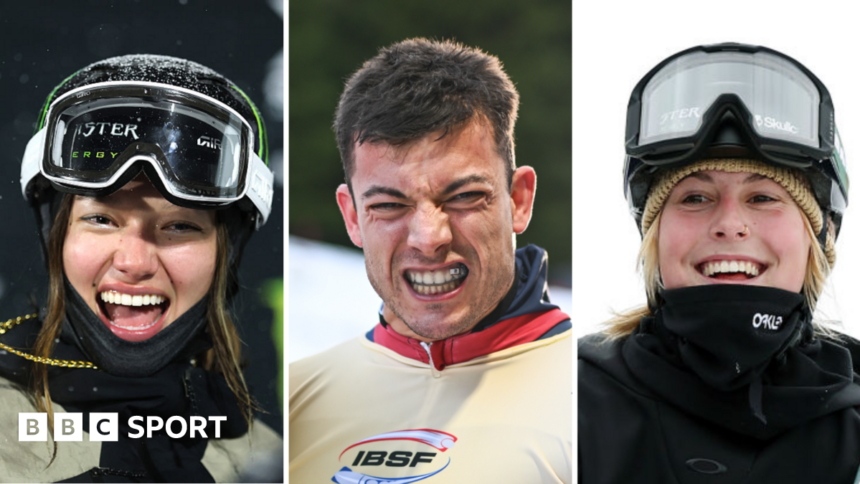
The heart of Britain’s 2026 optimism lies in a trio of athletes who haven’t just broken through—they’ve taken over their disciplines.
- Zoe Atkin: The freestyle skier from Cambridge isn’t just a medal hope; she’s the woman to beat in halfpipe. With a 2023 World Championship gold and multiple X Games medals, including gold, Atkin possesses the amplitude and technical mastery to win on the biggest stage. Her rivalry with the world’s best is a peer-to-peer battle, not an underdog story.
- Matt Weston: In the blink-of-an-eye world of skeleton, Weston is Britain’s rocket. The 2023 World Champion embodies the high-tech, precision-driven approach that has kept GB a force in sliding sports since the days of Amy Williams and Lizzy Yarnold. His victory on the iconic St. Moritz track proved he thrives under pressure and knows how to win when it matters most.
- Mia Brookes: The snowboarding prodigy announced herself to the world by becoming the youngest ever snowboarding world champion at just 16 in 2023, winning slopestyle gold. Her fearless approach and groundbreaking tricks (she was the first woman to land a 1440 in competition) make her a genuine pioneer. In a sport that rewards progression, Brookes is writing the next playbook.
These three represent a critical shift: they are entering an Olympic cycle as established favourites, not hopeful outsiders.
Depth and Breadth: The Supporting Cast for Record Hauls
While Atkin, Weston, and Brookes headline, the strength of this Team GB squad is its remarkable depth across a wider range of sports than ever before. This is where the prediction of up to eight medals from UK Sport gains credibility. Look at the supporting cast:
In curling, Bruce Mouat’s rink, already Olympic silver medallists from 2022 and reigning world champions, are a guaranteed medal threat in both the men’s and mixed team events. In ski and snowboard cross, athletes like Ollie Davies and Charlotte Bankes, a former world champion, consistently battle in the frenetic finals. On the ice, short track speed skater Niall Treacy and his brother Farrell have World Cup medals, proving Britain can compete in pure speed disciplines. In freestyle skiing, Kirsty Muir is a constant in big air and slopestyle finals. This breadth of contention is unprecedented for a British winter team.
Overcoming the Geography Problem: Innovation as an Advantage
The classic question remains: how does a nation with such limited natural infrastructure produce world-beaters? The answer has become Britain’s secret weapon: innovation and simulation. From the state-of-the-art ice push-start tracks at the University of Bath to the use of sophisticated dry-slope facilities and extensive training camps abroad, British athletes master their craft in hyper-focused environments. This lack of traditional terrain has forced a mindset of efficiency and scientific optimisation. When they get to the real mountain or track, they are meticulously prepared. The “geography problem” has, paradoxically, bred a generation of athletes who are technically superb and tactically astute.
2026 Predictions: A Historic Winter on the Horizon
So, what can we realistically expect in the Italian Alps? The baseline target will be to surpass the five-medal benchmark. The safe prediction is that this team will achieve that, likely finishing with six or seven. The ambitious, yet entirely possible, forecast is that they touch or exceed that eight-medal projection.
Look for gold medals from Zoe Atkin in the halfpipe and Matt Weston in the skeleton. Mia Brookes will be in a fierce battle for slopestyle gold. Bruce Mouat’s curling teams are a lock for at least one medal, likely gold or silver. Add in high-probability podium challenges from Charlotte Bankes in snowboard cross, Kirsty Muir in freestyle skiing, and the short track team, and the numbers quickly add up. The potential for multiple medals in a single day—a rarity for Team GB in winter—is now a tangible prospect.
Conclusion: The End of the Winter Underdog Narrative
The Milan-Cortina 2026 Winter Olympics are poised to be a watershed moment for Great Britain. This is not a team hoping for miracles; it is a squad of proven winners expecting results. The combination of world-leading stars, unprecedented squad depth, and a culture of high-performance has converged at the perfect time. The charming underdog story that once defined British winter sport has been respectfully retired. In its place is the confident stride of a nation that has systematically learned how to win on snow and ice. When the flame is lit in Italy, Great Britain will arrive not as guests to the winter sports party, but as serious contenders for the top of the medal table. The whispers are over. It’s time to make some noise.
Source: Based on news from BBC Sport.