Dodgers vs. Nationals Game Delayed: Weather Halts Sasaki-Griffin Pitching Duel
Baseball fans in the nation’s capital and across the country will need to exercise a little extra patience this Sunday. The highly anticipated series finale between the Los Angeles Dodgers and Washington Nationals at Nationals Park has been officially delayed due to inclement weather, pushing back the scheduled first pitch and impacting the day’s marquee pitching matchup. With persistent rain and threatening skies over Washington D.C., the teams are in a holding pattern, hoping the systems clear to allow play. As the final game of the series, there is a strong mutual incentive to get this one in, but Mother Nature is currently writing the lineup card.
Weather Woes: The Forecast Dictating the Day’s Action
The primary culprit for today’s delay is a stubborn low-pressure system that has been drenching the Mid-Atlantic region. Radar maps show a band of steady, sometimes heavy, rain settled over the district, making the field unplayable and creating unsafe conditions for players and fans alike. The key factor now is not just when the rain stops, but when the grounds crew can make the playing surface safe and professional. Infield dirt turns to mud, outfield grass becomes a slick hazard, and even a well-drained modern field like Nationals Park needs a significant window to dry.
Unlike a brief passing shower, this system suggests a potential for a prolonged wait. Teams and officials are closely monitoring real-time radar and reports from meteorological services. The decision to delay, rather than postpone outright first thing, indicates a belief that there is a viable window later in the afternoon or evening. However, with the game being a day-game getaway day for the traveling Dodgers, the calculus becomes complex. How long is too long to wait? The answer depends on the persistence of the precipitation.
Pitching Plans in Flux: Sasaki’s Start on Hold
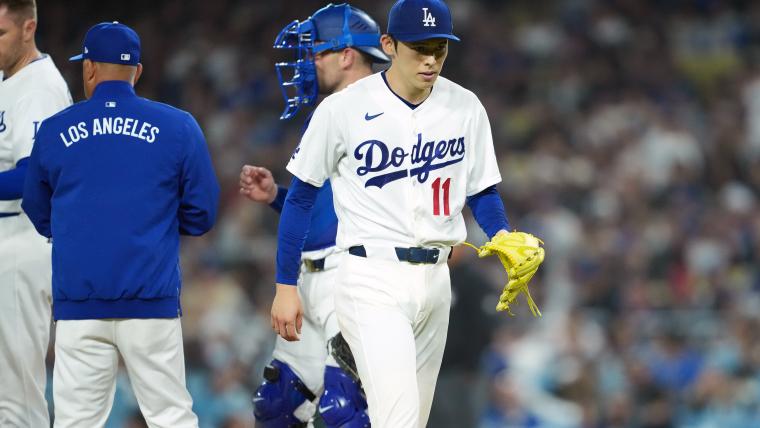
The delay throws a significant wrench into the strategic plans of both managers, most notably affecting a fascinating pitching duel. The Dodgers were set to give the ball to Japanese phenom Roki Sasaki, the hard-throwing right-hander whose every start is a must-see event. His triple-digit fastball and devastating “ghost fork” are a challenge for any lineup, but especially a young Nationals team.
Opposing him was slated to be Nationals left-hander Foster Griffin, a veteran looking to solidify his role. This contrast in styles and pedigree made for compelling viewing. Now, the delay creates immediate questions:
- Will both starters still take the mound? Extended delays often lead to teams scratching their planned starter, opting for a reliever or a backup option to avoid injury risk from irregular warm-ups.
- How does this affect bullpen management? If the game starts late and goes long, managers must be wary of overextending their relief corps, especially with both clubs having games scheduled for Monday.
- Is there a point of no return? If the wait stretches past a certain hour, the game risks being postponed to a mutual off-day, which are scarce in the modern MLB schedule.
For a player like Sasaki, routine is crucial. A lengthy rain delay disrupts the meticulous preparation a starter undergoes, from long-toss to bullpen sessions. It’s a mental and physical hurdle that can impact performance even if he does start.
The Getaway Day Dilemma: To Wait or Not to Wait
Sunday games, particularly the finales of a series, present a unique “getaway day” dynamic. The visiting team has flights to catch to their next destination, and both clubs are eager to transition to their next series. This reality often makes teams and umpires more willing to endure longer delays to complete the game, avoiding the logistical nightmare of a postponement.
A makeup game requires finding a date that works for both clubs, often leading to a doubleheader later in the season—a scenario that strains pitching staffs. Therefore, there is a powerful incentive to wait out the weather today. The Nationals, as the home team, are also conscious of fan experience, as a postponement means handling thousands of ticket exchanges or refunds. All these factors point to a concerted effort to play nine innings today, even if it means a late start and a long night at the ballpark.
Key considerations for the umpire crew and league officials include the latest possible start time that still allows for a full game, the forecast for the remainder of the evening (to avoid starting only to stop again), and the well-being of the players. Player safety is the non-negotiable top priority, and a wet field is a leading cause of preventable injuries.
Predictions and Potential Scenarios for the Delayed Game
Given the standard protocols and the desire to play, here are the most likely scenarios for how today’s events will unfold:
- Scenario 1: An Afternoon Window Opens (Most Likely). The rain subsides by early-to-mid afternoon, allowing for a 2-3 hour window for field preparation. This would lead to a start time in the late afternoon, perhaps around 4:00 or 5:00 PM ET. In this case, there’s a strong chance both Sasaki and Griffin would still start, as the delay, while inconvenient, would be manageable.
- Scenario 2: A Lengthy Delay Leads to Bullpen Games. If the delay pushes into the late afternoon, one or both teams may pivot. We could see an “opener” or a directly planned bullpen game to protect the starting pitchers. This would dramatically shift the strategic advantage and become a test of middle-relief depth.
- Scenario 3: Postponement to a Later Date. If the forecast shows no break in the weather, or if the delay becomes so long that playing would force an unreasonable finish time, the game will be postponed. The most likely makeup date would be during the Dodgers’ next visit to Washington, creating a single-admission doubleheader.
From a pure baseball prediction, a shortened or disrupted game often favors the team with the deeper bullpen and more versatile bench—advantages that lean toward the Los Angeles Dodgers. The Nationals, a team in a rebuilding phase, might find it harder to navigate a sudden shift to a bullpen-centric contest against the potent Dodgers lineup.
Conclusion: Patience is the Name of the Game
For now, the only certainty at Nationals Park is uncertainty. The Dodgers-Nationals game delay is a classic example of how weather remains one of the few elements of the sport beyond human control. It tests the patience of fans, the adaptability of players, and the decision-making of managers and officials. While the wait is frustrating for everyone eager to see Roki Sasaki face MLB hitters or for the Nationals to attempt a series win, the priority remains a safe and fair contest.
Fans are advised to stay tuned to official team channels and trusted sources like The Sporting News for the latest updates on the start time. As the radar clears and the tarp comes off, baseball will resume, and the unexpected delay will simply become part of the story of the 2024 season—a day where the duel between Sasaki and Griffin was first a duel against the elements. In the end, the resilience to wait out a storm is a small but real part of the marathon that is a Major League Baseball season.
Source: Based on news from Yahoo Sports.