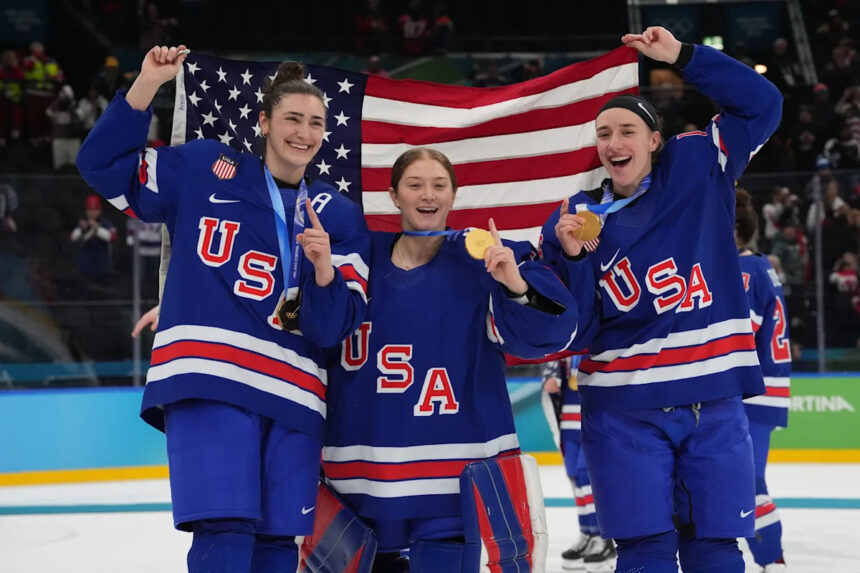
Why the U.S. Women’s Hockey Team’s State of the Union Absence Speaks Volumes
In a week meant for celebration, a conspicuous split-screen moment has emerged in American hockey. The gold medal-winning U.S. men’s Olympic ice hockey team, fresh off their stunning victory in Pyeongchang, toured the White House Oval Office and secured prime seats for President Donald Trump’s first State of the Union address. Their counterparts, the reigning world champion U.S. women’s ice hockey team, who are not just Olympic hopefuls but a dominant dynasty, will be notably absent. The official reason from USA Hockey cites “timing and previously scheduled academic and professional commitments.” But in the complex arena where sports, politics, and gender equity collide, this explanation is merely the opening face-off. The real story is a nuanced tale of legacy, logistics, and the unspoken pressures facing the most successful women’s hockey program on the planet.
The Official Line: Scheduling Conflicts and Real-World Demands
On the surface, the explanation is straightforward and undeniably valid. Unlike many elite male athletes in major professional leagues, the vast majority of the U.S. women’s national hockey team members do not play hockey as a full-time, salaried profession. Their gold-medal caliber skill is maintained alongside demanding careers and academic pursuits.
USA Hockey’s spokesperson confirmed the team received an identical invitation to the men’s squad. However, the short notice—the invite came just days before the event—made it impossible for the dispersed athletes to rearrange their lives. Consider their realities:
- Professional commitments: Many players hold full-time jobs in coaching, marketing, or fitness, or are contracted with the professional National Women’s Hockey League (NWHL), which has a weekend game schedule.
- Academic schedules: Several key players are standout student-athletes at top-tier NCAA programs. Missing class and practice for a mid-week political event is a significant ask.
- Geographic dispersion: The team does not train together year-round. Organizing a last-minute cross-country trip is a logistical and financial hurdle.
This stands in stark contrast to the men’s team, which was primarily composed of NHL veterans playing overseas or retired players, affording them greater schedule flexibility for a late-January honor.
The Unspoken Context: A History of Advocacy and Unequal Footing
To view this incident in isolation is to miss the critical historical context of U.S. women’s hockey. This is a team that, just ten months ago, threatened to boycott the 2017 World Championships over a protracted and public dispute with USA Hockey over equitable support. Their fight wasn’t just about salary; it was about fair treatment in areas like travel accommodations, marketing, and youth development resources compared to the men’s program.
Their successful advocacy led to a landmark, multi-year agreement that significantly improved their compensation and support. This history makes the team acutely aware of symbolism and parity. Attending a high-profile political event as “guests” while their male counterparts are celebrated, without addressing the underlying structural differences that made their attendance harder to coordinate, could be seen as counter to their hard-won stance.
Furthermore, the political climate cannot be ignored. The State of the Union is a deeply partisan event. For a team that represents the entire nation, aligning themselves with any political administration carries risk. Their unified stand last year was about hockey and equality. Navigating the political theater of Washington requires a different, more individualized calculus, where a player’s personal views could be misinterpreted as the team’s endorsement.
Expert Analysis: Beyond the Schedule, a Question of Priority and Perception
Sports sociologists and media analysts see this episode as a microcosm of the challenges facing women’s sports. “The ‘scheduling conflict’ explanation is both true and a convenient shield,” notes Dr. Laura Burton, a professor of sports management. “It highlights the systemic issue: the men’s hockey infrastructure is built for them to say ‘yes’ to these opportunities spontaneously. The women’s infrastructure is not. The invitation, while well-intentioned, inadvertently underscores the very inequality the women’s team has fought against.”
The media narrative is also pivotal. The men’s “Miracle on Ice” narrative is a powerful, recurring American story. Their 2018 victory, while not against the same Cold War backdrop, reignited that patriotic fervor. The women’s team, despite being arguably more consistently successful—they’ve won eight of the last ten World Championships—often fights for proportional media coverage. Their absence from the Capitol becomes part of their story, shifting focus from their prowess to a political-adjacent controversy.
This creates a delicate balancing act. The team must weigh the honor of a presidential invitation against the practical demands of their lives and the potential perception of either wading into politics or accepting a secondary status. Their decision to prioritize their commitments, while diplomatically thanking the White House for the invite, is a masterclass in navigating this no-win situation.
Predictions: How This Moment Shapes the Future
This incident is unlikely to be a one-off flashpoint. Instead, it signals what we can expect as women’s sports continue their ascent toward equity.
- Increased Scrutiny on Invitation Protocols: Moving forward, sports governing bodies and political offices may need to plan with greater lead time and sensitivity to the actual schedules of women athletes, not just assume parity in availability.
- Empowerment Through Selective Participation: We will see more athletes and teams making calculated decisions about which ceremonial events to attend, based on their values and logistics, rather than feeling obligated to accept every honor.
- Fuel for Continued Advocacy: For the U.S. women’s hockey team, this will likely reinforce their drive to build a sustainable, professional domestic league where hockey is their primary vocation, making future “scheduling conflicts” less frequent.
- Focus on 2022 Beijing Olympics: The ultimate redirect will be their performance. Expect the team to channel any frustration into their preparation for the 2022 Winter Games, where they will aim to reclaim the gold medal from Canada and create a celebration moment entirely on their own terms.
Conclusion: A Celebration Deferred, Not Denied
The absence of the U.S. women’s hockey team from the State of the Union is not a snub. It is a statement of fact—a reflection of the complex, dual lives elite women athletes still lead. Their gold medals shine just as brightly, but the paths they walk to earn them, and the choices they must make afterward, are often more arduous and complicated.
While the men’s team enjoys a well-deserved moment in the Washington spotlight, the women’s team is back on the ice, in the classroom, and at their jobs, building upon their legacy. Their story is one of relentless pursuit of excellence both in sport and in the fight for the conditions that allow that excellence to flourish. When they eventually visit the White House, perhaps after winning gold in Beijing, it will be with the same pride as the men—but also with the hard-earned knowledge that their presence represents a victory far beyond a single game. It will represent a system slowly, surely, changing to meet them at their level.
Source: Based on news from Yahoo Sports.