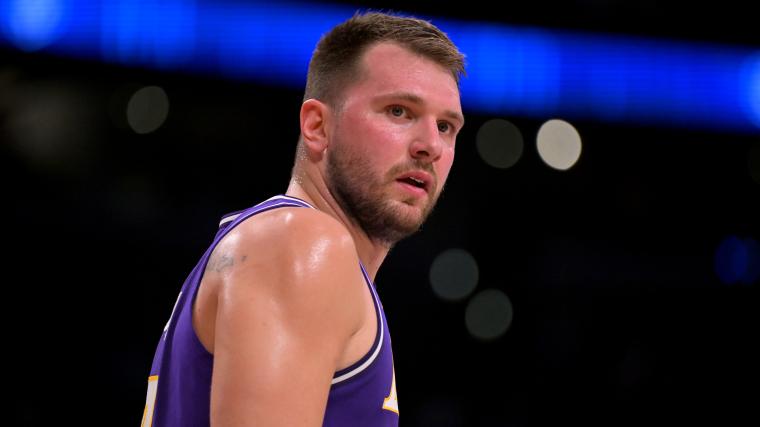
Why Luka Doncic’s European Treatment is a High-Stakes Gamble for the Lakers
The Los Angeles Lakers’ season, teetering on the brink, now hinges on a transatlantic medical mission. In a move that underscores both the urgency of the moment and the global nature of modern sports medicine, superstar Luka Doncic is bypassing conventional stateside recovery protocols. Instead, he is jetting to Europe to seek an aggressive, specialized treatment for his Grade 2 hamstring strain. This isn’t a vacation; it’s a calculated, high-stakes gamble by a franchise and its generational talent to compress a timeline that typically spells doom for postseason aspirations.
The Injury Crisis: More Than Just a Hamstring Strain
While the spotlight is rightly on Doncic, the Lakers’ treatment room tells a broader, more troubling story. The simultaneous loss of Doncic and the dynamic Austin Reaves (oblique) has exposed a frightening lack of depth. Sunday’s dispiriting loss to the Mavericks, where Los Angeles fell behind by 22 points, was a preview of a potential playoff reality without their engine. A Grade 2 hamstring strain is no minor setback; it represents a significant tear in the muscle fibers, with a typical recovery window spanning 4 to 8 weeks. For a player whose game is built on explosive drives, sudden stops, and elite-level deceleration, a compromised hamstring is a cardinal sin. The Lakers aren’t just racing the clock; they’re battling human biology.
Decoding the European Treatment Approach
So, why Europe? Doncic’s decision points to a growing trend among elite athletes seeking cutting-edge, often more intensive, rehabilitation methods outside the traditional North American system. While specific details are guarded, the European approach he is likely pursuing differs in philosophy and application.
- Aggressive Load Management: Unlike a conservative “rest and wait” model, European clinics often employ early, carefully calibrated loading exercises. This controlled stress on the healing tissue, using specialized equipment, aims to promote stronger collagen alignment and faster functional recovery.
- Advanced Modalities: Treatment likely includes a suite of advanced technologies not yet FDA-approved or widely adopted in the U.S. This could involve platelet-rich plasma (PRP) therapy, hyperbaric oxygen chambers, or specialized laser and electromagnetic therapies designed to accelerate cellular repair at the injury site.
- Holistic Regeneration: The focus often extends beyond the muscle itself. Treatments may incorporate intensive physiotherapy, cryotherapy, and tailored nutritional and supplementation plans to reduce systemic inflammation and optimize the body’s innate healing environment.
This isn’t merely alternative medicine; it’s a different performance paradigm. For Doncic, it represents a proactive attempt to steer his own recovery, leveraging a network of specialists familiar with his physique and the unparalleled demands of an NBA playoff run.
The Immense Risks and Potential Rewards
The gamble is twofold: medical and competitive. From a health perspective, an overly aggressive return risks re-injury, potentially turning a month-long issue into a chronic, career-altering problem. Hamstrings are notoriously vulnerable to re-aggravation. Pushing the envelope could see Doncic back on the floor in 3 weeks, only to suffer a more severe tear in Game 2 of a playoff series—a nightmare scenario for the Lakers’ long-term future.
Conversely, the reward is the preservation of a season. A successful, accelerated recovery that brings a near-100% Doncic back for the final playoff push transforms the Lakers’ ceiling. He is the sole player on the roster capable of single-handedly warping a playoff series with his scoring, playmaking, and gravitational pull on defenses. Without him, a first-round exit is probable. With him, the chaotic, star-powered potential of the Lakers makes them a dangerous wildcard.
Predictions: What This Means for the Lakers’ Playoff Fate
The success or failure of this European intervention will define the Lakers’ spring. Our analysis points to a precarious path forward.
Best-Case Scenario: The treatment is a resounding success. Doncic returns in just under 4 weeks, regains his rhythm in the final regular-season games, and enters the playoffs at or near his MVP-caliber level. The Lakers secure a lower-seed playoff berth and become the most feared matchup in the Western Conference, with a rested, motivated Doncic capable of carrying a team through four rounds.
Most Likely Scenario: The timeline is only marginally improved. Doncic returns late, perhaps for a play-in game or the first round, but is not at full explosiveness. The Lakers struggle to integrate him under playoff intensity, and while they may win a series, a lack of continuity and lingering physical limitations sees them bow out in the second round. The “what if” of a fully healthy season lingers.
Worst-Case Scenario: The aggressive rehab backfires. Either the initial injury requires more time than hoped, or a premature return leads to a significant re-injury. The Lakers make a meek exit, and a summer of difficult questions about long-term health and roster construction begins prematurely.
Conclusion: A Franchise’s Future in the Balance
Luka Doncic’s flight to Europe is more than a headline; it is a symbol of the modern athlete’s agency and the extreme measures championship aspirations demand. The Lakers, a franchise built on legendary performances, are betting its present on a medical strategy as unconventional as it is urgent. This move acknowledges a stark truth: a standard recovery timeline is a death knell for their 2024 title hopes. The coming weeks will reveal whether this transatlantic pursuit was a masterstroke of proactive care or a desperate roll of the dice. One thing is certain: the health of one hamstring in a clinic overseas now holds the fate of one of sports’ most storied franchises firmly in its grip.
Source: Based on news from Yahoo Sports.