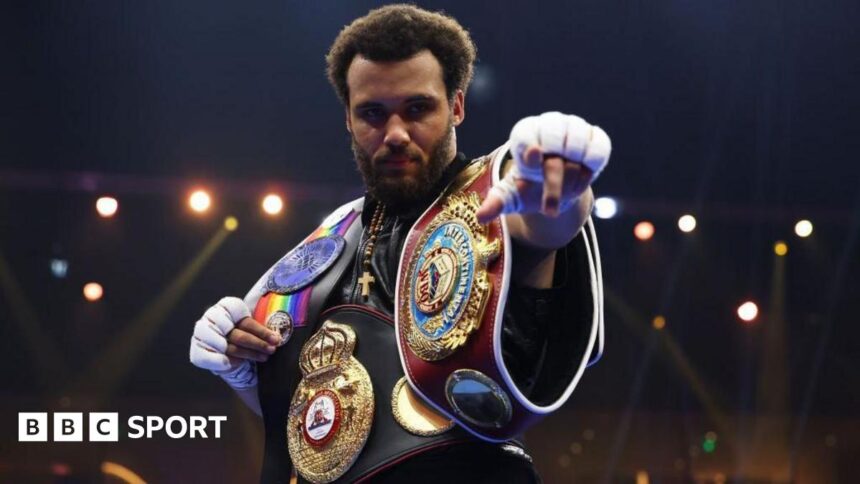
Why Lightning KOs Are a Curse and a Blessing for Heavyweight Prodigy Moses Itauma
The boxing world is swooning over Moses Itauma. At just 21, the British heavyweight possesses a chilling aura of inevitability, a conveyor belt of first-round victims, and the kind of hype that can distort reality. His highlight reel is a symphony of concussive, short-form violence: nine consecutive knockouts, none venturing beyond the second round. The crescendo? A 61-second demolition of a faded but name-brand Dillian Whyte in Saudi Arabia last summer. The narrative writes itself: the future king has arrived, his power absolute. But in the deep, dark waters of the heavyweight division, the very attribute that makes him spectacular—his fight-ending speed—may be the biggest obstacle on his path to the throne.
The Seductive Trap of the Early Night
Itauma’s early-career dominance is both a testament to his otherworldly talent and a potential developmental trap. For a young fighter, rounds are currency. They are the grueling classroom where a boxer learns to problem-solve, adapt to adversity, manage stamina, and confront their own vulnerabilities. Itauma’s financial ledger in this department is worryingly sparse. He has simply not been forced to answer the tough questions that define championship mettle.
Consider the gauntlet of a world title fight. It is rarely a one-act play. It’s a grueling, tactical war of attrition where:
- Stamina is weaponized: Can his explosive power carry into the championship rounds (10-12) where legends are made?
- Adaptability is key: What happens when the first bomb doesn’t land clean? Does he possess a nuanced Plan B or C?
- Defensive responsibility: Against elite opposition, one reckless charge can be punished with fight-ending consequences. Has he developed the layered defense needed at the top?
By dispatching overmatched opponents in moments, Itauma is denied the data—and the personal proof—that he can thrive when his pre-written script fails. Franklin will need to answer some tough questions – Itauma may be a prescient quote, but the most probing questions are still waiting for Itauma himself.
The Shadow of History: Prodigies Who Never Faced Adversity
Heavyweight history is littered with the carcasses of can’t-miss prospects who missed because they never learned to navigate a storm. They were the human equivalents of a spectacular firework—a blinding flash, a deafening boom, and then darkness. Their careers were built on the illusion of invincibility, shattered the first time an opponent had the chin, the savvy, or the grit to survive the initial onslaught.
Itauma’s team, brilliantly led by his brother and trainer, Karis, is undoubtedly aware of this. The danger lies in the seduction of the quick payday and the roar of the crowd. The path of least resistance—stacking up highlight-reel KOs against carefully selected foes—is commercially lucrative but competitively hollow. The true greats, from Ali to Lewis to Usyk, were forged in fights that tested their spirit, not just their power. They had to dig deep, and in doing so, they discovered a reservoir of grit they never knew they had. Itauma’s reservoir remains untapped and unmeasured.
The Blueprint for a True Champion: Beyond the Punch
For Moses Itauma to evolve from a thrilling prodigy into the global king he is heralded to be, a deliberate, perhaps uncomfortable, shift in matchmaking is required. The focus must move from rounds lasted to lessons learned.
Strategic matchmaking is now paramount. He needs opponents who can:
- Extend the fight: Durable veterans with proven chins who specialize in survival and spoiling.
- Present stylistic puzzles: Movers, switch-hitters, or long-range technicians who force Itauma to cut off the ring and think.
- Apply intelligent pressure: Fighters who can make him fight off the back foot and test his composure under fire.
These are not “step-up” fights in the traditional sense; they are “step-over” fights—deliberate choices that may lack marquee value but offer immense developmental ROI. A gritty, hard-fought eight-round decision against a cunning survivor could be more valuable than five more one-round spectacles.
The Road Ahead: Predictions for the Itauma Era
The potential in Moses Itauma is terrifyingly real. His hand speed, combination punching, and fight-ending power are generational gifts. The prediction here is not of failure, but of a necessary and potentially rocky transition.
We can expect the next 12-18 months to be revealing. His team will likely begin the delicate process of introducing rounds into his system. There may be a performance that leaves fans slightly underwhelmed—a messy win, a moment of frustration, perhaps even a dropped round. This should be celebrated, not criticized. It is evidence of growth.
The ultimate test will come when he shares the ring with a current top-10 contender. A fighter like a Filip Hrgovic or a Zhilei Zhang represents the perfect crucible: elite power, proven durability, and championship experience. In that furnace, we will learn if Itauma is merely a spectacular finisher or a complete fighter. Can he box, move, and win a tactical battle if the knockout doesn’t present itself? The answer will define his legacy.
Conclusion: The Making of a King Requires More Than a Crown
Moses Itauma stands at a fascinating crossroads. The boxing world is right to be excited; he is a rare and thrilling talent. However, the very quick KOs that have fueled his meteoric rise are a double-edged sword. They have built an aura but may have delayed the essential construction of a complete, battle-hardened champion.
True heavyweight greatness is not forged in seconds, but in the sweat-drenched, doubt-filled minutes that follow. It is built in the trenches of rounds five through eight, when the lungs burn and the easy power has faded. For Itauma to ascend from prodigy to pound-for-pound king, he must willingly walk into that darkness. He must seek out the fights that make him uncomfortable, the opponents who refuse to fall, and the rounds that test his soul. Only then will the hype be validated, and the crown truly earned. The knockout artist has arrived; now, the world waits to meet the boxer.
Source: Based on news from BBC Sport.