Why resolute Arsenal will believe prolific PSG can be beaten
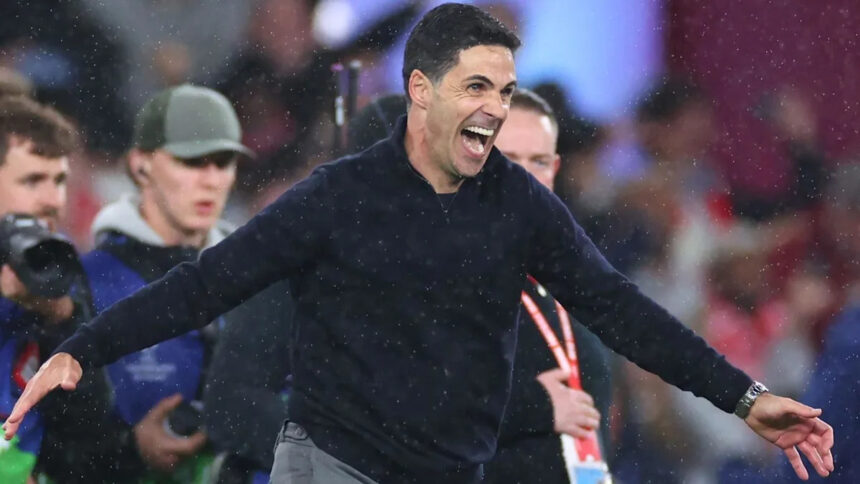
There are moments in football that define a season, and for Arsenal, that moment arrived under the floodlights of the Emirates Stadium. As Mikel Arteta’s side booked their place in a first major European final in two decades, the narrative was not just about the goal that broke the deadlock—it was about the resilience that kept the dream alive. “There are moments in the Champions League when somebody has to deliver a magic moment – and he delivered that again,” Arteta said after Arsenal beat Atletico Madrid to reach the final. You might be forgiven for thinking the Arsenal manager was referring to Bukayo Saka, whose all-important goal secured their semi-final triumph on Tuesday. But that “magic moment” on a famous night in north London came from centre-back Gabriel as Atletico were probing for a response to Saka’s opener.
That defensive intervention—a last-ditch, body-on-the-line block—encapsulates why this Arsenal team is different. It is why they will travel to face Paris Saint-Germain in the final with a genuine belief that the prolific French champions can be beaten. PSG are a machine built for goals, boasting the tournament’s top scorer and a midfield that dictates tempo. But Arsenal have something that statistics do not always capture: an unbreakable spirit, forged in adversity and sharpened by a decade of near-misses. Here is the expert breakdown of why the Gunners can topple the Parisian giants.
The defining moment: Gabriel’s rescue act against Atletico
To understand Arsenal’s current mindset, you must revisit the chaos of the semi-final second leg. With the score at 1-0 from the first leg, Arsenal had weathered early Atletico pressure. Then, in the 67th minute, Saka produced a moment of individual brilliance—cutting inside from the right, curling a left-footed shot into the far corner. The stadium erupted. It felt like the decisive blow. But football is rarely that simple.
Atletico, a team notorious for their refusal to die, responded immediately. A long ball forward was met by a poor defensive header from William Saliba, who misjudged the flight and inadvertently gifted the ball to Giuliano Simeone. The Argentine forward surged past goalkeeper David Raya, the goal gaping before him. For a split second, every Arsenal fan in the stadium felt their heart sink. This was the moment the tie could flip. But then came Gabriel.
- Speed of thought: Gabriel did not panic. He read Simeone’s body language, knowing the forward would try to slot the ball into an empty net.
- Physical courage: Instead of a reckless lunge, he applied just enough pressure—a shoulder-to-shoulder challenge that forced Simeone to adjust his shot.
- Timing of intervention: The ball trickled wide. Saliba’s blushes were saved. Arsenal’s lead was preserved.
That moment was not just a save; it was a statement. Arteta’s words about a “magic moment” were not about a goal. They were about a defensive act that required immense concentration, bravery, and selflessness. “Gabriel’s block was the turning point,” Arteta admitted post-match. “It showed the character we have in this squad.” That character will be essential against PSG, a team that can create chances from nothing.
PSG’s prolific attack vs Arsenal’s resolute defence
Paris Saint-Germain arrive at the final as the tournament’s most prolific attacking side. They have scored 28 goals in 12 Champions League matches, with their front three of Kylian Mbappé, Ousmane Dembélé, and Randal Kolo Muani combining for 15 of those. Luis Enrique’s system is built on speed, verticality, and individual brilliance. They can dismantle any defence when they click. However, Arsenal’s defensive record is equally impressive: only 8 goals conceded in the entire competition, the best of any team left standing.
The key battle will be in the central corridor. Arsenal’s centre-back pairing of Gabriel and William Saliba has been the foundation of their European campaign. Despite Saliba’s momentary lapse against Atletico, he remains one of the most composed ball-playing defenders in the world. Gabriel, meanwhile, has evolved from a raw talent into a leader. His physicality and aerial dominance will be crucial against PSG’s crosses and set-pieces.
But it is not just the defenders. Arsenal’s midfield—anchored by Declan Rice—provides a shield that PSG have struggled against in previous seasons. Rice’s ability to read danger, intercept passes, and break up transitions is tailor-made for nullifying PSG’s counter-attacks. In the semi-final, Rice made 12 ball recoveries and 5 interceptions. Against PSG, he will need to replicate that performance, particularly in the wide areas where Dembélé loves to cut inside.
Why Arsenal can contain PSG:
- Discipline in shape: Arsenal defend as a unit, not as individuals. Their 4-3-3 morphs into a compact 4-5-1 without the ball, making it hard for PSG to find gaps.
- Set-piece threat: Arsenal have scored 7 goals from set-pieces in the Champions League this season. Gabriel, in particular, is a menace from corners—a vulnerability PSG have shown in their last-16 tie against Barcelona.
- Goalkeeping confidence: David Raya has been outstanding, with a save percentage of 78% in the tournament. His distribution also allows Arsenal to bypass PSG’s press.
Saka and the attacking counter-punch
While much of the pre-final talk will focus on PSG’s attack, Arsenal possess their own match-winner in Bukayo Saka. The 23-year-old has been the Gunners’ talisman all season, with 8 goals and 5 assists in the Champions League alone. His ability to drift inside from the right, combine with Martin Ødegaard, or take on his full-back one-on-one makes him a constant threat. Against Atletico, it was Saka who delivered the decisive blow—a moment of composure under immense pressure.
PSG’s left-back, Nuno Mendes, is rapid but can be exposed defensively when caught high up the pitch. Saka’s intelligence in finding space between the lines will be critical. If Arsenal can pin PSG back, they can exploit the spaces behind Mendes and the centre-backs. Moreover, Gabriel Jesus offers a different dimension—his movement drops deep to link play, dragging PSG’s defenders out of position.
Arsenal’s attacking weapons:
- Martin Ødegaard’s creativity: The captain has the highest number of through-balls in the competition (12). His vision can unlock PSG’s high defensive line.
- Set-piece efficiency: Arsenal have scored from a corner in three of their last four European matches. PSG’s zonal marking has been questioned by pundits.
- Transition speed: Saka and Jesus can break at pace. If Arsenal win the ball in midfield, they can catch PSG’s full-backs out of position.
Arteta has also shown tactical flexibility. In the semi-final, he instructed his wingers to stay wide to stretch Atletico’s block. Against PSG, he might ask Saka to tuck inside to overload the midfield, creating space for Ben White to overlap. The key is to avoid becoming predictable. PSG’s defence, marshalled by Marquinhos and Milan Škriniar, is strong but has a tendency to switch off against quick combinations.
Mental fortitude and the Arteta factor
Perhaps the most underrated factor in this final is the psychological edge Arsenal have built. This is a squad that has learned from painful experiences. The collapse against Tottenham in the 2022 title race. The Europa League heartbreak against Sporting. The FA Cup exits. Each setback has been a lesson. “We are not the same team that lost those big games two years ago,” Arteta said. “We have grown. We have scars, but they make us stronger.”
PSG, by contrast, carry a different kind of weight. Despite their domestic dominance, they have not won the Champions League since 2020. Their exits to Real Madrid (2022), Bayern Munich (2023), and Dortmund (2024) were marked by moments of individual errors and collective panic. Luis Enrique’s side is talented but fragile under sustained pressure. If Arsenal can score first—as they did against Atletico—the doubt in PSG’s ranks could become a factor.
Arsenal’s experience in the Premier League title race has also hardened them. They have faced Manchester City, Liverpool, and Chelsea in high-stakes matches. They know how to manage a game, how to slow down the tempo, and how to absorb pressure. In the semi-final, after Saka’s goal, Arsenal did not retreat. They continued to press, to counter, to make Atletico uncomfortable. That maturity is a product of Arteta’s coaching.
Prediction: This final will not be a one-sided affair. PSG will have periods of dominance—likely in the first 20 minutes as they try to impose their rhythm. But Arsenal’s defensive structure, combined with the individual brilliance of Saka and the leadership of Gabriel, will keep them in the game. I expect a tight, tactical contest. The decisive moment may come from a set-piece or a counter-attack. Arsenal’s resilience, their ability to deliver a “magic moment” when it matters most, gives them a genuine chance.
Final score prediction: Arsenal 2-1 PSG (after extra time). Gabriel to score the winner from a corner. It would be poetic—the same defender who saved the semi-final, now delivering the trophy.
Conclusion: Belief built on substance
Arsenal’s journey to this final has been anything but straightforward. They have beaten Porto on penalties, overcome Bayern Munich’s aura, and outlasted Atletico’s dark arts. Each win has required a different kind of character. Against PSG, they will face a team that scores for fun, that has the individual talent to win a game in seconds. But football is not played on paper. It is played on the pitch, where heart, discipline, and tactical intelligence can overcome raw firepower.
Mikel Arteta’s side believes. They believe because they have a defence that refuses to break. They believe because they have a talisman in Saka who rises to the occasion. They believe because they have a manager who has built a culture of resilience. PSG are prolific, but they are not invincible. And on a European final night, when the pressure is at its highest, the resolute Arsenal will be ready to prove that magic moments come in many forms—not just from goals, but from the blocks, the tackles, and the unwavering belief that they can beat anyone.
Source: Based on news from Yahoo Sports.