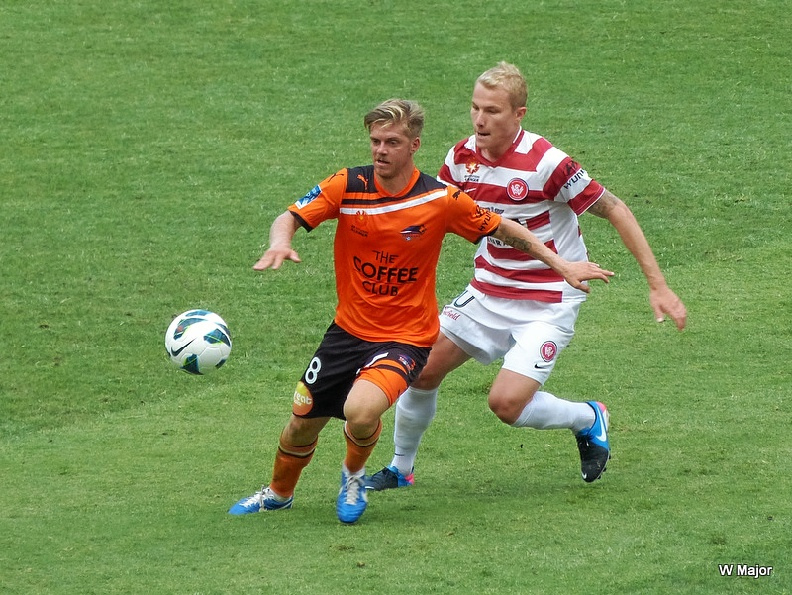
The Inevitable Unraveling: Why West Ham’s Decline Should Shock No One
The narrative around a struggling football club often follows a familiar, almost comforting, arc. There’s the early-season concern, the mid-season managerial vote of confidence, the desperate scramble for points, and finally, either the great escape or the tragic fall. For West Ham United this season, however, the story feels different. It lacks the dramatic tension of a surprise. Unlike the famed 2002/03 side—a squad boasting the talents of Joe Cole, Paolo Di Canio, and Michael Carrick, universally labelled ‘too good to go down’ before their fateful drop—no such platitudes are offered to this current iteration. Their decline feels less like a shocking plot twist and more like the inevitable final chapter of a book whose preceding pages were filled with foreshadowing. This isn’t a sudden collapse; it’s a systemic failure whose roots have been visible for years.
A Foundation Built on Sand, Not the Academy of Football
West Ham’s modern identity has become dangerously schizophrenic. The club trades on its historic ‘Academy of Football’ moniker and a perceived ethos of attractive, attacking football, yet its strategy in the Premier League era has increasingly been one of short-termism and scattergun recruitment. The move from the Boleyn Ground to the London Stadium was symbolic: a leap into a bigger arena without a concurrent plan to build a squad capable of filling it, both in quality and ambition. The cavernous stadium has often felt like a suit several sizes too big, amplifying poor performances rather than inspiring them.
This identity crisis manifests most clearly in recruitment. The post-David Moyes (first stint) and Manuel Pellegrini era has seen a huge outlay on players, but without a coherent sporting vision. The squad is a patchwork of different managers’ preferences, aging assets on lucrative contracts, and talented individuals who don’t necessarily complement each other. Key areas have been neglected for windows at a time, while other positions have seen overcrowding. The result is a team that lacks balance, resilience, and a clear tactical fingerprint.
- Short-Term Fixes Over Long-Term Strategy: The signing of aging stars on high wages has created a bloated wage bill and reduced resale value, hampering Financial Fair Play flexibility.
- No Defensive Midfield Anchor: For years, the failure to replace Declan Rice with a specialist, top-tier defensive midfielder has left the back line perpetually exposed.
- Style vs. Substance: A desire to play “attractive football” has often been pursued without the disciplined structure required to do so successfully in the Premier League.
The Leadership Vacuum: From the Boardroom to the Pitch
Great teams are built on strong leadership at every level. West Ham currently exhibits a vacuum in this department. In the boardroom, decisions have often appeared reactive—sacking managers at seemingly odd junctures or backing them with signings that don’t fit a discernible pattern. The relationship between the fanbase and the ownership has been strained for seasons, creating a background noise of discontent that inevitably filters down to the pitch.
More critically, there has been a glaring lack of leadership on the pitch. Since the departure of Mark Noble, the club has lacked a true captain who embodies its spirit and can rally troops in adversity. Declan Rice’s growth into a world-class player was evident, but his eventual sale, while financially sound, ripped out the team’s beating heart and its most consistent performer. The armband has been passed, but the authority and influence have not been replicated. In tough away games or when conceding first, this team has consistently shown a fragility and a tendency to fold—a hallmark of sides lacking in on-field generals.
This leadership void extends to the dugout. David Moyes, for all his historic achievements in securing European football, presided over a football style that grew increasingly unpopular and, ultimately, ineffective. The appointment of a successor was a chance to reset and unify. Yet, the chosen direction has failed to produce a cohesive or resilient unit, leaving players looking confused and fans disillusioned.
The Statistical Story: A Decline in Plain Sight
Beyond the eye test, the data paints a damning picture of a regression that has been years in the making. West Ham’s underlying metrics have often been a cause for concern, even during seasons where results papered over the cracks. Their historic 6th and 7th place finishes under Moyes were frequently achieved with a negative expected goal (xG) difference, a statistical anomaly that pointed to unsustainable overperformance in both boxes.
This season, that regression has hit with full force. The defensive numbers are particularly alarming. Consistently ranking among the worst in the league for shots conceded, chances conceded, and possession surrendered in dangerous areas is not bad luck; it’s a blueprint for failure. The midfield has been bypassed with ease, and the defensive unit has been disorganized and prone to individual errors. The once-reliable threat from set-pieces has diminished, removing a crucial safety net. When a team’s underlying numbers are this poor for this long, a steep decline in actual league position is not a surprise—it’s a mathematical probability finally realizing itself.
What Comes Next: A Painful Reckoning and a Narrow Path Forward
The immediate future for West Ham looks fraught. The threat of relegation is very real, and the Championship is a brutal division from which not all historic clubs emerge quickly, or ever. The financial ramifications of the drop, coupled with the aforementioned wage bill and likely player exodus, would be catastrophic, potentially setting the club back a decade.
Even if survival is secured by the slimmest of margins, the requirement for change is non-negotiable. The club stands at a crossroads that demands more than just sticking-plaster solutions.
- Radical Sporting Director Vision: The club must hire a top-tier Sporting Director and commit, unwaveringly, to a multi-year project based on a clear football philosophy. Every signing must fit this mold.
- Clearing the Decks: A painful but necessary squad overhaul is required. High-earning underperformers must be moved on to reset the wage structure and culture.
- Reconnecting the Core: The club must decide what it stands for in the modern era and communicate that plan to a disenfranchised fanbase. This might mean embracing a gritty, hard-working identity over an unattainable “West Ham way” fantasy.
Conclusion: The End of an Illusion
The decline of West Ham United should come as no surprise because it is the culmination of multiple, chronic failures in strategy, leadership, and identity. The 2002/03 team was a tragic anomaly, a good group that inexplicably fell apart. The 2023/24 team, and those in the preceding years, are the opposite: a group whose underlying flaws and construction made them prime candidates for a fall. The warning signs—the chaotic recruitment, the leadership vacuum, the damning statistics—have been flashing red for seasons. The Premier League is a ruthless auditor; it eventually exposes every structural weakness and punishes every unsound investment. West Ham are not too good to go down. They are a stark lesson in what happens when a club loses its way, trading long-term vision for short-term gains, and forgetting that in football, as in construction, any house built on shaky foundations is destined to crumble.
Source: Based on news from Sky Sports.
Image: CC licensed via commons.wikimedia.org