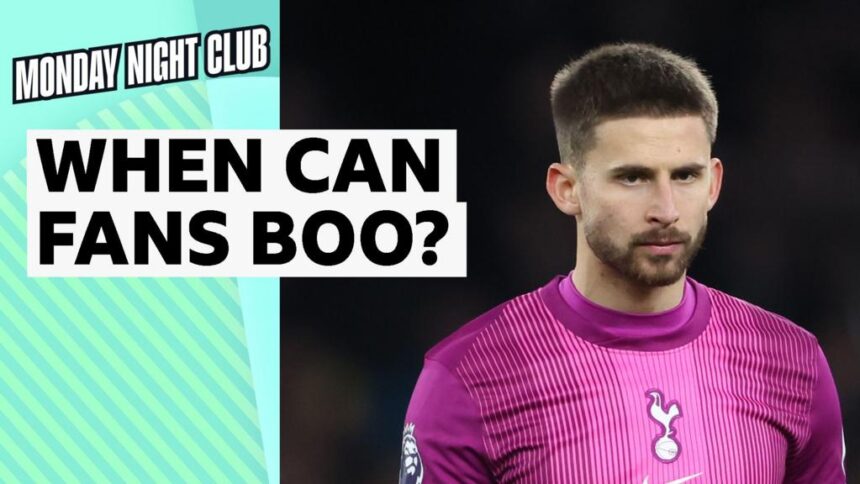
‘Why Would You Do That?’: Chris Sutton’s Blunt Take on Spurs Fan Boos and the Modern Fan’s Dilemma
The final whistle blows. The players, heads bowed, trudge towards the tunnel. And then it comes: a rolling wave of discontent, a chorus of boos raining down from the stands. It’s a sound that splits opinion, a visceral reaction that sparks debate far beyond the stadium walls. This was the scene at the Tottenham Hotspur Stadium recently, a reaction so pointed it prompted BBC Radio 5 Live’s Monday Night Club to dissect the very soul of modern fandom. At the heart of the discussion was Chris Sutton, whose incredulous question to Spurs fan Jack Hussey cut to the chase: “Why would you do that?”
The Sound of Discontent: Unpacking the Boo at Tottenham
The context is crucial. Tottenham’s defeat to Fulham was not just a loss; it was a performance deemed lacking in passion and intensity, coming off the back of a promising result. For many fans, the booing of Spurs players was a direct, immediate feedback mechanism. On the Football Daily podcast, fan Jack Hussey articulated this sentiment, suggesting it was a response to a perceived lack of effort, a breach of the fundamental contract between team and supporter. “It’s about standards,” is the common refrain. In an era where match-going fans invest staggering sums, the argument follows that they have a right to voice their frustration when those standards are not met.
However, Chris Sutton’s perspective, representing a former professional’s viewpoint, challenges this notion head-on. His stance is one of pragmatic psychology: how does negative reinforcement actually help? “Do they think the players aren’t trying? Do they think they want to be booed?” Sutton questioned. This highlights the core conflict: the fan’s emotional release versus the potential impact on player morale and performance. It’s a debate that stretches far beyond North London, touching on the very nature of support in the high-stakes, high-finance Premier League.
The Great Divide: Emotional Investment vs. Professional Psychology
The Monday Night Club discussion expertly framed the two irreconcilable positions in modern football. On one side, the emotionally invested, identity-tied supporter. For them, the club is a lifelong commitment, and the performance on the pitch feels deeply personal. A lethargic display can feel like a betrayal of that shared identity.
- The Fan’s Viewpoint: Booing is a legitimate, last-resort tool to signal deep dissatisfaction with direction, effort, or ownership. It is a collective voice saying, “This is not good enough.” In a business where fans are often treated as consumers, it is one of the few forms of direct protest left.
- The Professional’s Viewpoint: As articulated by Sutton and co-host Rory Smith, players are human. Public condemnation from their own supporters can shatter fragile confidence, increase anxiety, and create a toxic, fearful home environment. It rarely, if ever, inspires a positive reaction on the pitch.
This divide is the modern fan’s dilemma. The game has never been more commercialized, with ticket prices soaring and billionaire owners treating clubs as assets. Yet, the demand for unwavering, unconditional support from those same fans remains. When does passionate support become enabling acceptance? And when does justified criticism become counterproductive toxicity?
Beyond the Boo: The Bigger Picture at Spurs
To view the booing solely as a reaction to one bad half against Fulham is to miss the broader narrative. These eruptions are often a symptom of deeper, lingering issues. For Tottenham, the context includes years of near-misses, a revolving door of managers, and the constant shadow of Harry Kane’s departure. The pressure on manager Frank is a part of this, but the fan frustration seems to speak to a broader philosophical unease about the club’s direction and mentality.
The blistering Fulham defeat acted as a catalyst, but the fuel was already there. It represents a fear of reversion to a familiar “Spursy” trope—a failure to capitalize on opportunity, a softness in crucial moments. The boos, therefore, are not just for 90 minutes of football, but for the accumulated weight of history and perceived cultural flaws. This is what makes the situation so volatile and the debate so heated. It’s about the present performance and the haunting echoes of the past.
What Comes Next? Predictions for the Road Ahead
The immediate fallout from such public dissent is increased pressure on the entire club structure. Players must now demonstrate not just quality, but character, to win back the skeptical portions of their home crowd. The manager’s task becomes doubly hard: fixing tactical issues while also repairing a fractured relationship between his squad and the supporters.
Looking forward, we can predict a few potential outcomes. A string of passionate, high-energy performances could quickly turn the atmosphere, with the boos replaced by rallying cries. Alternatively, further inconsistent results could see the discontent solidify, creating a tense, divided atmosphere that becomes a genuine handicap—a self-fulfilling prophecy of underperformance. The club’s leadership must also be wary; fan sentiment, when it turns, can quickly shift focus from the pitch to the boardroom.
Ultimately, the saga raises a critical question for all match-going fans: what is the most effective way to enact change? Is it the immediate, cathartic boo, or is it more organized, strategic forms of communication directed at those who make long-term decisions?
Conclusion: A Rift That Needs Bridging
The conversation sparked by Chris Sutton’s simple, blunt question—“Why would you do that?”—reveals a fundamental rift in the heart of the game. It is the clash between raw, tribal emotion and cold, performance-based psychology. There is no easy answer. Fans have every right to feel what they feel, and their financial and emotional investment grants them a voice. Yet, the evidence that booing one’s own team leads to improved results is scant.
The path forward for Tottenham, and for any club in this situation, requires nuance. It demands that fans channel their immense passion into a force that lifts rather than tears down, even in profound disappointment. Conversely, it requires players and managers to understand that such reactions stem from a place of deep care, not mere malice. Bridging this gap is one of football’s greatest modern challenges. The sound of a boo is easy to hear, but the silence of a disconnected fanbase is far more dangerous. The true test for Spurs will be whether this moment of public fracture becomes a lasting schism or a catalyst for a renewed, and more resilient, understanding.
Source: Based on news from BBC Sport.
Image: Source – Original Article