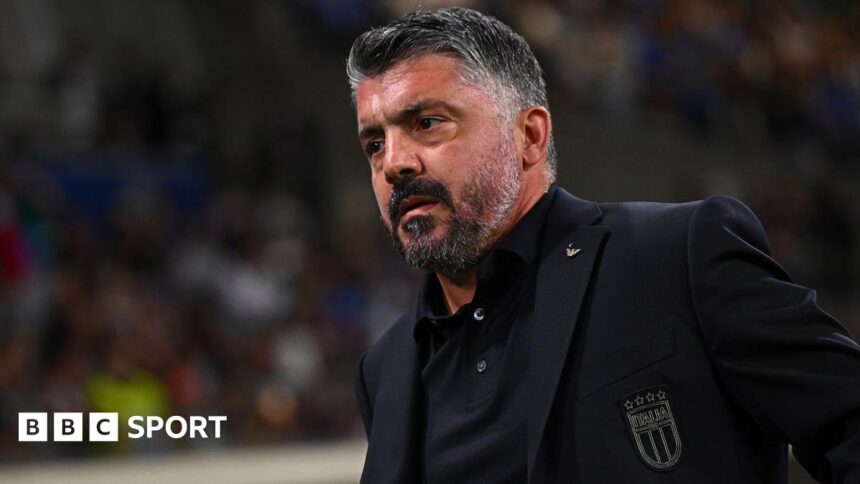
Will ‘Risky’ Gattuso Lead Italy’s World Cup Resurrection?
The image is seared into the collective memory of calcio: Fabio Grosso’s penalty hitting the net, the eruption in Berlin, and Italy crowned four-time World Cup champions in 2006. In the center of that triumph, a snarling, indefatigable midfield engine named Gennaro Gattuso. Fast forward nearly two decades, and the picture is one of profound paradox. Italy, the reigning European Champions, have become World Cup ghosts. Their record since that Berlin high reads like a tragic epitaph: Champions. Group Stage. Group Stage. Did not qualify. Did not qualify. The failure to reach football’s grandest stage since 2014 is a wound that festers. Now, in a move that has divided a nation, the Italian Football Federation has turned to the spirit of 2006 itself, appointing Gennaro Gattuso as the man to exorcise the demons. Is this the inspired return of a warrior’s mentality, or a desperate, risky gamble that could backfire spectacularly?
The Gattuso Paradox: Firebrand Pedigree vs. Managerial Nomad
Gennaro Gattuso’s appointment is not the safe choice. It is a statement. In the wake of Luciano Spalletti’s abrupt sacking last June, the FIGC has pivoted from a tactician known for intricate, possession-based “Spallettiball” to the embodiment of grinta and unyielding combat. As a player, Gattuso’s value was never in subtlety; it was in soul, in a defensive intensity that allowed the artists around him to flourish. The question is whether that iconic on-field persona can translate into sustained managerial success at the international level.
His club career hints at both promise and peril. Ten clubs in twelve years is the statistic critics wield. It paints a picture of a restless, sometimes volatile, journey with spells at AC Milan, Napoli, Valencia, and Fiorentina, among others. His tenures have often been short, marked by fiery press conferences and a demanding, sometimes confrontational, style. Yet, to dismiss him as a mere motivator is reductive. At Napoli, he won the Coppa Italia. He has shown tactical flexibility, occasionally deploying more progressive football than his stereotype suggests. But the international arena is a different beast. It requires man-management over daily coaching, strategic pragmatism over complex weekly systems, and the ability to forge a cohesive unit from players who spend most of the year as rivals. Does Gattuso’s specific, intense energy work in concentrated doses during international breaks? Or will it wear thin without the daily grind to reinforce it?
Diagnosing the Azzurri’s World Cup Disease
To understand the scale of Gattuso’s task, one must autopsy Italy’s recurring World Cup qualifying failures. The problems are systemic and deep-rooted:
- Striker Crisis: Since the days of Luca Toni and a prime Mario Balotelli, Italy has lacked a reliable, world-class numero nove. The conversion of creative dominance into goals has been a chronic issue, culminating in the playoff disaster against North Macedonia.
- Transitional Trauma: The failure to qualify for 2018 and 2022 occurred during a painful generational shift. The legendary Juventus defensive backbone faded, and a new identity was slow to emerge, despite the Euro 2021 triumph being a glorious, yet perhaps fleeting, peak.
- Psychological Scarring: Each failure adds weight. The “playoff curse” is now a mental hurdle as much as a sporting one. The pressure on the Azzurri in must-win qualifiers is now suffocating.
- System Instability: The managerial carousel—from Conte to Ventura, Mancini to Spalletti, and now Gattuso—has prevented the cultivation of a long-term footballing philosophy.
Gattuso is not being asked to merely tweak a system; he is being tasked with performing cultural surgery. His mandate is to rebuild a qualifying mentality, one built on the very resilience he exemplified as a player.
The Gattuso Blueprint: Fight, Identity, and Pragmatism
So, what will a Gattuso-led Italy look like? Expect a clear departure from his predecessor. Where Spalletti favored control and complexity, Gattuso will prioritize intensity and clarity.
The non-negotiable will be work rate. Gattuso’s famous quote, “Sometimes the important thing is not the football, it is the fight,” will be the dressing room mantra. We can anticipate a high-pressing, physically demanding side that seeks to win the battle before winning the game. Tactically, he will likely favor a solid 4-3-3 or 4-2-3-1, providing a platform for the nation’s creative talents—players like Nicolò Barella, Davide Frattesi, and Lorenzo Pellegrini—to express themselves, secure in the knowledge that the defensive structure behind them is robust and organized.
His biggest challenge will be solving the striker dilemma. Gattuso may not have a classic target man, so his system may rely more on goals from midfield and aggressive wing play. Most crucially, he must forge an us-against-the-world siege mentality. This is his greatest potential strength. He can frame Italy’s status as fallen giants, as wounded warriors, and use that narrative to create a band of brothers desperate to restore pride. In the cauldron of a decisive qualifier in a hostile stadium, that intangible spirit can be worth more than any tactical nuance.
Verdict: High-Risk, Potentially High-Reward Appointment
Predicting Italy’s path under Gattuso is to stare into a fog. The risks are glaring. His managerial record is inconsistent, and his temperament will be under a microscope with every dropped point. The modern game also demands more than just fight; it requires tactical solutions to break down stubborn, low-block defenses—a common sight for Italy in qualifying. If results stutter early, the pressure and scrutiny will be immense, and the “risky” tag will dominate headlines.
Yet, there is a compelling case for his potential success. Sometimes, a broken situation doesn’t need a subtle fix; it needs a shock to the system. Italy’s qualifying failures have often been characterized by a lack of grit, a nervous fragility. Gattuso is the antithesis of that. He represents the very Italian footballing DNA of defensive solidity and fierce pride that carried them to four stars. If he can channel his passion into clear tactical instruction and unite the squad under a common, combative cause, he could be the perfect antidote to the qualifying jitters.
The journey to the 2026 World Cup in North America is a long one. Gattuso will need patience from the federation, buy-in from a new generation of players, and perhaps a slice of luck in finding a consistent goal scorer. But one thing is certain: the Italy that takes the field will be unmistakably his. They will sweat, they will scrap, and they will leave everything on the pitch.
Conclusion: A Warrior’s Call to Arms
The appointment of Gennaro Gattuso is Italy rolling the dice. It is an acknowledgment that technical prowess alone has not been enough to navigate the treacherous path back to the World Cup. In turning to ‘Ringhio’, they are betting on heart, on character, on the restoration of a mentality that feels lost. This is not a nostalgia trip; it is a deliberate, calculated risk to inject the modern Azzurri with the old-school virtues that once made them feared.
Will the risky Gattuso lead Italy back to the World Cup? It is far from guaranteed. But he guarantees a team that will reflect his own furious commitment. In the aftermath of repeated failure, that may be the essential first step. The mission is not just to qualify; it is to resurrect the soul of Italian football. And there are few figures more symbolic of that soul than Gennaro Gattuso. The fight, for once, is not on the pitch. It is in the dugout. And Italy has just sent in their fiercest warrior.
Source: Based on news from BBC Sport.