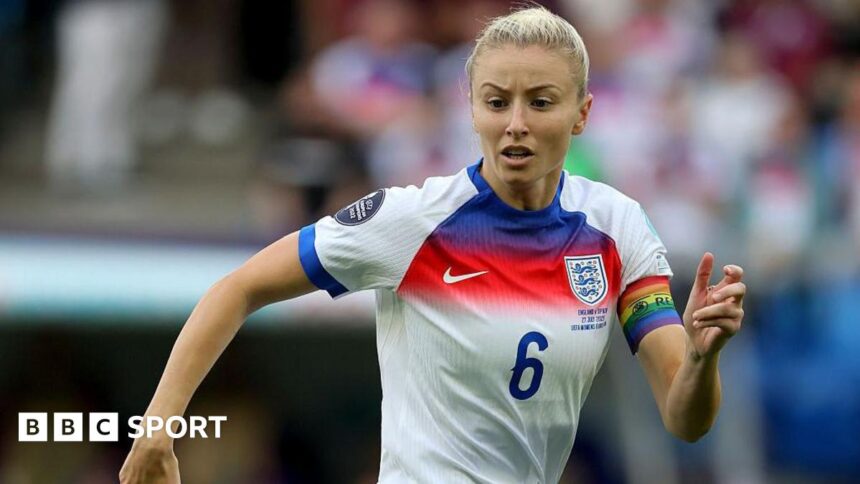
Leah Williamson’s Strike Warning: A Watershed Moment for Women’s Football?
The image of Leah Williamson, the stoic and celebrated captain of England, lifting the European Championship trophy is one of modern sport’s most powerful. It symbolizes a hard-fought era of growth, respect, and triumph for women’s football. Yet, in a candid and potentially seismic interview, that same leader has introduced a starkly different picture: the prospect of player strikes. Williamson’s admission that she would “never rule out” industrial action over scheduling concerns is not merely a player complaint; it is a direct challenge to the very foundations of the sport’s breakneck expansion, signaling that the era of grateful acquiescence is over.
The Captain’s Stand: From Pitch Leader to Labor Advocate
Leah Williamson’s authority on this issue is both personal and professional. Her perspective is forged in the crucible of victory and the solitude of rehabilitation. Following England’s Euro 2025 triumph in Switzerland, Williamson faced a harsh reality: a serious knee injury requiring surgery and a grueling five-month absence from the pitch. Her return in December for Arsenal, culminating in a Champions Cup win in February, was a testament to her resilience. However, her experience mirrors that of teammates like Lucy Bronze and a growing list of global stars—players pushed to their physical limits by a congested calendar.
Williamson’s statement transcends individual grievance. As captain, her voice carries the collective concern of a generation of players who are now navigating an unsustainable fixture pile-up. “We’re not robots,” has become a common refrain. The conversation has evolved from seeking better conditions to demanding fundamental structural change to protect careers and the quality of the product itself. Williamson’s willingness to mention the ultimate tool—strike action—elevates this from backroom negotiation to public, high-stakes discourse.
The Congested Calendar: A Recipe for Burnout and Injury
The core issue is a simple equation of physics and biology: there are too many high-intensity games in too short a time. The women’s game has seen explosive growth with new domestic leagues, expanded European competitions, and full international schedules, but this growth has not been matched by a rationalized calendar. The result is a perfect storm of risk.
- Physical Depletion: Players face minimal off-seasons, moving directly from club finals to major international tournaments and back.
- Injury Epidemic: The alarming rate of ACL injuries and other serious musculoskeletal issues in the women’s game is increasingly linked to workload and insufficient recovery.
- Performance Dilution: Fans are at risk of seeing fatigued stars and diminished quality, threatening the very entertainment value the sport is building.
For Williamson, Bronze, and others returning from major surgeries, this isn’t theoretical. The fear of re-injury in a relentless schedule is a constant professional anxiety. Their stance is a preemptive strike for the long-term health of their peers and the sport.
Expert Analysis: The Precedent and the Power Play
This moment did not emerge in a vacuum. It follows years of collective action by female athletes across sports, most notably the U.S. Women’s National Soccer Team’s fight for equal pay and conditions. What makes Williamson’s warning distinct is its focus on the structural mechanics of the sport rather than purely financial equity.
“This is the natural evolution of athlete empowerment in women’s football,” says Dr. Anya Sharma, a sports sociologist. “The first battles were for legitimacy and pay. The current battle is for sovereignty over their bodies and careers. Williamson is leveraging her captaincy and credibility not just for England, but as a global figure. Mentioning a strike is a strategic calculation—it demonstrates the severity of player frustration and forces governing bodies like the FA, UEFA, and FIFA to the table before a crisis point.”
The power dynamics have shifted. Players are now marquee brands with significant social capital. A strike led by figures of Williamson’s stature would be a public relations disaster for federations and leagues, jeopardizing broadcast deals and commercial partnerships built on the backs of these stars.
Predictions: What Happens Next in the Scheduling War?
The path forward is fraught but clear. Williamson’s comments are a starting gun, not a conclusion. Several outcomes are now on the table.
- Immediate Dialogue: Expect urgent, private talks between player unions (like the PFA and FIFPRO) and governing bodies to address calendar reforms for the 2026 season and beyond.
- Calendar Overhaul: Predict a move towards mandatory summer breaks, enforced rest periods, and potentially a streamlining of some competitions. The men’s model is clearly not a fit-for-purpose blueprint.
- Collective Solidarity: Williamson will not stand alone. We will see more captains and star players from other nations voice public support, creating a unified, global front.
- The Nuclear Option: While a full-scale strike remains a last resort, targeted actions—such as boycotting specific friendly matches or commercial duties—are a plausible intermediate step to prove player resolve.
The ultimate prediction is that player welfare will become the non-negotiable center of all future scheduling. The genie is out of the bottle.
Conclusion: A Defining Fight for the Soul of the Game
Leah Williamson lifted a trophy for her country and then, with clear-eyed courage, laid down a gauntlet for its future. Her stance on potential strike action is a profound act of leadership that extends far beyond the pitch. It is a fight for the right to have long, healthy careers, to play at one’s peak for fans, and to ensure the sport’s growth is sustainable, not exploitative.
This is the new frontier for women’s football. The battle for equal pay was about value. The battle over the calendar is about values. It asks: what kind of sport will this be? Williamson’s message is that the players, who have driven this golden era with their talent and sacrifice, must have the definitive say. The governing bodies now face a choice: collaborate to create a responsible future, or risk the very stability they have worked to build. The captain has spoken. The world is listening.
Source: Based on news from BBC Sport.