Damian Penaud Axed: France’s Shock Six Nations Squad Omission Sends Shockwaves
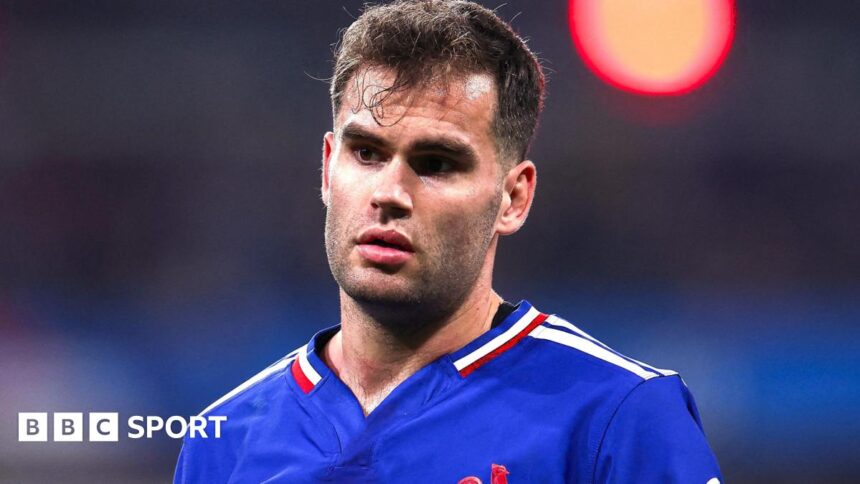
The French Rugby Federation’s team announcement is typically a moment of celebration and anticipation. This year, it delivered a seismic shock. In a decision that has sent tremors through the rugby world, France’s all-time top try-scorer Damian Penaud has been left out of Fabien Galthié’s squad for the upcoming Six Nations championship. The omission of the prolific wing, a cornerstone of France’s recent renaissance and defending champions, is a bold, brutal statement of intent ahead of a titanic opening clash against Ireland in Marseille on February 5th.
Penaud, with 40 tries in 59 caps, is not just a finisher; he is an icon. His signature swerve, intuitive support lines, and uncanny ability to find the try line have made him a global superstar. As recently as November, he was scoring against the mighty Springboks. Yet, the selectors’ axe has fallen, prioritizing current form and defensive solidity over a legendary reputation. This is more than a squad rotation; it is a paradigm shift for Les Bleus.
The Numbers Game: A Dip in the Deadly Strike Rate
To understand the decision, one must look beyond the iconic status and examine the cold, hard data. Penaud’s try-scoring prowess, while still impressive by mortal standards, has seen a noticeable decline this season. For club Bordeaux-Bègles and country, he has crossed the line eight times in 16 matches. Contrast this with his staggering 2024-25 season, where he dotted down 27 times in just 26 appearances—a strike rate bordering on the supernatural. The drop-off is significant.
In the high-stakes environment of international rugby, where chances are scarce and ruthlessness is paramount, a winger’s primary currency is tries. The French coaching staff, led by Galthié and defence guru Shaun Edwards, have clearly decided that Penaud’s current output does not warrant an automatic starting jersey. In a tournament as compressed and brutal as the Six Nations, every selection must be justified by week-in, week-out form, not past glories.
The Defensive Question: A Liability Edwards Could Not Ignore
While the try-scoring dip is a concern, the more damning evidence likely stems from the other side of the ball. Shaun Edwards’ defensive system is built on an uncompromising foundation of structure, discipline, and relentless aggression. Every player is a defender first. Penaud’s defensive frailties, long considered the trade-off for his attacking genius, have come under intense scrutiny.
A pivotal moment came in Bordeaux’s recent Champions Cup victory over Northampton Saints. A straightforward kick ahead by Henry Pollock caused Penaud to hesitate and falter, leading directly to a Saints try. For Edwards, such a lapse in fundamentals is a cardinal sin. In the cauldron of the Six Nations, against orchestrators like Ireland’s Johnny Sexton or Scotland’s Finn Russell, such weaknesses are targeted and exploited mercilessly.
- Positional Awareness: Penaud has occasionally been caught out of position in the defensive line.
- High Ball Vulnerability: Contesting aerial bombs has never been his strongest suit.
- One-on-One Tackling: In the wide channels, his technique can be inconsistent under pressure.
With a championship on the line and a World Cup cycle beginning, the French hierarchy has decided it can no longer carry a defensive liability, regardless of his attacking pedigree.
Galthié’s Gambit: Tactical Evolution or Ruthless Rebuild?
This decision is a monumental gamble for Fabien Galthié. Is this a short-term wake-up call designed to galvanize Penaud, or the first step in a broader tactical evolution for Les Bleus? The options to fill the void are tantalizing but untested at this level. The explosive Louis Bielle-Biarrey is a shoo-in on one wing. The other spot becomes a fierce contest between the powerful Yoram Moefana, the versatile Matthis Lebel, or the raw talent of newcomer Théo Attissogbe.
This shift could signal a move towards a more defensively robust, physically dominant back three, aligning with the “power rugby” trend dominating the global game. Without Penaud’s instinctive roaming, France may adopt a more structured, phase-building approach, trusting their formidable pack to lay a platform for less flamboyant but more reliable finishers.
The message to the squad is unequivocal: no one’s place is safe. Complacency, the great enemy of defending champions, has been publicly beheaded. This move asserts that the collective system, built over four years, is bigger than any individual—even a record-breaking one.
Six Nations Fallout and the Road to 2027
The immediate fallout will be measured in the Stade de France and Aviva Stadium. How will France’s attack function without its most potent weapon? More pressingly, how will Penaud respond? This rejection could either break his spirit or forge an even hungrier, more complete player. History is littered with greats who used omission as fuel for a legendary comeback.
For the Six Nations 2024, this adds a compelling subplot to an already blockbuster tournament. Ireland, England, and others will now be dissecting a new-look French backline. The opening match against Ireland has been transformed from a showdown into a referendum on Galthié’s selection policy. A win will vindicate his ruthlessness; a loss, especially a narrow one, will invite endless second-guessing about the missing magic Penaud could have provided.
Looking further ahead, this decision is fundamentally about the 2027 Rugby World Cup. At 29, Penaud is not old, but the next cycle demands evolution. Galthié is making the painful, proactive decisions now to build a squad that can peak in Australia. He is challenging a superstar to either adapt and reclaim his throne or make way for the next generation.
Conclusion: The Uncomfortable Price of Progress
The omission of Damian Penaud is a stark reminder that in the relentless pursuit of excellence, sentimentality has no place. It is a brutal, high-risk strategy that underscores the professional coldness at the heart of modern elite sport. France has voluntarily disarmed one of world rugby’s most devastating weapons in the name of structural integrity and long-term planning.
Whether this is remembered as a masterstroke or a monumental misstep will be decided by the results over the coming weeks. One thing is certain: the defending champions have entered the Six Nations battlefield not with a familiar war cry, but with a stunning declaration of change. The spotlight is no longer just on the field; it burns brightly on the man left in the shadows, and on the coach brave enough to put him there. The championship, and perhaps the future of French rugby, hinges on this call.
Source: Based on news from BBC Sport.