FA Cup Magic Prevails: Controversial Women’s FA Cup Revamp Shelved After Fan Fury
The Women’s FA Cup, a competition steeped in history and famous for its giant-killing drama, will retain its cherished, unpredictable format for at least another season. In a significant victory for tradition and fan power, The Football Association has paused a controversial overhaul of the tournament after widespread criticism branded the plans a “ridiculous idea” that threatened the soul of the game. The decision follows a fierce backlash from supporters’ groups and players alike, who argued the proposed changes prioritized commercial interests over the competition’s fundamental magic.
The Proposed “Pathway to Wembley”: A Blueprint for Backlash
The now-shelved proposals, first revealed by The Guardian, represented the most radical restructuring of the Women’s FA Cup in decades. The core changes were designed to engineer blockbuster late-stage matches but would have fundamentally altered the competition’s DNA.
The key elements of the plan included:
- Seeding the Top Four: The previous season’s top four WSL teams would be seeded and kept apart until the semi-finals.
- Pre-Determined “Pathways”: From the last 32 onwards, the draw would be abolished. Instead, teams would be placed on a fixed bracket, mapping a pre-ordained “pathway to Wembley.”
- Guaranteed Big Clashes: This structure was explicitly designed to ensure the biggest clubs could not meet early, theoretically creating “high-quality” fixtures in later rounds.
The FA argued this model would “strengthen commercial potential” and provide narrative clarity for broadcasters and new fans. However, to the footballing traditionalist, it sounded the death knell for the random, romantic draw that makes cup football unique.
Fan Fury and the Defence of Football’s “Magic”
The reaction from the sport’s core stakeholders was swift and damning. Official supporters’ clubs from across the women’s football pyramid led the charge, issuing powerful statements that cut to the heart of the issue. They argued the changes would irrevocably damage the competition’s appeal by removing its core ingredient: uncertainty.
“It ruins the magic of the cup,” became the unifying cry. The pre-determined bracket was seen as a sterile, American-style playoff system, alien to English football’s cup heritage. Critics pointed out that the biggest clubs “only get richer” under such a protected model, entrenching the financial elite by guaranteeing them deeper runs and more revenue, while smaller clubs lost their shot at a lucrative, dream draw against a giant.
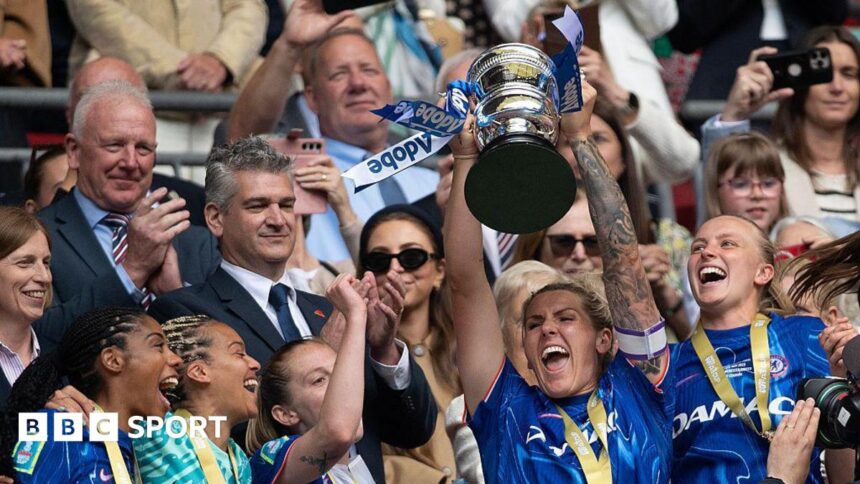
The sentiment resonated powerfully because the Women’s FA Cup has recently been a showcase for growth and drama. Last season, Chelsea, captained by the formidable Millie Bright, lifted the trophy in a thrilling final, but their path, like all winners, was defined by the luck of the draw. The prospect of replacing that authentic tension with a manufactured schedule proved universally unpopular. The phrase “ridiculous idea,” echoed by fans and pundits, captured the visceral rejection of a move perceived as overly corporate and out of touch.
Expert Analysis: A Short-Sighted Vision for Long-Term Growth
From a strategic perspective, the FA’s retreat is a masterclass in listening to your audience. While the desire to boost commercial revenue is understandable in a rapidly growing sport, the proposed method risked killing the goose that lays the golden eggs. The unique selling point of cup football is its egalitarian chaos—the possibility that a part-time, lower-league side can draw a reigning champion and create a story for the ages.
“The FA fundamentally misjudged the emotional connection fans have with the competition’s format,” says Dr. Sarah Thompson, a sports sociologist specializing in football culture. “They saw an opportunity to package and sanitize the product for television, but they failed to realize that the unscripted drama *is* the product. The magic isn’t just a marketing slogan; it’s the tangible excitement of the draw, the shared anticipation, and the pure sporting meritocracy that allows for true Cinderella stories.”
Furthermore, the plan exposed a tension at the heart of the women’s game’s expansion. As the WSL becomes more professionalized and competitive, there’s a pressure to maximize returns. However, this cannot come at the expense of the broader ecosystem. The Women’s FA Cup is a vital financial lifeline and profile-booster for clubs outside the WSL. A guaranteed pathway for the top sides would have further concentrated wealth and attention, potentially stunting the development of the very pyramid that feeds the top flight.
The Future of the Cup: Predictions and a Crossroads for the FA
This pause is a victory, but the battle over the competition’s soul is likely not over. The commercial and scheduling pressures that prompted the initial review remain. So, what happens next?
First, expect a period of genuine consultation. The FA has been forced back to the drawing board and must now engage meaningfully with fans, clubs, and players to find a consensus. The challenge will be to enhance commercial appeal without sacrificing sporting integrity.
Potential compromises could include:
- Later Seeding: Introducing seeding only from the quarter-final stage, rather than the last 32.
- Enhanced Revenue Sharing: A more equitable distribution of broadcast and gate income from the latter rounds to support lower-league clubs.
- Protected Draw Integrity: Keeping the open draw but potentially staging the semi-final draw at Wembley to build narrative.
The FA’s next move will be highly revealing. It can either seek a more collaborative, evolutionary approach to growth, or it may repackage similar ideas in the future. The ferocity of this backlash, however, has set a powerful precedent. The women’s football community has demonstrated it is fiercely protective of its traditions and will not accept changes that prioritize a narrow, short-term commercial vision over the health and romance of the entire sport.
Conclusion: A Win for the Heart of the Game
The shelving of the Women’s FA Cup revamp is more than a bureaucratic delay; it is a reaffirmation of the values that make football beloved. It is a testament to the growing influence of organized fan groups in the women’s game and a clear message to administrators: growth cannot be engineered at the expense of soul. The competition that saw Millie Bright captain Chelsea to glory will, for now, remain the same unpredictable, thrilling tournament where any team, on any given day, can dream of Wembley. The magic of the cup survives, not as a quaint relic, but as the essential, beating heart of the game’s future. The FA would do well to remember that the most valuable asset in sports isn’t a predictable bracket—it’s genuine, unscripted passion.
Source: Based on news from BBC Sport.