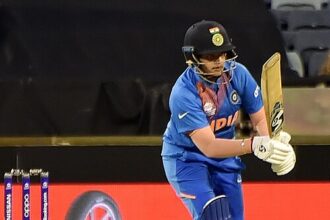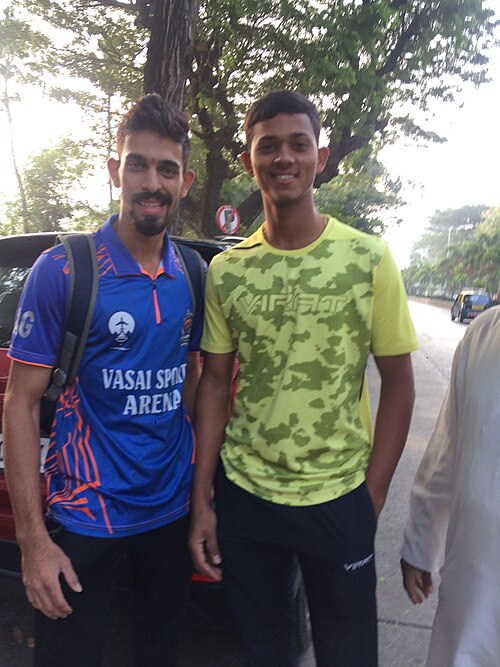
Yashasvi Jaiswal, Shafali Verma Served First Missed Test Notices: NADA Whereabouts Rule Could Spell Disaster for Indian Cricket
In a development that has sent shockwaves through the Indian cricketing ecosystem, two of the nation’s brightest young stars—Yashasvi Jaiswal and Shafali Verma—have been formally served their first “missed test” notices by the National Anti-Doping Agency (NADA). Sources confirmed to India Today that the notices were issued under the stringent whereabouts failure rule, a regulation that carries the potential for a two-year ban if three such lapses occur within a 12-month window.
This is not a minor administrative hiccup. For athletes in NADA’s Registered Testing Pool (RTP), a missed test is a serious breach of protocol. The Board of Control for Cricket in India (BCCI) has been informed, and both players have been given a chance to explain their absence. But the clock is now ticking. With the first strike officially on the board, Jaiswal and Verma are walking a tightrope that could derail careers that many believed were destined for greatness.
The Whereabouts Rule: Why a Missed Test is a Red Flag
To understand the gravity of this situation, one must first grasp the mechanics of NADA’s whereabouts program. Athletes in the RTP are required to submit a quarterly filing of their exact location for a 60-minute daily window. During that window, a Doping Control Officer (DCO) can arrive without prior notice to collect a blood or urine sample. If the athlete is not present at the declared location, it is logged as a missed test.
According to the notices obtained by sources:
- Yashasvi Jaiswal was scheduled for a dope test on December 17 last year. The DCO arrived at his declared location but found him absent.
- Shafali Verma’s scheduled test was on November 7. She was also not present at the location she had declared to NADA.
Both incidents now constitute the first recorded whereabouts failures for these cricketers. While a single missed test does not trigger an immediate ban, the three-strike rule is unforgiving. Three missed tests—or a combination of three missed tests and filing failures—within 12 months can result in a suspension of up to two years. For athletes competing at the highest level, that is a career-altering penalty.
Expert analysis: “This is a wake-up call for Indian cricket,” says former anti-doping official Dr. Rajesh Menon. “The BCCI has generally been proactive about educating players, but the onus is on the athlete. You cannot afford to be casual about your whereabouts. A second or third strike will not be treated lightly by NADA or the World Anti-Doping Agency (WADA).”
Why Yashasvi Jaiswal and Shafali Verma Are Under the Microscope
Both players are not just any cricketers. Yashasvi Jaiswal, the explosive left-handed opener, has already cemented his place in India’s Test and T20I squads. His meteoric rise—from a tent-dwelling street cricketer to a double-centurion in Test cricket—has made him a symbol of resilience. Shafali Verma, meanwhile, is the face of women’s cricket’s aggressive revolution. Her power-hitting and fearless approach have drawn comparisons to the greats of the game.
Being in NADA’s RTP means they are subject to out-of-competition testing at any time. This is standard for elite athletes, but the responsibility is immense. The missed tests raise uncomfortable questions:
- Was it a logistical error? Both players are constantly traveling for domestic and international fixtures. A simple miscommunication about hotel rooms or training venues could be the culprit.
- Was it negligence? The BCCI has a dedicated anti-doping education program. If the players failed to update their whereabouts on the ADAMS (Anti-Doping Administration and Management System) system, that is a filing failure—equally dangerous under the rules.
- Could there be a deeper issue? While there is no evidence of doping, a missed test always invites suspicion. NADA will scrutinize the explanations carefully.
Prediction: The BCCI will likely issue a statement of support, emphasizing that these are first-time oversights. However, the governing body cannot shield the players indefinitely. If a second missed test occurs, expect a public relations crisis and possible sanctions from the International Cricket Council (ICC), which aligns with WADA codes.
The Broader Impact on Indian Cricket’s Anti-Doping Culture
This incident is not occurring in a vacuum. Indian cricket has historically enjoyed a relatively clean reputation regarding doping, but the whereabouts rule has tripped up other sports. In 2019, wrestler Narsingh Yadav faced a four-year ban for a missed test. More recently, track athlete Dutee Chand was handed a four-year suspension for whereabouts failures.
Cricket, however, has been somewhat insulated—until now. The notices to Jaiswal and Verma signal that NADA is becoming more aggressive in enforcing the rules. The BCCI, as a signatory to the WADA Code, cannot afford to appear lenient.
Expert analysis: “This is a test of the BCCI’s compliance,” says sports lawyer Ananya Kapoor. “If the BCCI tries to sweep this under the rug, it could face penalties from WADA. The players must be held accountable, but the system also needs to ensure that athletes are properly trained. The first notice is a yellow card. The second and third are red cards.”
The timing is also critical. With the 2025 ICC Champions Trophy and the 2026 Commonwealth Games on the horizon, both players are expected to be central figures. A two-year ban would not only rob Indian cricket of two generational talents but also damage the sport’s global credibility.
What Happens Next: The Road Ahead for Jaiswal and Verma
Both players have been given a formal opportunity to explain their absence. According to NADA protocol, they must provide a written explanation within a specified timeframe. If the explanation is deemed reasonable—such as a last-minute change in team schedule or a medical emergency—the missed test may be overturned. If not, it will stand as the first strike.
Here is what the next steps look like:
- Step 1: Submit a detailed explanation to NADA, with supporting evidence (e.g., travel itineraries, team schedules, hotel records).
- Step 2: NADA reviews the explanation and either accepts or rejects it. If rejected, the missed test is recorded.
- Step 3: Both players must immediately ensure their whereabouts are updated daily. Any further lapse within the 12-month rolling window will escalate the risk.
- Step 4: The BCCI is expected to conduct internal counseling sessions and possibly assign a compliance officer to monitor their filings.
Prediction: I expect both players to be exonerated for this first notice, given the lack of any prior record and the possibility of administrative errors. However, the BCCI will likely impose stricter internal monitoring. The real test will come in the next six months. If either player receives a second notice, the narrative will shift from “oversight” to “recklessness.”
Conclusion: A Stark Reminder for Every Indian Athlete
The missed test notices served to Yashasvi Jaiswal and Shafali Verma are more than just a bureaucratic footnote. They are a stark reminder that in the world of elite sport, compliance is non-negotiable. The whereabouts rule exists to ensure a level playing field, and no amount of talent or fan support can override the rules.
For Jaiswal and Verma, this is a moment of reckoning. They have been handed a lifeline—a chance to correct course before the stakes become catastrophic. The BCCI, too, must step up its education and monitoring systems. Indian cricket cannot afford to lose its brightest stars to a paperwork error.
As the dust settles, one thing is clear: the era of casual compliance is over. Every cricketer in the RTP must now treat their whereabouts with the same seriousness as their batting or bowling. The next 12 months will determine whether this is a minor blip or the beginning of a crisis.
Final thought: The ball is now in the court of Jaiswal, Verma, and the BCCI. A single missed test is forgivable. A pattern is not. The world is watching.
Source: Based on news from India Today Sport.
Image: CC licensed via commons.wikimedia.org