Yaxel Lendeborg’s Halftime Honesty: A Star’s Self-Critique in the Championship Crucible
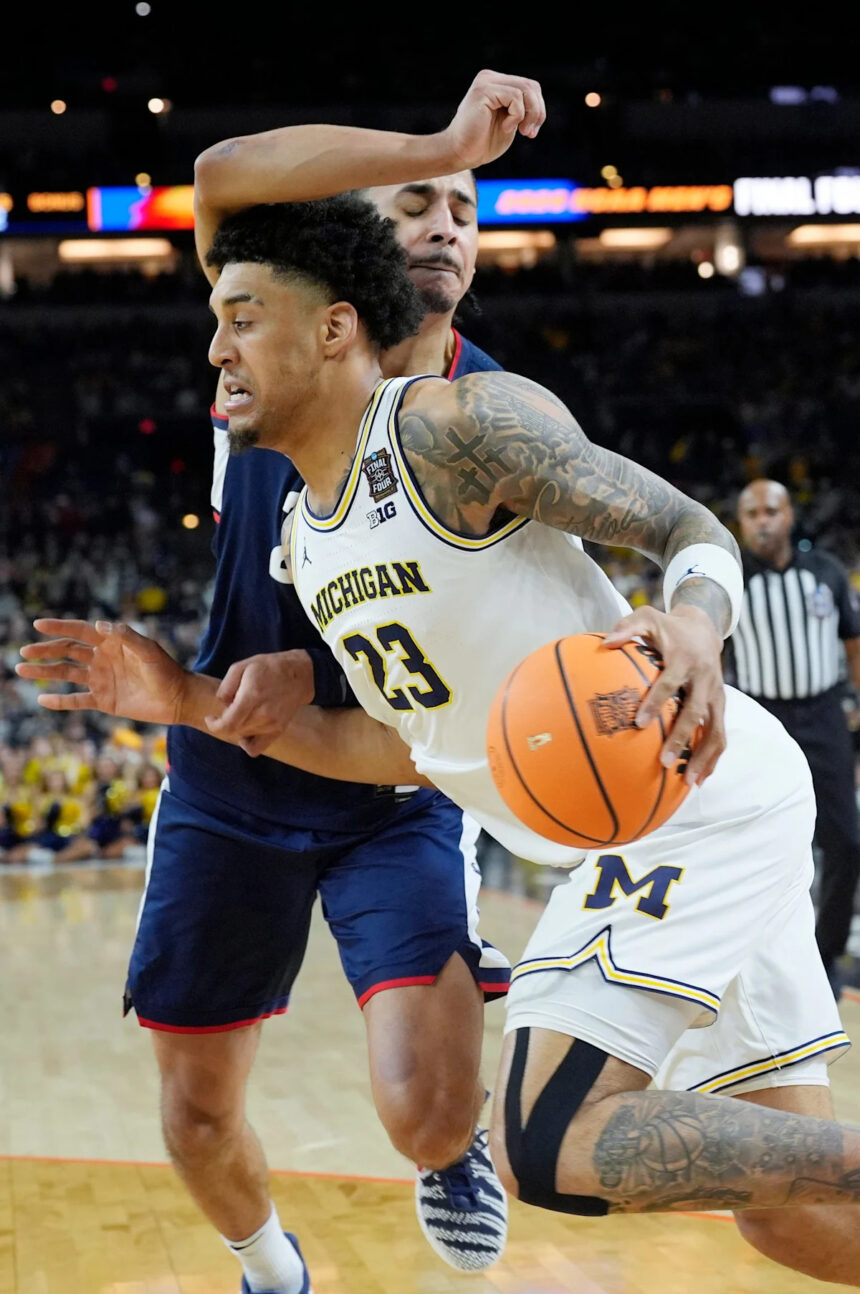
The confetti was still hours away, the trophy a distant dream, but in the bowels of State Farm Stadium, a different kind of championship moment was unfolding. The Michigan Wolverines, massive underdogs, had done the unthinkable: they led the juggernaut UConn Huskies at halftime of the national title game. The atmosphere was electric with possibility. Yet, when TBS sideline reporter Tracy Wolfson caught up with Michigan’s anchor, big man Yaxel Lendeborg, she didn’t get the triumphant soundbite she might have expected. Instead, she got a stunning, raw, and brutally honest self-indictment that cut through the noise of the biggest game in college basketball.
- A Moment of Unfiltered Accountability on the Grandest Stage
- Deconstructing the “Soft” First Half: What Went Wrong?
- The Leadership and Psychological Impact of Public Self-Criticism
- Second Half Predictions and Lasting Legacy of the Moment
- Conclusion: More Than a Soundbite – A Lesson in Competitor’s Integrity
A Moment of Unfiltered Accountability on the Grandest Stage
With millions watching, Lendeborg didn’t bask in the lead. He torched his own performance. “I feel awful,” he told Wolfson. “I missed the plays I don’t usually miss, I had many opportunities to take advantage of a smaller defender, haven’t been able to do it. I played really soft in that first half and I’m gonna do way better in the second half.”
This wasn’t coach-speak or cliché. This was a star player, in real-time, diagnosing his own failure with surgical precision. The stat sheet backed his frustration: 4 points on 1-for-5 shooting, and most glaringly for a player of his caliber, zero rebounds in 20 minutes of action. He and UConn’s Alex Karaban were the only players to go the entire half, yet his imprint on the game was faint. In a media landscape often filled with platitudes, Lendeborg’s candor was a thunderclap of athlete accountability.
Deconstructing the “Soft” First Half: What Went Wrong?
Lendeborg’s self-critique, while harsh, pointed to specific, correctable issues. His admission of missing usual plays and failing to exploit smaller defenders hinted at a disruption in his typical physical and mental rhythm.
- UConn’s Defensive Physicality: The Huskies, renowned for their defensive discipline, likely brought early double-teams or disruptive digs, preventing Lendeborg from establishing deep post position. His “soft” comment suggests they were the first to deliver the game’s physical tone.
- The Weight of the Moment: Even for veterans, the national championship stage can cause atypical tension. Missed bunnies and uncharacteristic mistakes often stem from adrenaline overriding fine motor skills. Lendeborg’s all-minutes load may have also led to early fatigue, affecting his lift and touch.
- The Statistical Anomaly: Zero rebounds for a premier big man is a red flag. It indicated he was being boxed out effectively, was out of position, or was overly focused on offensive struggles, breaking his fundamental concentration. His two fouls may have also made him tentative.
His performance was a paradox: maximum effort (20 minutes played) yielding minimal traditional statistical impact. This disconnect clearly fueled his frustration.
The Leadership and Psychological Impact of Public Self-Criticism
Lendeborg’s interview was more than a player being hard on himself; it was a masterclass in locker room leadership. By publicly owning his poor half, he accomplished several crucial things before even reaching the locker room.
First, he protected his teammates. With Michigan leading, the narrative could have been about others stepping up in his stead. By spotlighting his own flaws, he shielded his teammates from any potential “carrying” narrative and kept the focus on collective improvement.
Second, he set a standard of accountability. If the team’s best player is that transparent about his need to improve, no other player can shirk responsibility. It raises the bar for everyone.
Third, he managed external expectations. He effectively told the world, “We’re ahead, but you haven’t seen our best.” This applies subtle pressure to UConn while giving his team a clear, tangible blueprint for second-half success: get me the ball, and I will be better.
Psychologically, this public vow can be a powerful motivator. It creates a point of no return for his own effort level. As sports psychologists note, public commitment increases the drive to follow through.
Second Half Predictions and Lasting Legacy of the Moment
So, what did this mean for the second half? Lendeborg’s proclamation set the stage for a dramatic personal and team storyline.
- A Aggression Surge: We predicted an immediate effort to establish post presence, demand the ball, and attack the offensive glass with vengeance to erase the zero-rebound stat.
- Strategic Adjustments: Michigan’s coaches would likely design a few early sets to get Lendeborg an easy bucket—a rim-run, a duck-in—to build his confidence and validate his physicality.
- The UConn Counter: Dan Hurley’s Huskies are champions for a reason. Expecting a Lendeborg surge, they would likely have prepared even more physical counters, hard shows, and attempted to draw a critical third foul on him early.
Ultimately, the game’s outcome would hinge on whether Lendeborg’s actions could match his words. Could he transform halftime honesty into second-half dominance? Regardless of the final score, his interview instantly became an iconic moment in championship broadcasting history.
Conclusion: More Than a Soundbite – A Lesson in Competitor’s Integrity
Yaxel Lendeborg’s halftime interview transcended basketball strategy. In an era of curated images and safe media training, his unfiltered self-critique was a refreshing testament to competitor’s integrity. It revealed a player so invested in winning that his personal pride was secondary to the team’s mission. He understood that a lead built despite his struggles was fragile, and he took the immense pressure of fixing it squarely onto his own shoulders.
This moment will be remembered not just for the stat line it described, but for the character it displayed. It was a powerful reminder that true leadership isn’t about boasting during highs, but about fearless accountability in the midst of personal struggle. Whether Michigan completed the upset or not, Lendeborg provided a masterclass in maturity, setting a standard for athlete accountability that resonates far beyond the final buzzer of any championship game. His words weren’t an admission of defeat; they were a battle cry born from personal disappointment, a vow to be better that defined what it means to compete at the highest level.
Source: Based on news from Yahoo Sports.