Michael Carrick’s Interim Reign: A Calculated Stopgap or a Bridge to United’s Future?
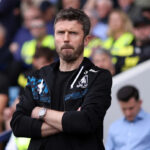
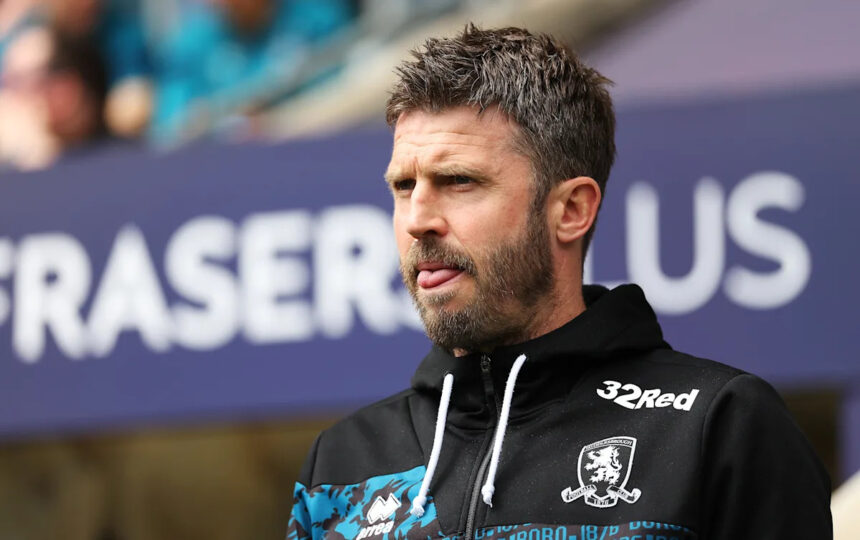
The managerial carousel at Old Trafford has taken another dramatic, if somewhat predictable, turn. Following a whirlwind of speculation, Manchester United has reached an agreement in principle with Michael Carrick to assume first-team duties until the end of the season, as first reported by David Ornstein of The Athletic. The deal, pending final contractual formalities, positions the former midfield metronome as the club’s latest interim solution. This isn’t a long-term vision unveiled; it’s a pragmatic fire blanket deployed over a simmering crisis. But in appointing Carrick, United have chosen a familiar face over a foreign firefighter, betting that stability and club DNA can steady a ship that has been listing badly.
From Caretaker to Interim: Carrick’s Unfinished Business
For Michael Carrick, this represents a poignant full-circle moment. His previous stint as caretaker manager in 2021, following Ole Gunnar Solskjaer’s dismissal, was a brief but intriguing audition. He steadied the team with a crucial away win at Villarreal and a draw at Chelsea, showcasing a tactical nous that moved away from his predecessor’s patterns. His decision to drop Bruno Fernandes for that Chelsea game sent a clear message: no player was undroppable. He then gracefully stepped aside for Ralf Rangnick’s ill-fated interim spell, his loyalty never in question.
Now, he returns to a far more pressurized and complex scenario. The key facts of this agreement are telling:
- Short-Term Mandate: The deal is explicitly for the remainder of the season, a clear stopgap measure.
- Immediate Availability: He is available to take charge immediately, negating any disruptive transition.
- In-Principle Status: The preliminary agreement underscores the speed of the negotiation, a move born of necessity.
This is not a romantic “prodigal son returns” narrative. It is a cold, calculated move by a hierarchy buying time to secure their primary long-term target, widely believed to be England manager Gareth Southgate. Carrick’s appointment is the definition of a safe pair of hands.
Expert Analysis: The Pros and Cons of the Carrick Compromise
From a footballing perspective, Carrick’s interim tenure presents a fascinating mix of potential upside and inherent risk. His deep understanding of the club’s culture and current squad is his greatest asset. He commands respect in the dressing room not through past glory alone, but through a reputation for intelligent, calm leadership. He speaks the “United way” fluently, which could help reconnect a disenchanted fanbase with the team.
Tactically, Carrick is an unknown quantity over a longer period. His brief stint hinted at a more structured, possession-based approach than seen under Solskjaer, influenced undoubtedly by his time under Jose Mourinho and his own reading of the game. The pressing question is whether he can impose a coherent system on a squad riddled with confidence issues and tactical indiscipline.
The major challenge will be authority. As a former teammate of some and a recent coach to all, the dynamic must shift from colleague to commander. Can he make the tough selection calls, particularly regarding underperforming stars? His handling of Fernandes in 2021 suggests he can, but a one-off game is different from a multi-month campaign with top-four hopes and an FA Cup run on the line.
Furthermore, the very nature of an interim appointment can be limiting. Players, especially those with uncertain futures, may be less responsive to a manager who holds no sway over their long-term prospects at the club.
Predictions: Navigating the Storm to a Summer Overhaul
What can we realistically expect from the Carrick Interregnum? The primary objective for the board is clear: secure Champions League qualification. Failure to do so would be a financial and reputational disaster, complicating their summer rebuild. Carrick’s job is to salvage a top-four finish from a precarious position.
We predict a period of initial stabilization. Look for Carrick to:
- Simplify tactics to build confidence, likely reverting to a more familiar 4-2-3-1 or 4-3-3.
- Re-integrate key figures like Luke Shaw and Lisandro Martínez to solidify a leaky defense.
- Manage egos by offering clean slates while demanding basic defensive accountability from all.
The fixture list will be his ultimate judge. A kind run could see momentum build; a brutal stretch could expose the same old flaws. His success will not be measured in trophies, but in points per game and the restoration of a basic competitive standard. His tenure will be deemed a success if he hands over a functional, unified squad to a permanent successor in May, rather than the fractured group he inherits today.
Conclusion: A Necessary Pause, Not a Panacea
Manchester United’s agreement with Michael Carrick is a classic case of club pragmatism. It is an admission that the preferred path was not yet available, and that further radical experiment or external gamble was too risky. In choosing Carrick, they have opted for continuity, familiarity, and a man who embodies a calmer, more thoughtful era at the club.
However, let’s be clear: this is a stopgap solution, not a visionary appointment. It addresses the immediate symptom—the dugout vacancy—but does little to treat the chronic disease of structural dysfunction above the manager. Carrick’s task is to be a competent custodian, a steadying bridge between the chaos of the present and the hoped-for clarity of the summer.
The true significance of this move will be determined by what follows. If Carrick stabilizes the season and the club then executes a decisive, visionary appointment and transfer window, his interim spell will be remembered as a vital, quiet period of healing. If he is merely the prelude to another cycle of indecision, then this will be another chapter in United’s era of prolonged uncertainty. For now, the Carrick era, part two, begins not with a booming fanfare, but with a collective, hopeful sigh that he can simply stop the noise.
Source: Based on news from Yahoo Sports.