Beyond the Podium: Why Lando Norris and Luke Littler’s SPOTY Absence Speaks Volumes
The red carpet at the BBC Sports Personality of the Year ceremony in Salford was a glittering tribute to a year of British sporting excellence. Yet, amidst the celebration, two notable chairs remained empty. Lando Norris, the freshly crowned Formula 1 World Champion, and Luke Littler, the teenage darts sensation and reigning world champion, were conspicuous by their absence from the six-athlete shortlist. Their no-shows weren’t a snub, but rather a telling reflection of the modern athlete’s relentless schedule and a shifting perspective on what such accolades mean in the heat of a career’s prime.
The Champion’s Escape: Lando Norris and the Need for Normalcy
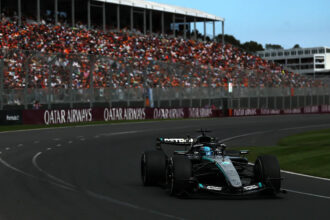
Less than two weeks after the seismic high of clinching his maiden F1 title in Abu Dhabi, Lando Norris was expected to trade his racing suit for black tie. Instead, the McLaren driver issued a gracious apology, revealing he was on a pre-planned skiing holiday. For Norris, this wasn’t a slight against the prestigious award but a vital act of self-preservation.
The F1 Drivers’ Championship is a gruelling, ten-month global odyssey of relentless pressure, scrutiny, and travel. The moment the chequered flag falls in Abu Dhabi, a valve releases. The off-season is not just a holiday; it’s a mandatory mental reset, a fleeting window to reconnect with a life put on hold. Norris’s choice to ski signifies a champion prioritizing his well-being and savoring a rare moment of private celebration with those closest to him. It underscores a fundamental truth: for the athlete in the arena, the ultimate reward is the title itself. The trophies and awards that follow are honors, but the catharsis comes in the immediate, personal aftermath of achievement.
His attendance, while missed, was hardly needed to cement his status. His achievement—beating Max Verstappen in a titanic season-long duel—echoed far louder than any awards show applause. His absence spoke of a new generation of athletes who are fiercely protective of their downtime, understanding that longevity at the pinnacle requires such guarded breaks.
The Prodigy’s Focus: Luke Littler’s Alley-Oop Priority
If Norris’s absence was about recovery, Luke Littler’s was purely about business. The 18-year-old, who finished second in SPOTY last year after his fairytale run to the World Darts Championship final, was characteristically blunt about his decision. He did not believe he was in contention for the top prize and, more importantly, had a crown to defend.
Littler’s reasoning highlights the intense, singular mindset of a champion. His world revolves around the oche at Alexandra Palace, where he is the reigning king. The World Darts Championship is a physically and mentally draining marathon played in a raucous, pressure-cooker atmosphere over the Christmas period. For Littler, attending an awards ceremony in Salford in the middle of his title defence was an unnecessary logistical and psychological diversion.
- Competitive Rhythm: The darting calendar offers no true off-season. Staying in the competitive “zone” is paramount.
- Minimizing Distraction: At 18, managing global fame is a new challenge. Littler and his team are wisely controlling his external commitments.
- Proving a Point: His statement, “No, I’m not going to it,” after his first-round win was a powerful declaration of priority. His sport, and his title, come first.
Littler’s absence wasn’t dismissive; it was professional. It signaled a maturity beyond his years, understanding that for a reigning champion, the most important personality trait to display is an unflinching focus on the next challenge.
A Changing Landscape: What SPOTY Means in the Modern Era
The coordinated absence of two of Britain’s biggest sports stars invites a broader analysis of the BBC Sports Personality of the Year award’s place in the contemporary sporting ecosystem. The ceremony remains a cherished national institution, but its gravitational pull is evolving.
Today’s elite athletes operate in a global, year-round media landscape. Their connection with fans is direct and constant via social media, behind-the-scenes content, and dedicated streaming services. The need for a single, annual televised moment to celebrate their personality is diminished. Fans have already shared in Norris’s championship heartbreak and triumph through Netflix’s ‘Drive to Survive’ and his own channels. They follow Littler’s every dart on dedicated sports platforms.
Furthermore, the sheer density of the sporting calendar creates inevitable clashes. SPOTY is held in December, a month packed with premier events like the darts world championship, crucial football fixtures, and rugby internationals. For an in-competition athlete, the choice is often clear: performance over presentation.
The attendees—Rory McIlroy, Chloe Kelly, Hannah Hampton, and Ellie Kildunne—rightfully enjoyed their moment in the spotlight. Their presence honored the tradition. But Norris and Littler, in their own ways, represented another, equally valid reality: that an athlete’s primary commitment is to their craft, sometimes at the expense of the ancillary celebrations.
Looking Ahead: The Future of Celebration and Commitment
So, what does this mean for the future? It would be premature to suggest SPOTY is losing relevance. However, it may need to increasingly accommodate the realities of modern sport. We may see more winners accepting awards remotely from training camps or competition venues, a practice that has become normalized in other global awards. The definition of “personality” is also expanding—it’s no longer just about charisma on a stage, but the compelling narrative of an athlete’s entire journey, much of which is now documented in real-time.
Predictions for future ceremonies must account for this shift. Athletes in the heart of seasonal competition, like Premier League footballers in a tight title race or a boxer in a fight camp, may follow Littler’s precedent. Those, like Norris, who achieve a lifelong dream in an exhausting campaign, will increasingly guard their immediate off-season. The award’s prestige remains, but its claim on an athlete’s time is no longer absolute.
The absence of Lando Norris and Luke Littler from the SPOTY ceremony was not a story of disrespect, but one of dedication. It was a masterclass in priority. Norris demonstrated that even a world champion needs to disconnect to recharge, to find the normalcy that fuels future greatness. Littler showcased the tunnel vision required to stay at the top, where defending a title trumps collecting an award. Their empty chairs spoke louder than any acceptance speech could have, delivering a powerful message: for the modern elite athlete, the greatest honor is not just winning, but having the clarity and courage to do what is necessary to win again. The podium at SPOTY celebrates the past; their choices were investments in the future.
Source: Based on news from Yahoo Sports.