No VAR Error on Wirtz’s Leveler: Key Match Incidents Panel Backs Controversial Onside Call
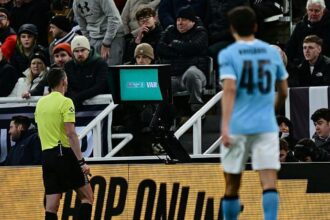
The roar at Craven Cottage was one of confusion, then fury, then resigned acceptance. Liverpool, trailing 1-0 to a dogged Fulham side, had found their equalizer through the boot of Florian Wirtz, but the assistant referee’s flag was raised high and immediate. For a moment, the goal was dead. Then, the familiar, tense silence of a VAR check descended. Minutes later, the verdict: goal awarded. The Premier League’s Key Match Incidents Panel has now reviewed the flashpoint and delivered a definitive ruling: the video assistant referee did not make a mistake. This decision, hinging on millimeters and the league’s technological tolerance, has reignited the fierce debate over football’s technological soul.
The Millimeter Margin: Dissecting the Wirtz Decision
In the 57th minute, with Liverpool probing for a breakthrough, a touch from Connor Bradley sent the ball spiraling towards Fulham’s goal. Florian Wirtz, timing his run with instinctive precision, latched onto it and finished coolly. The assistant referee, from his angled view, saw an offside. Enter VAR Andy Madley and the league’s semi-automated offside technology (SAOT).
SAOT uses a network of cameras to create a digital skeletal model of players, pinpointing the exact moment the ball is played. The system generates a single, definitive line for the last defender and the attacker. However, the Premier League incorporates a crucial, and often misunderstood, caveat: a five-centimetre tolerance. This “buffer” accounts for potential minor calibration errors in the camera system and the frame rate at which the “kick point” is identified.
Upon review, the SAOT showed Wirtz was ahead of the last defender, but by a margin smaller than that five-centimetre buffer. The key finding was this: Wirtz was aided by the thicker lines. In essence, the technology could not conclusively prove he was offside beyond its own margin of error. Therefore, the on-field decision of “offside” was deemed a clear and obvious error, and the goal was correctly given.
- The Trigger: Assistant referee’s immediate flag for offside against Wirtz.
- The Technology: VAR used Semi-Automated Offside Technology (SAOT) for calibration.
- The Margin: Wirtz’s position fell within the 5cm tolerance level built into the system.
- The Verdict: “Onside” call upheld by technology, goal awarded.
Expert Analysis: Precision vs. The Spirit of the Game
The panel’s backing of the decision is a staunch defense of the protocol, but it does little to quell the philosophical dispute. Proponents of the system argue this is offside at its most accurate. We have moved beyond the days of broadcasters drawing lines with questionable starting points. This is a calibrated, scientific process. If the technology has a known margin of error, they argue, it is correct to favor the attacker when the evidence sits within that gray area. It returns to the original “benefit of the doubt” principle, but now defined by pixels and processing power rather than an assistant’s naked eye.
However, critics see a different problem. They argue that the “thicker lines” or tolerance level creates a moving and invisible offside line. The law, as written, is binary: you are either offside or you are not. By building in a buffer, the Premier League has effectively re-written the law to say “you are only offside if you are more than 5cm offside.” This, for many, feels like an artificial adjustment that undermines the very precision SAOT was supposed to deliver. The visceral anger from defenders and fans when a goal like this stands is rooted in the feeling that a rule has been broken, even if a protocol hasn’t.
Former professional referee and now analyst, Chris Foy, stated, “The panel’s decision is consistent. The system is designed to make these ultra-tight calls definitive. The tolerance is an acknowledged part of that system. While it feels brutal for the defending team, the alternative—disallowing a goal where the technology itself says it can’t be sure—is arguably worse.”
Future Implications: Will Tolerance Survive the Scrutiny?
This incident is not an anomaly; it is a deliberate feature of the Premier League’s implementation of SAOT. As such, we can predict its consequences.
First, attacking players and coaches will increasingly play to this margin. The “lean” or the timed run that rides the very edge of the tolerance zone will become a coached skill, much like a defender holding a line. The offside trap will become a higher-stakes, millimeter-perfect game.
Second, the controversy will force a global conversation. Other competitions using SAOT, like the UEFA Champions League, do not employ this tolerance buffer. They use a single pixel line. The Premier League must now justify why its version of the truth differs from Europe’s. Pressure may mount to align globally, either by removing the tolerance or by adopting it universally.
Finally, this reinforces that VAR has not removed controversy; it has merely shifted its language. Debates about a referee’s eyesight have been replaced by debates about calibration tolerances and kick-point frames. The quest for perfect fairness continues to clash with the game’s fluid, human nature.
The Final Whistle: Technology’s Uncomfortable Truth
The Key Match Incidents Panel ruling on Florian Wirtz’s goal is a landmark moment. It draws a line in the sand, affirming that the Premier League’s offside law is now intrinsically tied to its technological margin of error. The goal was legally correct, technically sound, and protocol-perfect.
Yet, for many watching, it felt like an offside goal. This is the enduring, perhaps unsolvable, conflict. Football is a game of emotion, of instinct, of instantaneous judgment. The introduction of millimeter-precision technology, complete with its own built-in allowances, creates a cognitive dissonance for the purist. The game on the pitch and the game in the VAR hub are increasingly two different realities, interpreted through different sets of rules.
Liverpool gained a point from this decision, and the panel has spoken. But the wider conversation is far from over. The Wirtz incident is not a glitch; it is the system working as designed. The question now facing the sport is whether this design truly serves the spirit of the game, or if in seeking absolute justice, we have created a new, equally contentious form of injustice. The thicker lines are here to stay, but the divide they create may only grow wider.
Source: Based on news from BBC Sport.