Mercedes F1 Poised for Landmark $60m Per Year Partnership with Microsoft
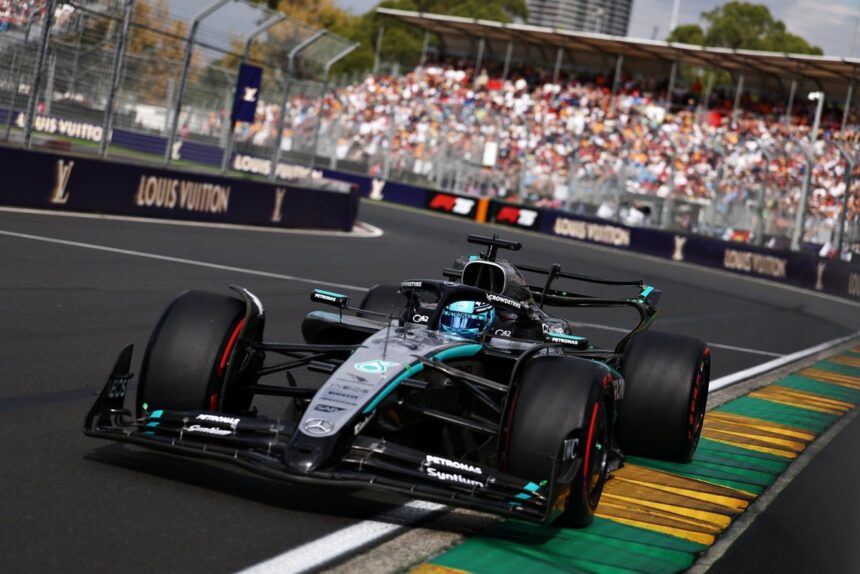
The off-season in Formula 1 is often a theater of silent, high-stakes maneuvers, where the battles for technological and financial supremacy are waged away from the track. In a move that could redefine the commercial and technical landscape of the sport, the Mercedes-AMG Petronas Formula One Team is reportedly on the cusp of announcing a monumental, multi-year partnership with technology titan Microsoft. According to an exclusive report from Sky News, the alliance, potentially valued at a staggering $60 million annually, is set to be unveiled at the team’s 2026 car launch on January 22nd, signaling a new era for the Brackley-based squad.
This anticipated collaboration is more than just another badge on an already star-studded livery. It represents a strategic masterstroke at a pivotal moment for Mercedes, following team principal Toto Wolff’s recent sale of a minority stake to CrowdStrike CEO George Kurtz—a deal that pegged the team’s valuation at an astonishing £4.6 billion. As Wolff himself noted in Las Vegas, this financial evolution proves F1 teams have become “sustainable and profitable.” The Microsoft deal, however, suggests they are aiming for something far greater: technological dominion.
A Strategic Power Play in the New F1 Era
While the exact technical contours of the partnership remain under wraps, the implications are profound. Microsoft is not merely a sponsor; it is a global leader in cloud computing (Azure), artificial intelligence, and enterprise software. Integrating these capabilities into Mercedes’ F1 operations could create an unprecedented competitive edge.
This move follows a clear pattern of aggressive commercial strategy from Mercedes. The recent partnership with PepsiCo and the strategic equity investment from CrowdStrike’s Kurtz demonstrate a team building a fortress of commercial and tech-sector alliances. Each partnership is a piece of a larger puzzle, designed to bolster resilience and capability beyond mere prize money. In the cost-cap era, where aerodynamic testing time is linked to championship position, such lucrative commercial deals provide the financial firepower to invest in infrastructure, personnel, and long-term innovation that fall outside the cap’s restrictions.
Key Strategic Drivers for the Partnership:
- Data Synthesis & AI: An F1 car generates terabytes of data every race weekend. Microsoft Azure’s cloud infrastructure and AI tools could process this data in real-time, optimizing strategy, simulating race scenarios, and accelerating car development in the digital realm.
- Advanced Simulation: The partnership could revolutionize Mercedes’ driver-in-loop (DIL) simulators, using Microsoft’s computing power to create hyper-realistic, low-latency simulation environments, a critical tool for driver training and setup work.
- Enterprise-Wide Efficiency: From supply chain logistics to marketing operations, Microsoft’s suite of productivity and business tools could streamline the entire Mercedes F1 apparatus, making a 1,500-person organization leaner and more agile.
Expert Analysis: Beyond the Badge, A Fusion of Philosophies
From a journalistic perspective, this is a partnership of profound symbolic and practical significance. Microsoft, a name synonymous with foundational software, aligning with Mercedes, a benchmark for high-performance engineering, speaks to the evolving soul of Formula 1. The sport is no longer just about mechanical grip and horsepower; it is a data war, a contest of algorithms and predictive modeling.
“The reported scale—$60m per year—places this partnership in the absolute top tier of F1 sponsorships,” notes a veteran F1 business analyst. “It’s a statement of intent from both parties. For Microsoft, it’s a global marketing platform and a live, extreme R&D lab. For Mercedes, it’s access to capabilities that could become as fundamental to car performance as their legendary power units were in the last era.”
The timing is also critical. With the 2026 technical regulations looming—featuring new engine formulas and a greater emphasis on sustainable fuels and electrical power—teams are resetting their technological baselines. Embedding a partner like Microsoft at the genesis of this new cycle allows for a deeper, more architectural integration of their tools. This isn’t a sticker added to a finished product; it’s a new component being built into the machine from the ground up.
Furthermore, Wolff’s equity move and this commercial deal are intrinsically linked. The £4.6 billion valuation was a headline-grabbing figure that underscored Mercedes F1’s status as a blue-chip asset. Announcing a partnership of this magnitude weeks later reinforces that valuation and demonstrates to investors and rivals alike that the team’s commercial momentum is accelerating, not diminishing, even after a period of on-track recalibration.
Predictions: How This Partnership Could Reshape the Grid
The ripple effects of this announcement will be felt across the paddock. First, it raises the commercial bar. Rival top teams will now look to their own partner portfolios, seeking deeper, more technologically substantive relationships rather than traditional sponsorship. The era of the “technology partner” has decisively arrived.
Second, it could catalyze a new arms race in computational fluid dynamics (CFD) and simulation. If Mercedes gains even a few tenths of a second through superior data crunching and AI-driven design, it forces every competitor to respond in kind. We may see a scramble for similar alliances with other tech giants, from Google to Amazon Web Services, further blurring the lines between Silicon Valley and Motorsport Valley.
Finally, for Mercedes, this partnership is a cornerstone of their 2026 championship blueprint. The goal is clear: to merge their unparalleled F1 engineering culture with Microsoft’s digital prowess to build not just a fast car, but an intelligent one. The battle with Red Bull, Ferrari, and the rising contenders will be fought on asphalt and in the cloud simultaneously.
Conclusion: A New Chapter for Mercedes and Formula 1
The expected announcement between Mercedes and Microsoft is far more than a financial transaction. It is a strategic fusion, a recognition that the future of winning in Formula 1 lies at the intersection of cutting-edge engineering and digital omnipotence. As Toto Wolff astutely observed, the sport has achieved sustainability and profitability. The next phase is about evolution and disruption.
When the covers come off the 2026 Mercedes on January 22nd, the world will be looking for hints of aerodynamic genius. But the most powerful innovation may be invisible—a seamless integration of cloud computing and artificial intelligence humming behind the scenes. This partnership, if confirmed, marks a definitive shift. It proves that in modern F1, the most critical development work doesn’t always happen in the wind tunnel or the workshop; increasingly, it happens in the data center. For Mercedes, securing a $60 million-per-year alliance with one of the world’s premier data center operators isn’t just good business. It’s a decisive step toward reclaiming the summit of the sport.
Source: Based on news from Yahoo Sports.