Brooks Koepka’s LIV Golf Exit: A Tipping Point or a Bump in the Road?
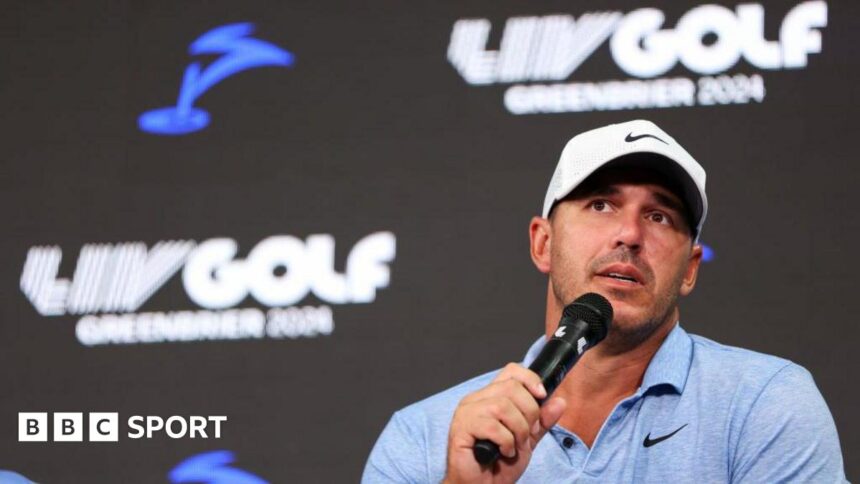
The seismic tremors that have rattled the foundations of professional golf for the past two years have settled into an uneasy, fragmented landscape. At the epicenter stands LIV Golf, the Saudi Arabia-backed disruptor that wielded billions to fracture the sport’s established order. Yet, as it prepares to launch its ambitious fifth season, a new tremor has hit: the departure of its first marquee signing. The “amicable and mutual” exit of five-time major champion Brooks Koepka back to the PGA Tour is more than a personnel change; it is a strategic inflection point that forces a critical examination of LIV’s future trajectory, its value proposition to players, and its ultimate endgame.
The Koepka Precedent: Cracking the Invincible Façade
For LIV Golf, player acquisition was its primary weapon. Signing stars like Phil Mickelson, Dustin Johnson, and Cameron Smith wasn’t just about fielding a competitive tour; it was a statement of permanence and power. Brooks Koepka, a golfer whose brand is built on cold-eyed dominance, was a cornerstone of that statement. His defection in 2022 was a massive coup, symbolizing that even the most traditional competitors could be swayed. His return to the PGA Tour, therefore, is a reciprocal symbolic blow.
LIV’s carefully crafted narrative of a player-first, revolutionary alternative now faces its first major contradiction. If the project is so revolutionary and fulfilling, why is one of its alpha predators leaving? The official “amicable” line suggests a negotiated exit, likely involving the fulfillment or restructuring of his colossal upfront contract. This reveals a critical vulnerability: LIV’s initial contracts had finite terms. As these contracts begin to expire, players are entering a new phase of calculation beyond the initial life-changing guarantees.
Patrick Reed’s immediate comment that he would “consider following suit” if offered the same terms confirms this new reality. The player loyalty LIV purchased is now up for renewal, not with sentiment, but with a fresh calculus weighing guaranteed money against competitive relevance, major preparation, and legacy.
The Forces at Play: Beyond the Checkbook
Koepka’s decision underscores the complex, often conflicting forces pulling LIV players in multiple directions. The breakaway league is no longer operating in a vacuum; it exists in a tense, evolving ecosystem with real consequences for its roster.
- Major Championship Access: This remains the ultimate currency in golf. Koepka, a major specialist, is acutely aware that his path to further history is paved through performances on the most demanding stages. While LIV secured Official World Golf Ranking (OWGR) recognition for some events, its 54-hole, no-cut format continues to hinder the awarding of crucial ranking points. Players outside the top 50 or without recent major wins face an increasingly narrow path to golf’s premier events.
- The Enduring Pull of Legacy: For elite athletes, legacy is defined by traditional benchmarks: major championship counts, PGA Tour victories, and Ryder Cup participation. The PGA Tour, for all its recent changes, remains the primary feeder and proving ground for these accolades. Koepka’s desire to reclaim a spot on the U.S. Ryder Cup team—a near impossibility from LIV—speaks volumes.
- The Evolving PGA Tour Counter-Offensive: The PGA Tour was caught flat-footed by LIV’s initial assault but has since mobilized. Its creation of designated “signature events” with elevated purses ($20 million), limited fields, and guaranteed payouts directly addresses the financial lure LIV offered. For a star like Koepka, the financial gap has narrowed significantly, while the competitive and legacy benefits of the Tour have been reinforced.
- Fan Engagement and Commercial Reality: Despite vast investment, LIV continues to grapple with establishing a mainstream broadcast footprint and consistent fan engagement beyond the spectacle of its team concept. For players, long-term commercial endorsements and sponsorship value are still largely tied to visibility on the traditional tours.
LIV’s Strategic Crossroads: Adaptation or Doubling Down?
Koepka’s exit forces LIV’s leadership, led by Greg Norman and backed by the Public Investment Fund of Saudi Arabia, into a moment of strategic reckoning. How they respond will define their next chapter.
Scenario 1: The Reload. LIV’s most straightforward path is to simply open the vault again. The departure of one star creates budget to target two new ones. The focus could shift to younger, rising talents yet to sign massive PGA Tour deals, or to other sports stars seeking a new challenge. This maintains the cycle of disruption but does not solve the underlying issues of format legitimacy and integration.
Scenario 2: The Pivot. LIV could use this moment to adapt its model. This might involve:
- Seriously negotiating pathways back to the PGA Tour for players, effectively becoming a feeder or alternative tour within a broader ecosystem, as hinted at in the ongoing framework agreement talks between the PGA Tour and PIF.
- Adjusting its format to secure OWGR points, perhaps by incorporating 72-hole events or a cut for certain tournaments, to directly address player concerns about major eligibility.
- Leaning harder into the team golf concept, making franchise ownership and competition so lucrative and compelling that it outweighs individual traditional pursuits.
Scenario 3: The Long Game. The most likely scenario is that LIV views Koepka as a manageable loss in a decades-long project. The PIF’s strategy in other sports, like football, is one of immense patience and long-term asset building. LIV may accept short-term roster churn, focusing instead on building its brand, securing more lucrative media rights, and growing its team franchises as valuable global properties, waiting for the next generation of golfers who see it as the default top tier.
Predictions: A Fractured Future and Selective Exits
The future is unlikely to see a mass exodus from LIV, nor will it see the league folding. Instead, we are entering a phase of selective, strategic movement.
More players will likely follow Koepka’s path, but they will be a specific profile: players in their competitive prime whose primary focus is adding majors, and those whose initial contracts are concluding. Aging legends like Mickelson or those who have secured lifetime commitments may stay put. Young stars like Smith, who joined at a career peak, will weigh their options carefully.
The true bellwether will be the fate of the PGA Tour-PIF framework agreement. If a finalized deal creates a clear pathway for player movement and reintegration, LIV could stabilize as a lucrative, off-season series or a true “league” within a unified golf structure. If negotiations collapse, expect LIV to reload aggressively, ensuring the cold war continues and the sport’s fracture becomes permanent.
Conclusion: A Legacy Defined by Reaction
Brooks Koepka’s exit is not a death knell for LIV Golf, but it is a profound reality check. It proves that even the deepest pockets cannot instantly buy the centuries of tradition, competitive gravity, and legacy currency embodied by the established tours. LIV successfully exposed complacency and forced a financial reckoning that has benefited all top players. However, its future is no longer about mere disruption.
The coming year will determine if LIV evolves into a sustainable, integrated part of golf’s fabric, or remains a separate, parallel universe fueled by sovereign wealth. Its legacy may ultimately be less about the stars it attracted with upfront billions, and more about how it adapts to the first major star it lost. The ball, as they say, is now in LIV’s court. How it plays the next shot—whether with stubborn power or strategic finesse—will reveal the true nature of its long-game ambition.
Source: Based on news from BBC Sport.