Sports Television Pioneer Geoffrey Mason, Architect of the Modern Broadcast, Dies at 85
The landscape of sports television as we know it—the seamless multi-camera coverage, the intimate athlete profiles, the global spectacle of the Olympic Games—was built by a small cadre of visionary producers. One of the most influential of those architects, Geoffrey Mason, has died. The Sports Broadcasting Hall of Famer, whose five-decade career shaped broadcasts for ABC, NBC, and ESPN, passed away from natural causes on Sunday, January 25, in Naples, Florida. He was 85.
Mason’s passing marks the end of an era for an industry he helped define. From the tragic heights of the 1972 Munich Olympics, which he coordinated, to the creation of iconic programs like ABC’s “Wide World of Sports,” his work was foundational. He didn’t just televise games; he crafted narratives, pioneered technology, and set the standard for how billions would experience athletic drama for generations.
From Munich to Montreal: Forging a Legacy in the Crucible of the Olympics
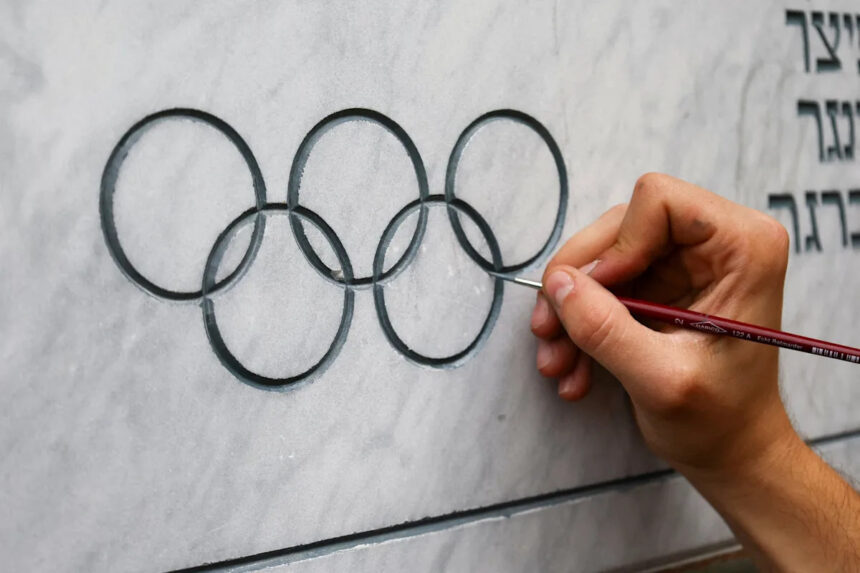
Geoffrey Mason’s career is inextricably linked to the Olympic Games, the ultimate test for any broadcaster. His defining, and most harrowing, professional challenge came in 1972 when, at just 34, he was named the coordinating producer for the Munich Olympics for ABC. The broadcast, under the legendary Jim McKay and Roone Arledge, was poised to showcase a new, peaceful Germany.
That vision was shattered on September 5th when Palestinian terrorists from the Black September group infiltrated the Olympic Village, taking Israeli athletes and coaches hostage. For over 16 hours, Mason and his team were thrust into the epicenter of a global crisis, tasked with covering an unfolding tragedy live, with unprecedented gravity and restraint.
Mason’s steady hand during the Munich crisis became the stuff of broadcasting legend. He managed a complex, emotionally charged production that balanced the need for information with profound respect. This experience forged a broadcasting philosophy he would carry forward: television as a responsible witness. He later applied this hard-won expertise as a senior producer for the 1976 Montreal Olympics, helping to refine the large-scale, multi-sport format that remains the model today.
The Architect of the Modern Sports Broadcast
Beyond the Olympics, Mason’s fingerprints are on virtually every major sport. He was a key figure during the heyday of ABC Sports, contributing to the magic of “Wide World of Sports,” which introduced audiences to sports from around the globe. His innovative spirit was characterized by several key contributions:
- Pioneering Technical Innovation: Mason was an early advocate for using technology to enhance storytelling. He championed the use of new camera angles, slow-motion replay systems, and isolated camera feeds to give viewers a closer, more detailed look at the action than ever before.
- Elevating the “Up-Close and Personal” Narrative: Building on the Roone Arledge playbook, Mason understood that sports are about human drama. He pushed producers and reporters to dig deeper, creating the athlete profiles and backstory segments that are now a staple of pre-game and Olympic coverage, transforming athletes into relatable personalities.
- Master of Multi-Sport Production: His Olympic experience made him the go-to expert for complex events. At NBC, he served as a senior producer for coverage of the NBA, NFL, and Triple Crown horse racing, applying the same meticulous planning and narrative rigor to each.
His later move to ESPN in the 1990s as a senior coordinating producer was a testament to his enduring relevance. He helped guide the young network’s foray into major event coverage, serving as a mentor to a new generation of producers who now run the industry.
Expert Analysis: The Mason Doctrine and Its Lasting Impact
To understand Mason’s impact, one must look at the modern sports broadcast. The standard template—the pre-game human interest story, the strategic use of replay during analysis, the sprawling yet cohesive coverage of a massive event like the Olympics—bears his influence.
“Geoffrey was from the school of thought that the production served the story, not the other way around,” says a veteran network sports producer who worked under Mason. “In today’s world of constant noise and flashy graphics, his principle seems almost classical: clarity, emotion, and respect for the moment. Whether it was the joy of a gold medal or the silence of a tragedy, he knew when to let the pictures speak and when to let the anchor guide us. That’s a timeless skill.”
His legacy is one of dignified innovation. He proved that technological advancement and deep human storytelling were not opposites but partners. In an age where live sports remain one of television’s last reliable pillars, the structural integrity of that pillar owes much to Mason’s foundational work.
Predictions: The End of an Era and the Future of Production
Mason’s passing symbolically closes the chapter on the first golden age of sports television, an era defined by broadcast networks and appointment viewing. The producers he mentored now face a fragmented media landscape dominated by streaming wars, personalized content, and interactive viewing experiences.
However, the core tenets of the “Mason Doctrine” will remain vital. As sports coverage expands across digital platforms, the need for clear, authoritative, and emotionally resonant storytelling will only increase. The next generation of producers, while deploying 5G-enabled multi-view feeds and augmented reality graphics, will still be solving the same essential problem Mason faced: how to connect a distant viewer intimately to the heart of the competition.
We can predict that his influence will manifest in new ways:
- Ethical Coverage in the Social Media Age: Mason’s experience in Munich established a high bar for responsible coverage during crises. Future producers will need to apply those same ethics to the instant, often-unfiltered chaos of social media during live events.
- Narrative in a Non-Linear World: As streaming allows for customized highlight reels and alternate feeds, the art of the produced narrative segment—the modern descendant of the “Up-Close and Personal”—will become a crucial differentiator for premium services.
- The Mentorship Gap: Mason’s role as a teacher to younger producers may be his most enduring legacy. The industry must now consciously work to institutionalize that kind of mentorship to preserve the craft he helped perfect.
A Final Salute: The Man Who Showed Us the Games
Geoffrey Mason was more than a producer; he was a cartographer who drew the maps we still use to navigate the world’s greatest sporting events. He guided audiences through moments of unparalleled triumph and unspeakable tragedy with a steady, respectful hand. He built the visual language of sports, teaching cameras not just to record, but to observe, to anticipate, and to feel.
In an industry often loud with self-promotion, Mason’s genius was in his quiet command behind the scenes. He didn’t seek the spotlight; he aimed it, carefully and brilliantly, onto the athletes and the events that captivated the world. The echo of his work is in every crisp replay, every poignant profile, and every sprawling Olympic opening ceremony. While the technologies will evolve and the platforms will shift, the foundational principles of clarity, dignity, and powerful storytelling that Geoffrey Mason embodied will forever be part of the game.
Source: Based on news from Yahoo Sports.