From Hollywood to High Finance: How Wrexham AFC Became a Global Brand Powerhouse
The story of Wrexham AFC has always been one of passion, community, and resilience. But since February 2021, it has transformed into something far grander: a masterclass in modern brand building, a financial fairytale, and a sporting phenomenon all rolled into one. This week, as the club climbed into the Championship play-off places, the on-field dream of Premier League football felt palpably closer. Simultaneously, a revelation from the boardroom provided the staggering financial bedrock for that ambition: nearly £50 million in recent investment, a figure that underscores a journey from non-league curiosity to a globally recognized asset. This is no longer just a football club; it’s Wrexham, the global brand, operating in an EFL world.
The Initial Bet: A £2 Million Leap of Faith
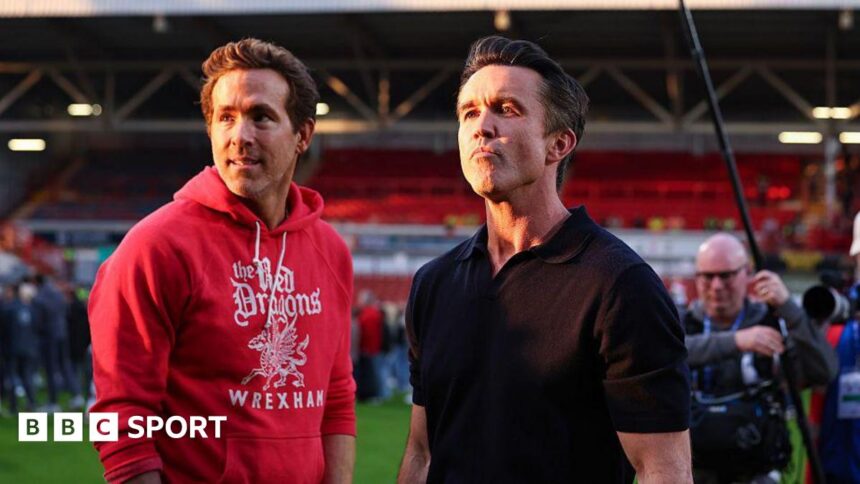
When Ryan Reynolds and Rob McElhenney first assumed control of the world’s third-oldest professional football club, the headline was their £2 million investment. To many in the high-stakes world of sports acquisitions, this was a modest sum. But its significance was never in the amount. It was a symbolic stake, a down payment on belief. The duo weren’t just buying a football team languishing in the National League; they were acquiring a narrative-rich institution with untapped potential. Their real investment wasn’t the initial capital; it was their global celebrity platform and marketing genius. They understood that in the digital age, a compelling story is the most valuable currency, and Wrexham’s was ready to be told to the world.
The immediate impact was not on the balance sheet, but on brand perception. Overnight, the club’s social media following skyrocketed. Local news was replaced by global headlines. The “Welcome to Wrexham” documentary series became the vehicle, transforming players, staff, and fans into beloved characters in a real-life sports drama. This strategic content creation was the first major financial lever pulled, generating unprecedented commercial interest and setting the stage for the massive inflows to come.
The £50 Million Infusion: Building a Championship-Caliber Machine
The revelation of almost £50 million in recent investment is the clearest signal yet of the project’s scale and seriousness. This capital is not a gift; it’s strategic fuel for a rapidly scaling enterprise. The funds are being deployed across every facet of the club to bridge the gap from a feel-good story to a sustainable footballing force.
- Infrastructure & Stadium Development: The Racecourse Ground, a historic but dated venue, is undergoing transformative redevelopment. This includes the new Kop stand, which will boost capacity and matchday revenue significantly.
- Playing Squad Investment: Competing in the Championship requires a different caliber of player. This investment allows for competitive wages and transfer fees, attracting talent like Paul Mullin initially and now more established Football League professionals.
- Commercial & Operational Expansion: The club’s commercial department has exploded, securing global sponsorship deals (like TikTok and United Airlines) unimaginable a few years ago. This capital supports a growing, professional off-field team.
- Long-Term Asset Growth: Every pound spent on improving the stadium, the training facilities (The Maesgwyn), and the club’s brand equity increases the underlying value of the asset itself.
This financial muscle flex proves the Hollywood owners are playing the long game. They are not extracting value; they are relentlessly reinvesting to build a club that can compete at the highest level, both on and off the pitch.
Global Brand vs. EFL Reality: A Unique Business Model
Wrexham now operates in a fascinating duality. On one hand, it is an EFL club subject to the league’s financial regulations, facing the weekly grind of Championship football. On the other, it is a global media entity with a fanbase spanning continents, driven by superstar owners and a hit Disney+ series. This duality is its superpower.
The club’s revenue streams are increasingly diversified and atypical for its current league status:
- Merchandising: Reports indicate kit sales rivaling top Premier League clubs. The “Wrexham” brand is worn worldwide.
- Content & Media Rights: The documentary deal is a major revenue source, with future seasons guaranteed as the story becomes more dramatic.
- International Sponsorship: Deals are struck with a global audience in mind, not just local exposure.
- Tourism & Hospitality: The “Wrexham Effect” has boosted local tourism, with fans making pilgrimages to the Racecourse, benefiting the wider community economy.
This model provides a financial safety net and competitive advantage. While other Championship clubs rely heavily on parachute payments or owner loans, Wrexham generates organic, brand-driven revenue that can be plowed back into football operations, all while staying within financial fair play frameworks. It’s a virtuous cycle: sporting success fuels the global narrative, which in turn generates revenue for more sporting success.
The Premier League Horizon: Predictions for the Final Ascent
The current position in the play-off spots is a tantalizing glimpse of the future. The project’s trajectory suggests the Premier League is not a pipe dream, but a clear target. Here’s what the path likely holds:
Short-Term (Next 2-3 Years): The immediate focus is consolidating a Championship presence and pushing for promotion. The £50 million investment is key here. Expect continued shrewd recruitment—mixing experienced EFL campaigners with high-potential talent. The commercial machine will expand, potentially including a pre-season tour in the United States, further monetizing the international fanbase.
Medium-Term (The Premier League Leap): Should promotion be achieved, the brand’s value will undergo another quantum leap. Global sponsorship deals would enter a new, stratospheric tier. The Racecourse would require further expansion to meet Premier League standards and demand. The club would instantly become one of the most marketable stories in world sports, attracting a different echelon of commercial partner and player.
The Long-Term Vision: Reynolds and McElhenney’s endgame appears to be a self-sustaining top-tier club. Not a plaything for billionaires, but a globally renowned, community-anchored institution that thrives on its own commercial merit. The “Wrexham” brand could extend into other ventures—entertainment, lifestyle, and more—all feeding back to support the footballing heart.
Conclusion: More Than a Club, A Blueprint
The financial explanation of Wrexham is simple in numbers but profound in implication. The initial £2 million unlocked a narrative. The subsequent £50 million is building an empire. This is not a traditional football takeover; it is a 21st-century brand activation set against the backdrop of the beautiful game. They have demonstrated that with visionary ownership, authentic storytelling, and strategic reinvestment, a club’s ceiling is defined not by its postcode or history, but by the scale of its ambition and its connection to a global audience.
The Premier League dream is alive in north Wales, but it is being powered by something far more powerful than hope. It is being engineered by a unique fusion of Hollywood storytelling, financial acumen, and unwavering community spirit. Wrexham is no longer just chasing history; it is writing a new playbook for what a football club can become in the modern era.
Source: Based on news from BBC Sport.