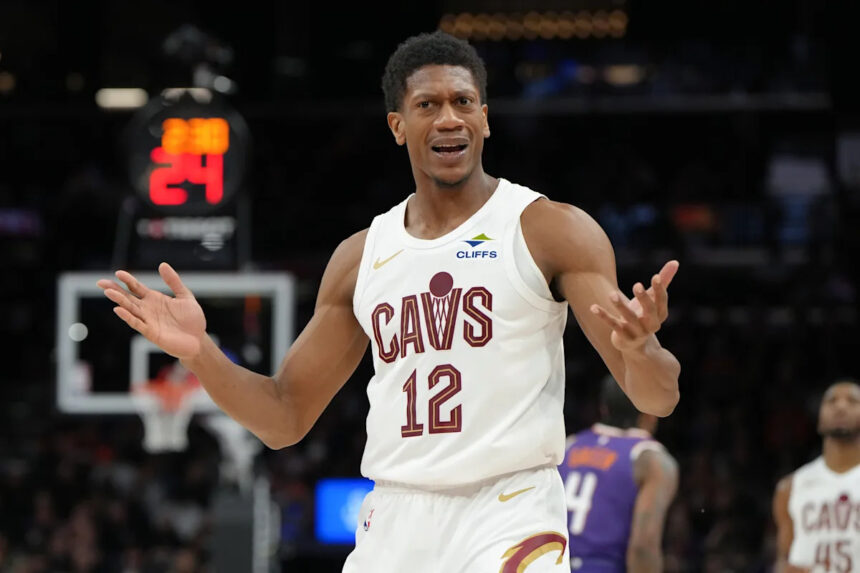
Cavaliers-Kings-Bulls Trade Grades: Who Truly Won the De’Andre Hunter Deal?
In the quiet, post-midnight hours when the NBA world sleeps, front offices are often widest awake. The league’s latest transaction—a three-team shuffle involving the Cleveland Cavaliers, Sacramento Kings, and Chicago Bulls—wasn’t the blockbuster that dominates headlines, but a nuanced, depth-chart maneuver with distinct intentions for each franchise. At its center: former lottery pick De’Andre Hunter on the move again. We dive deep into the mechanics and motivations behind the deal to deliver definitive trade grades and determine which team engineered the sharpest move for their immediate future.
The Trade Mechanics: Breaking Down the Three-Team Framework
Before assigning grades, understanding the full architecture of the trade is crucial. This wasn’t a simple player-for-player swap, but a carefully orchestrated three-team deal with financial and rotational considerations for all involved.
The official trade pieces are as follows:
- Cleveland Cavaliers receive: Dennis Schröder and Keon Ellis (from Sacramento).
- Sacramento Kings receive: De’Andre Hunter (from Cleveland).
- Chicago Bulls receive: Dario Šarić and two future second-round picks (from Sacramento, via Cleveland).
Financially, this deal allowed the Kings to utilize Hunter’s sizable contract to match salaries, sending out Schröder and Ellis to make the money work. The Bulls, operating as a facilitator, took on Šarić’s expiring deal and pocketed draft capital for their trouble. The Cavaliers, meanwhile, addressed a glaring need while betting on a specific type of player.
Cleveland Cavaliers: Betting on Grit Over Size
The Cavaliers’ offseason has been defined by a clear, if risky, philosophy: double down on their core backcourt of Donovan Mitchell and Darius Garland by adding relentless defensive tenacity around them. Trading Jarrett Allen for Zach LaVine was the first seismic shift. Moving De’Andre Hunter, a 6-foot-8 wing with proven playoff experience, continues that trend in a perplexing way.
What Cleveland gains: In Dennis Schröder, they get a veteran, steady-handed point guard who can stabilize the second unit—a clear upgrade over the departed Ricky Rubio in terms of current on-court impact. But the crown jewel of their return is Keon Ellis. The undrafted guard emerged last season as a defensive menace, a pesky, intelligent guard who led the NBA in steal rate among players with significant minutes. He is the exact prototype of a player you want hounding opposing star guards in a playoff series.
What Cleveland loses: This is the major concern. Hunter, while inconsistent, provided legitimate size and a capable two-way skill set at the forward spots. His departure leaves a gaping hole at the wing. The Cavs are now alarmingly thin and undersized at the three and four, relying heavily on Max Strus, Isaac Okoro (also 6’5″), and the hope that rookie Jaylon Tyson is ready. For a playoff run, lacking considerable size and offensive talent on the wing could be a fatal flaw against teams like Boston, New York, or Milwaukee.
Trade Grade: C+
The Ellis acquisition is a savvy, forward-thinking move that addresses a specific need for backcourt defense. However, the overall cost—weakening an already thin wing rotation—feels steep. The success of this deal hinges entirely on another subsequent move to acquire a competent forward. For now, the roster feels imbalanced.
Sacramento Kings: A Calculated Swing on Wing Upgrade
After a play-in tournament disappointment, the Kings’ mandate was clear: get better on the perimeter, particularly defensively, without sacrificing their offensive identity. In De’Andre Hunter, they see a potential solution.
What Sacramento gains: Hunter is the archetype of the player the Kings have coveted for years. At 6’8″ with a 7-foot wingspan, he has the physical profile to guard multiple positions. Offensively, he is a career 37% three-point shooter who doesn’t need plays called for him to be effective—a perfect complementary piece next to Domantas Sabonis and De’Aaron Fox. If he can stay healthy, he slots in immediately as their starting small forward, a significant upgrade over Harrison Barnes defensively.
What Sacramento loses: Keon Ellis was a fan favorite and a genuine developmental success story. His defensive energy will be missed. Dennis Schröder provided valuable veteran leadership and ball-handling, but his role was made redundant by the emergence of Monk and the presence of Fox. The Kings also surrendered two second-round picks, a minor but not insignificant cost.
Trade Grade: B+
This is a classic “consolidation” trade. The Kings turned two good rotation pieces into one potentially great fit for their starting lineup. Hunter’s health is a legitimate concern, but his skill set is exactly what this roster lacked. It’s a logical, aggressive move that makes them better on paper without touching their core. The grade would be an “A” if not for Hunter’s injury history.
Chicago Bulls: The Art of the Facilitation
The Bulls’ role here is simple and reflects their current team-building stage: acquire assets for taking on salary. With no major aspirations for this season, they operate as a transactional middleman.
What Chicago gains: Dario Šarić is a veteran big man on an expiring contract; he’s either a potential buyout candidate or a decent frontcourt piece they can flip at the deadline. The real prize is the two second-round selections. In today’s NBA, second-round picks are valuable currency for drafting cost-controlled talent or packaging in future deals. For simply helping the money work, this is pure profit.
What Chicago loses: Nothing. They were not involved in the core player exchange and gave up no players or picks of their own.
Trade Grade: A
You can’t argue with free assets. The Bulls’ front office continues to play the long game, patiently accumulating draft capital as they navigate a looming rebuild or retool. This is a textbook, win-neutral facilitation that smart teams execute.
Final Verdict and Predictions: Who Won the Trade?
Declaring one outright “winner” in a three-team deal is complex, as each had divergent goals. However, based on risk versus reward and roster fit, a hierarchy emerges.
The Kings stand as the most likely winner. They addressed their most glaring need with a high-upside player whose game fits seamlessly. The risk is mitigated because they didn’t give up any core pieces or future first-round capital.
The Bulls are winners in a transactional sense, adding draft equity for minimal effort, a smart business move for a team in their position.
The Cavaliers are the wild card. Their grade is the lowest because the move creates a new problem while solving an old one. The prediction here is that Cleveland is not finished. The acquisition of Ellis and Schröder signals a “win-now” mentality around Mitchell, but the hole at forward is too obvious to ignore. Expect President of Basketball Operations Koby Altman to be aggressively pursuing a trade for a power forward using their remaining trade exceptions or future picks before the season begins.
Ultimately, this midnight deal won’t redefine the Eastern or Western Conference hierarchies. But it underscores the relentless pursuit of roster optimization in the modern NBA. The Kings made themselves tougher and more versatile. The Bulls smartly banked assets. And the Cavaliers placed a bold, confusing bet that their backcourt-centric, defensive-guard model can overcome a significant size disadvantage. The final grade on their gamble won’t be written until next spring’s playoffs.
Source: Based on news from Yahoo Sports.