Lando Norris Predicts “More Chaos in Races” as New F1 Rules Shift Emphasis to Driver Skill
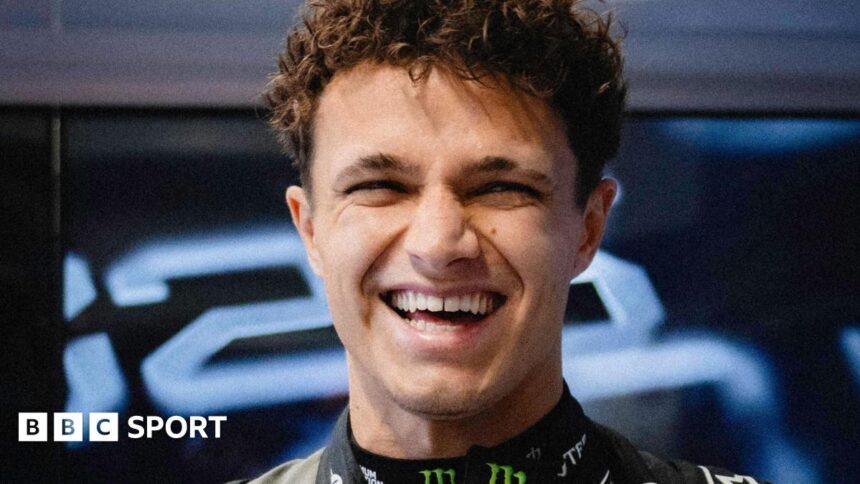
The air in the Formula 1 paddock is thick with a familiar scent: the smell of fresh carbon fibre, high-octane fuel, and palpable, unadulterated uncertainty. As teams unveil their interpretations of the most radical technical regulation overhaul in the sport’s history, a clear warning has been issued from one of its sharpest minds. Lando Norris, the reigning world champion, has looked at the new landscape of 2026 and seen not just competition, but bedlam. His prognosis for the coming era is stark: expect “more chaos in races,” where the driver’s ability to manage a vastly more complex machine will be the ultimate decider.
The 2026 Revolution: More Than Just a New Car
To call the 2026 changes an update would be a profound understatement. This is a foundational rewrite of the Formula 1 rulebook, targeting every critical component in a synchronized push towards sustainability and spectacle. The engines, chassis, aerodynamics, fuel, and tyres are all subject to transformative new requirements. The heart of the revolution lies in the power unit. The internal combustion engine, while still vital, is being downsized and supplemented by a massively enhanced hybrid electrical system. The electrical energy from the battery will now contribute to roughly 50% of the total power output, a monumental leap that fundamentally alters the physics of racing.
This shift creates a new battlefield: energy management. Drivers will no longer be mere conductors of raw horsepower; they will become strategic energy accountants, deciding when to harvest, when to deploy, and how to stretch a finite electrical resource over a Grand Prix distance. As Norris explains, this complexity lands squarely in the driver’s lap. “There’s going to be more emphasis on the drivers,” he stated, highlighting the new layer of in-cockpit decision-making that will separate the great from the merely good.
Driver as Systems Manager: The New In-Cockpit Chaos
Imagine the final laps of a tight battle. Under the current regulations, a driver is focused on braking points, tyre preservation, and outright pace. In 2026, they will have a parallel, high-stakes game unfolding on their steering wheel displays. The strategic deployment of electrical energy will become as crucial as the racing line itself.
- Overtaking Gambits: A driver may save energy for several laps to unleash a mega-boost down a straight, but a mistimed move could leave them a sitting duck on the following corner, their battery depleted.
- Defensive Energy Drain: Defending a position aggressively could burn through the electrical reserve, forcing a driver into a vulnerable “recovery” phase.
- Regen Roulette: Maximizing energy harvest under braking becomes a constant trade-off with brake balance and tyre temperature, a delicate dance in changing track conditions.
Norris’s prediction of chaos stems from this volatility. “You’re going to see more chaos in races where a driver has to be a little bit more on top of all of these different situations that can happen,” he said. One misjudged energy setting, one overly optimistic deployment, could turn a comfortable podium into a points-free finish. This injects a powerful element of human error and strategic variance that engineers cannot fully control from the pit wall.
Beyond the Battery: The Cascading Effect on Racing
The chaos won’t be confined to energy screens. The 2026 rules are designed as an ecosystem, and the ripple effects will be profound. The new, lighter cars with active aerodynamics and narrower tyres promise to be more nimble but potentially more nervous to drive. When combined with the unpredictable power delivery of a heavily hybrid-dependent engine, the margin for error shrinks.
We can anticipate several key scenarios:
- More On-Track Incidents: Drivers wrestling with a sudden torque surge from the electric motor or managing erratic rear-end grip under regeneration could lead to more spins and off-track excursions, especially in the early years.
- Strategic Wildcards: Races may no longer follow a predictable tyre-and-pit-stop pattern. Instead, we could see races decided by who best manages a “critical energy phase” after a Safety Car, or who can creatively extend their electrical boost to cover an undercut.
- The Rise of the Adaptor: This new era will favor drivers with exceptional racecraft, spatial awareness, and the cognitive ability to process multiple data streams under extreme physical stress. The driver’s role evolves from athlete to ultimate systems operator.
Predictions for the New Era: Who Thrives in the Chaos?
If Norris’s forecast holds true, the 2026 season and beyond will reward a specific breed of competitor. The cerebral drivers—those known for their technical feedback and strategic minds—will find a natural home in this complex environment. Think of a Max Verstappen or a Charles Leclerc, whose innate feel for car dynamics will be crucial for managing the new power units. Similarly, a driver like Norris himself, with his renowned racecraft and opportunistic instincts, could excel at capitalizing on the chaotic moments he predicts.
Conversely, the transition could be brutal for those slow to adapt. The learning curve will be steep, and consistency will be harder to achieve. Teams, too, will face a monumental challenge. Reliability will be a nightmare initially, as they push the boundaries of electrical and mechanical integration. The first few seasons may be characterized by dramatic swings in performance from race to race, creating a volatile and unpredictable championship fight.
Conclusion: Embracing the Beautiful Chaos
Lando Norris has not issued a warning so much as a thrilling preview. The “more chaos in races” he foresees is the inevitable byproduct of a sport choosing evolution over stagnation. By placing a renewed and immense emphasis on the driver’s skill as a tactician and manager, Formula 1 is returning to a core tenet of its appeal: the human element. The 2026 rules will not diminish the engineering genius behind the scenes, but they will ensure that genius is filtered through the hands, mind, and reflexes of the person in the cockpit. Get ready for a era where victory is not just about the fastest car, but about the driver who can best tame the beautiful, electrifying chaos unfolding at 200 miles per hour.
Source: Based on news from BBC Sport.