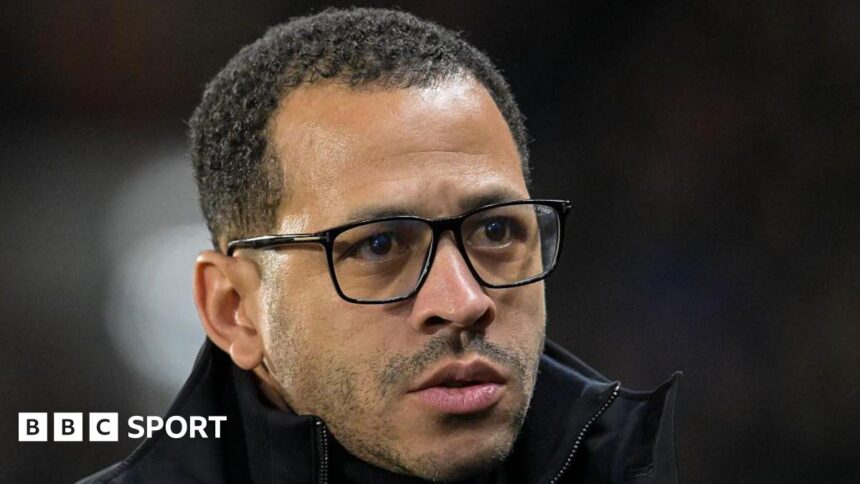
Liam Rosenior’s Stand: Why a Guilty Verdict for Racism Must Mean a Permanent Exit from Football
The beautiful game is once again marred by an ugly stain. As UEFA launches an investigation into allegations that Real Madrid’s Vinicius Jr. was racially abused by Benfica’s Gianluca Prestianni during a Champions League clash, a powerful, unequivocal statement has cut through the usual procedural noise. Chelsea head coach Liam Rosenior, addressing the incident, declared that any form of racism is unacceptable and that anyone found guilty of such behaviour shouldn’t be in the game. This isn’t just another manager’s comment; it’s a stark, necessary line in the sand that challenges football’s entire disciplinary framework and demands a fundamental shift from reactive punishment to proactive exile.
Beyond Fines and Empty Gestures: The Case for Zero Tolerance
For decades, football’s response to racism has cycled through a familiar, ineffective pattern: shock, condemnation, investigation, and a punishment that rarely fits the crime. Fines that are pocket change to federations, partial stadium closures, and short-term bans have been the norm. These actions, while signaling disapproval, have failed as deterrents. They treat racism as a disciplinary infraction akin to a bad tackle, not as a existential threat to the sport’s integrity and the well-being of its players.
Rosenior’s stance reframes the issue entirely. By stating that the guilty should not be in the game, he elevates racism from a breach of rules to a fundamental disqualifier. It posits that participating in football at any level—as a player, coach, official, or executive—is a privilege, not a right. Upholding basic human dignity is the non-negotiable entry fee. This philosophy moves the conversation from “How long should they be suspended?” to “Do they deserve to be here at all?”
- Historical Precedent of Inadequate Punishment: Past incidents have seen punishments that are quickly forgotten, allowing perpetrators back into the fold without meaningful contrition or education.
- The Privilege of Participation: Professional football is a global platform with immense influence; upholding its values must be a prerequisite for anyone involved.
- Protecting the Victim, Not the Institution: Soft penalties often prioritize the comfort of clubs and leagues over the trauma experienced by victims, forcing players like Vinicius Jr. to become perpetual campaigners while trying to perform.
The Vinicius Jr. Precedent: A Litmus Test for UEFA
The current case involving Vinicius Jr. and Gianluca Prestianni serves as a critical litmus test for the sport’s governing bodies. UEFA’s investigation will be scrutinized not just for its conclusion, but for the severity of its outcome. Prestianni, who denies the charge, faces a potential minimum 10-match suspension in European competition if found guilty. But is that enough? A ten-game ban, while lengthier than past sanctions, is still temporary. It operates within the old paradigm.
Adopting Rosenior’s zero-tolerance principle would mean that a guilty verdict results in permanent expulsion from UEFA competitions. This would have seismic ramifications, effectively ending a player’s career at the highest European level. Such a consequence would finally align the risk with the reprehensible nature of the act. For a sport that often hides behind the phrase “football family,” it’s time to start disowning those who poison it from within. The message must be clear: racist behaviour in football is a career-ending offense.
This case is particularly poignant given Vinicius Jr.’s tragic status as a frequent target of racist abuse in Spain. Football has asked him to be strong, to play on, to be the symbol of the fight. Now, the institutions must prove they are fighting for him, with actions that have tangible, permanent consequences for his abusers.
The Ripple Effect: Implementing a “Not in the Game” Standard
Enacting a true zero-tolerance policy requires more than just strong words; it demands a unified, codified overhaul. Rosenior’s comment, likely made from a place of moral clarity rather than political strategy, provides the blueprint.
First, every governing body (FIFA, UEFA, the FA, etc.) must harmonize their regulations to include permanent expulsion as the baseline punishment for proven, deliberate racist abuse. This applies to players on the pitch, fans in the stands, and officials in the boardroom. Second, the burden of proof must be balanced with robust investigation protocols, using all available technology and testimony. Third, and crucially, clubs must be held accountable for the actions of their players and supporters, facing severe sporting sanctions like relegation or exclusion from competitions for repeated or institutional failures.
- Unified Global Sanctions: A worldwide ban registry to prevent expelled individuals from simply moving to another league.
- Mandatory Education & Rehabilitation: While expulsion is the punishment, pathways for genuine education and restitution could be explored, but never as a shortcut back to the top level.
- Empowering Match Officials: Clear protocols for officials to abandon matches immediately upon witnessing racist abuse, transferring power from the abusers to the victims and the sport’s guardians.
The Future of Football: A Game Worth Watching
Predicting the future here is simple: football either heeds calls like Rosenior’s and takes definitive, drastic action, or it continues a slow, complicit decline into irrelevance among younger, more socially conscious generations. The sport’s commercial and cultural power is built on its global appeal and aspirational joy. Racism directly undermines that foundation.
The Champions League match between Real Madrid and Benfica should be remembered for footballing excellence, not for this investigation. In the future, under a true zero-tolerance framework, the fear of permanent exile would act as a powerful deterrent. Young talents would enter a sport that visibly protects them. Fans would know their support is for a game that stands for something more.
Liam Rosenior has offered football a mirror and a mandate. His statement, “anyone found guilty of racist behaviour shouldn’t be in the game,” is not radical; it is rational. It is the only logical conclusion if football is serious about its own survival and professed values. The investigation into the Vinicius Jr. allegation is not just about one incident. It is about which path football chooses: the worn path of weak compromises, or the new road of resolute principle. For the sake of every player who has ever been abused, and for the soul of the game itself, there is only one acceptable choice. The guilty must go.
Source: Based on news from BBC Sport.