Lamine Yamal Takes a Stand: Ballon d’Or Runner-Up Condemns Racist Abuse in Egypt Friendly
The beautiful game, once again, found its rhythm disrupted by an ugly undercurrent. In a high-profile international friendly between Spain and Egypt at Barcelona’s RCDE Stadium this Tuesday, the focus shifted from tactical battles to a disturbing chorus of hate. Emerging from the fallout is the powerful, principled voice of Lamine Yamal, Spain’s teenage sensation and a recent Ballon d’Or runner-up, who has publicly condemned the “disrespectful and intolerable” racist and Islamophobic abuse aimed at the Egyptian national team.
A Tarnished Stage: Racist Chants Overshadow Barcelona Friendly
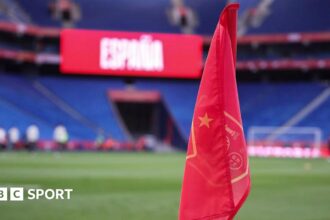
What was meant to be a celebratory fixture in Catalonia quickly descended into controversy. During the first half of the goalless draw, sections of the crowd directed xenophobic and Islamophobic chants at the Egyptian players. The situation grew so severe that stadium authorities were forced to intervene at halftime. A message warning fans against discriminatory behavior was displayed on the stadium’s giant screens, a measure that had to be repeated early in the second half. Astonishingly, this plea for basic decency was met with whistles of derision from some attendees, highlighting the entrenched nature of the problem.
Spanish police have since opened an investigation into the incident, classifying the chants as potential hate speech. This official response underscores the seriousness of the offense, but it is the reaction from within the Spanish camp, specifically from its brightest young star, that carries the most significant moral weight.
Yamal’s Principled Stance: Faith, Football, and Solidarity
Despite not being the direct target of the abuse, Lamine Yamal felt compelled to speak out. Taking to Instagram, the 17-year-old Barcelona winger, a practising Muslim, delivered a clear and impactful statement. “I know it [the chant] was directed at the opposing team and wasn’t personal against me, but as a Muslim, it’s still disrespectful and intolerable,” Yamal wrote.
This declaration is a masterclass in allyship and personal integrity. Yamal, still a teenager, demonstrated a level of maturity and moral courage that transcends his years on the pitch. His statement operates on multiple levels:
- Solidarity with Opponents: He stood shoulder-to-shoulder with fellow professionals and Muslims on the Egyptian team, rejecting the tribalistic “us vs. them” mentality that often fuels such abuse.
- Personal Conviction: By identifying as a Muslim, he personalized the issue for a global audience, reminding fans that the sport’s roster is filled with diverse faiths and backgrounds.
- Leveraging Platform for Good: Using his immense platform—fresh off a second-place finish in the 2025 Ballon d’Or—to address societal issues, not just sporting achievements.
In an era where athletes are often counseled to remain apolitical, Yamal’s choice to speak from the heart and from faith is a powerful rebuttal. He understands that silence in the face of such bigotry is complicity.
Expert Analysis: A Systemic Challenge in Spanish Football
This incident is not an isolated one in Spanish football. While La Liga and the RFEF (Spanish Football Federation) have implemented anti-racism protocols, including announcements and stoppages in play, critics argue these are reactive measures that fail to address the root causes. The whistling at the stadium’s anti-discrimination message is a stark indicator of the challenge.
“Yamal’s intervention is significant because it comes from within the ecosystem,” says Dr. Elena Ruiz, a sociologist specializing in sport and identity. “He is Spain’s golden boy, the face of the next generation. When he says this behavior is intolerable, it forces institutions, media, and fans to listen. It moves the conversation from bureaucratic protocols to human impact. However, the real test is whether the authorities will now enforce stringent, punitive actions against clubs and fan groups, not just generic stadium announcements.”
The fact that this occurred in Barcelona, a city famed for its cosmopolitanism, and during a friendly match, suggests the issue is not confined to high-stakes rivalries but is a pervasive cultural problem within certain fan segments. The abuse, reportedly Islamophobic in nature, also points to a specific form of xenophobia that requires targeted education and condemnation.
Predictions: Yamal’s Leadership and the Road to 2026
Lamine Yamal’s stance is likely to be a defining moment, both for his career and for Spanish football’s ongoing battle with racism. We can anticipate several developments:
- Increased Scrutiny on La Liga: Governing bodies will be under pressure to demonstrate that their anti-racism measures are more than just cosmetic. Points deductions, forced stadium closures, and lengthy bans for identified offenders must be on the table.
- Yamal as a De Facto Spokesperson: While undoubtedly a burden for a young player, Yamal may increasingly be looked to as a moral leader in Spanish sport, a role he has shown readiness to accept.
- A Litmus Test for the World Cup: As Spain builds towards the 2026 FIFA World Cup, the atmosphere in its stadiums will be intensely scrutinized. The federation will be desperate to avoid a repeat incident on the world’s biggest stage.
- Player-Led Initiatives: This could spur Yamal and other senior players to launch or champion player-driven anti-discrimination campaigns, which often carry more credibility with fans than top-down institutional messages.
The hope is that Yamal’s courage will empower other players, of all backgrounds, to speak out, creating a unified front that makes stadiums hostile environments for bigots, not for players of color.
Conclusion: More Than a Footballer
The final whistle blew on a 0-0 draw, but the most important result of the night was Lamine Yamal’s unequivocal condemnation of hate. In a single Instagram post, he proved his worth extends far beyond his dazzling dribbles and visionary passes. He has shown the character of a champion. While police investigate and federations draft statements, the most potent action came from a 17-year-old who reminded the world that respect is the minimum requirement for the right to call yourself a fan.
Spanish football stands at a crossroads. It can choose to view this as another regrettable incident to be managed, or it can seize upon the moral clarity of its brightest young star as a catalyst for genuine, systemic change. The beautiful game’s future depends not just on the talent of players like Lamine Yamal, but on the environment we create for them to shine. That environment must be free from the “disrespectful and intolerable” poison of racism. The ball is now in the court of the authorities, the clubs, and every fan to ensure it is.
Source: Based on news from BBC Sport.