ECB Intervenes as Shadow of Geopolitics Threatens The Hundred’s Integrity
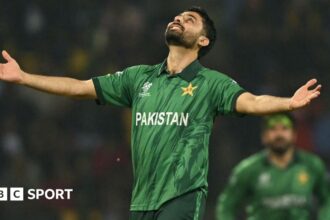
The Hundred, England Cricket Board’s (ECB) bold franchise venture, finds itself at a critical crossroads. As it gears up for a pivotal new season buoyed by fresh private investment, the tournament is grappling with a controversy that strikes at the very heart of sport: fair play and non-discrimination. The ECB has been forced to issue a formal reminder to all eight franchises regarding their anti-discrimination obligations, following persistent reports that Pakistan players could be systematically overlooked in the upcoming draft—particularly by the four teams with Indian Premier League (IPL) ownership links.
The Unspoken Draft: Where Reports Meet Regulation
The spark was a BBC report suggesting a potential shadow-ban on Pakistan cricketers by certain franchises. With over 60 Pakistani stars, from established icons to explosive young talents, registering for the 2026 draft, the prospect of their names being ignored for non-sporting reasons sent shockwaves through the cricket community. The ECB, though unable to force a franchise to pick a specific player, moved swiftly to draw a regulatory line in the sand.
The governing body’s letter to all eight teams serves as a powerful pre-emptive strike. It underscores that while selection is a sporting judgment, it cannot breach the ECB’s strict codes of conduct. The subtext is clear: decisions based on a player’s nationality—especially stemming from the longstanding and complex India-Pakistan cricket rivalry spilling over into a domestic UK league—are unacceptable. This intervention highlights the delicate balance the ECB must strike between franchise autonomy and safeguarding the league’s integrity and inclusive values.
Untangling the Web: IPL Ownership and Commercial Realities
To understand the speculation, one must examine the ownership map. Four Hundred teams have direct ties to IPL franchises:
- London Spirit (owned by Rajasthan Royals Group)
- Oval Invincibles (part-owned by Knight Riders Group, owners of Kolkata Knight Riders)
- Manchester Originals (part-owned by IPL franchise owners)
- Birmingham Phoenix (has shareholding links to Chennai Super Kings)
These ownership groups have vast commercial interests in India, the world’s most lucrative cricket market. The perceived risk, as analysts see it, is not necessarily one of explicit directive, but of implicit pressure and risk aversion. Could selecting a Pakistani player—however brilliant—invite backlash from certain segments of a fanbase or, more critically, complicate broadcast and sponsorship negotiations in India? This unspoken commercial calculus is the alleged engine behind the rumored sidelining.
This scenario presents a stark conflict: the duty to build the most competitive sporting roster versus the desire to protect a billion-dollar business ecosystem. For the ECB, whose tournament’s success is now partly hitched to this very private investment, it creates a profound governance challenge.
Stakes Higher Than Ever: Why This Draft Matters
The timing of this controversy couldn’t be more sensitive. The Hundred is in a phase of aggressive growth and reinvention.
- Substantial private investment has recently been secured, raising the financial stakes.
- Player salaries have been significantly increased to attract top global talent.
- The league is fighting for its place in a crowded global calendar, needing star power and credibility.
In this context, excluding an entire nation of world-class T20 merchants—a nation that is a consistent producer of pace-bowling phenoms and fearless batters—is not just an ethical misstep; it’s a competitive self-sabotage. Pakistan players are headline acts in leagues worldwide. Their absence would diminish the on-field quality and, ironically, could damage The Hundred’s global broadcast appeal, particularly in key markets like the Middle East and among the South Asian diaspora.
Expert Analysis: Predictions and Pathways Forward
The ECB’s letter is a warning shot, but the true test will come on draft day. Here’s what seasoned observers predict may unfold:
The “Compliance Pick” Scenario: Expect at least one high-profile Pakistan player to be selected by an IPL-linked franchise as a demonstrative act of compliance. This would be a strategic move to quieten criticism while potentially limiting broader selection. The focus will be on how many Pakistani players are picked and at what price, compared to players of similar caliber from other nations.
The Independent Franchise Pivot: The four teams without IPL ties (Trent Rockets, Northern Superchargers, Welsh Fire, Southern Brave) may see this as a massive opportunity. They could capitalise on the market inefficiency, snapping up elite Pakistani talent that others shy from, thereby building a formidable on-paper advantage. This would create a fascinating narrative subplot for the entire season.
The Long-Term Governance Battle: This incident may force the ECB to strengthen its draft regulations. Future rules could mandate that a certain percentage of the draft pool must be considered, or implement stricter, audited selection criteria to prove choices are performance-based. The integrity of the draft process itself is now under microscope.
A Defining Moment for Modern Cricket
The Hundred stands at a defining juncture. It was conceived as a disruptive, modern force in cricket. This controversy presents a fundamental question: is it modern enough to resist the spillover of geopolitical tensions into its team rooms? The ECB’s intervention is a necessary first step, but it is only that.
The true verdict will be delivered in the draft room. If a generation of brilliant Pakistani cricketers finds itself unwanted for reasons beyond the boundary, it will be a fiasco that tarnishes The Hundred’s credibility far more than any on-field failure. Conversely, if the league emerges from this with its selection process demonstrably fair and its teams fiercely competitive, it will have passed a critical stress test. The message must be clear: in The Hundred, as in all sport, selection must be based on skill, not nationality. The world of cricket, and indeed the world beyond it, will be watching closely.
Source: Based on news from India Today Sport.
Image: CC licensed via www.rawpixel.com