Higgins and Murphy Locked at 8-8: A Crucible Classic Poised on a Knife-Edge
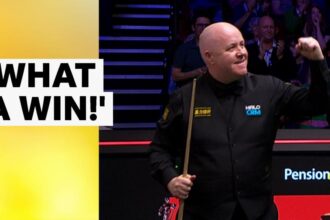
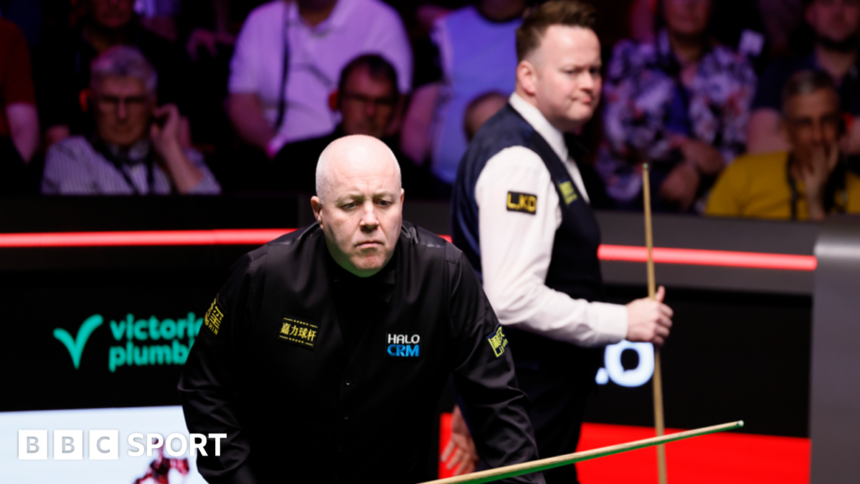
The Crucible Theatre in Sheffield has witnessed countless chapters of snooker folklore, but the 2025 World Championship semi-final between John Higgins and Shaun Murphy is rapidly writing a script that rivals the very best. After a breathtaking second session on Thursday, the scoreboard reads a tantalising 8-8. This is not just a match; it is a collision of generations, a war of attrition, and a test of nerve that will define the legacy of both men.
For the four-time world champion, Higgins, the clock is ticking louder than ever. He turns 51 on 18 May, and each frame he wins feels like a defiance of Father Time. For Murphy, the 2005 champion, this is a chance to end a 21-year drought and prove that his single Crucible crown was not a fluke. The narrative is rich, the stakes are immense, and the snooker has been nothing short of electric.
The Opening Salvo: Experience vs. Youthful Fire
If the first session on Wednesday was a cagey, tentative affair, the second session exploded into life with a ferocity that had the Sheffield crowd gasping. The early exchanges belonged to John Higgins. The Scot, known for his glacial composure and tactical genius, came out of the blocks with a purpose that suggested he had found an extra gear.
The defining moment of the opening frame came from a moment of sheer ruthlessness. Murphy, looking to establish his rhythm, missed a straightforward black off its spot. It was the kind of error that is unforgivable at this level, and Higgins made him pay the ultimate price. The Wizard of Wishaw stepped in and compiled a clinical break of 72 to steal the frame. It was a masterclass in punishment, a reminder that against a player of Higgins’ calibre, you cannot afford to blink.
This early momentum had the hallmarks of a Higgins steamroller. He has built a career on grinding opponents into submission, and for a fleeting moment, it looked as though Murphy might be overwhelmed. The Scot’s safety game was suffocating; his long potting was laser-guided. He was moving like a man ten years younger, not one on the cusp of his sixth decade.
Murphy’s Perfect Riposte: The 88 That Changed the Tide
But Shaun Murphy is not a man to be cowed. The Englishman, whose 2005 triumph remains his only world title, has spent two decades answering questions about his bottle and his ability to close out big matches. On this stage, against this opponent, he delivered the perfect response.
After Higgins had edged ahead, Murphy found his cue action. He levelled the match at 6-6 with a display of pure, attacking snooker. The highlight was a majestic break of 88 that was as much a statement of intent as it was a frame-winning contribution. It was fluid, aggressive, and utterly fearless. Murphy began to dictate the tempo, using his powerful cue ball control to open up reds that Higgins had tried to tie up.
The next two frames were a microcosm of the match itself. Higgins, using every ounce of his experience, tried to slow the game down, forcing Murphy into long, tactical battles. Murphy, in contrast, wanted to play fast, to hit his way through the safety nets. The result was a see-saw battle that saw the lead change hands multiple times. By the time the mid-session interval arrived, the score was locked, and the psychological advantage was up for grabs.
Key Tactical Observations from the Second Session
- Higgins’ Safety Dominance: The Scot won the vast majority of the safety exchanges in the first four frames. His ability to leave Murphy snookered behind the brown and green balls was a major factor in his early lead.
- Murphy’s Long Potting: When Murphy found his range, his long potting was exceptional. He potted several crucial balls from distance to start his breaks, negating Higgins’ tactical advantage.
- Decisive Breaks: Neither player is messing about. Every chance is being converted. The average break in the session was well over 50, indicating that both men are cueing beautifully under pressure.
- Mental Fortitude: The ability of both players to bounce back from losing a frame on the black was remarkable. There was no hangover; they simply reset and went again.
Expert Analysis: The Battle of the Generations
This semi-final is not just about who pots the most balls; it is a psychological chess match. John Higgins represents the old guard—the relentless, calculating machine who wins through sheer will and positional perfection. Shaun Murphy represents the modern era—the attacking, flamboyant player who relies on firepower to blast his way out of trouble.
The key for Higgins is to keep the frames long. He needs to drag Murphy into the trenches, into the kind of scrappy, ugly frames where experience trumps youth. Every time Murphy gets a clear sight of the pocket, he is dangerous. Higgins must use his legendary cue ball control to tie up the colours and force Murphy to play safety shots he doesn’t want to play.
For Murphy, the formula is simpler but harder to execute: keep the table open. He needs to avoid the long, grinding safety battles where Higgins excels. His best chance is to attack early, to pot a long red and then open up the pack. His break-building has been sublime, and if he can maintain that level of potting, he will be very difficult to stop.
There is also the elephant in the room: stamina. Higgins, at 51, is playing his second consecutive best-of-33-frame match. The physical toll of a 17-day World Championship is immense. Murphy, 15 years his junior, will feel he has the legs to go the distance. However, Higgins has a remarkable ability to conserve energy, often playing at a slower pace to manage his fatigue. The final session on Friday will be a true test of endurance.
Predictions: Who Has the Edge at 8-8?
Predicting a winner in a match this tight is a fool’s errand, but patterns are emerging. Momentum is the most volatile currency in snooker, and it has swung wildly. Higgins started strong, Murphy fought back, and they ended the session dead even. The psychological advantage, however, might slightly favour Murphy.
Here is why: Murphy was behind and clawed his way back. He weathered the storm of Higgins’ best tactical play and is now level. He knows he can compete with the Scot’s safety game. Higgins, meanwhile, will be frustrated that he could not build on his early lead. He had the momentum and let it slip.
However, never count out a champion. John Higgins has been in this position dozens of times. He knows that the Crucible is a marathon, not a sprint. His experience in deciding frames is unparalleled. He will not panic. He will stick to his game plan and wait for Murphy to make a mistake.
The decisive factor will be the first three frames of the final session. If Higgins wins them, he will put Murphy under immense scoreboard pressure. If Murphy wins them, he will smell blood and go for the kill. I predict that this match will go to a deciding frame. It has that epic, heavyweight feel to it. In a single frame, anything can happen. But if I had to put my money on one man to hold his nerve, it would be the man who has done it more than anyone else in history: John Higgins, by a whisker, 17-16.
Strong Conclusion: A Night for the Ages
The Crucible Theatre has a habit of producing moments that transcend the sport of snooker. This semi-final between John Higgins and Shaun Murphy is shaping up to be one of those moments. It is a battle between a man chasing history and a man chasing redemption. It is the wisdom of a four-time champion against the hunger of a one-time winner desperate to prove he belongs back at the top.
At 8-8, the match is perfectly balanced. Every shot now carries the weight of a career. Every missed ball could be the one that costs the match. For the fans in Sheffield and the millions watching around the world, this is snooker at its absolute finest. The final session on Friday promises to be a brutal, beautiful, and unforgettable showdown. The only certainty is that one man will walk off the Crucible floor in tears of joy, and the other in agony. The stage is set. The balls are racked. Let the drama begin.
Source: Based on news from BBC Sport.