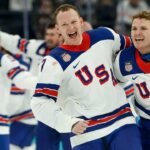
‘Never Say No’: GB Curlers Keep 2030 Winter Olympics Dream Alive After Silver Success
The sting of a second consecutive Olympic silver medal is a unique kind of pain. It speaks not of a fleeting triumph, but of a sustained excellence that perpetually brushes against the ultimate prize, yet cannot quite grasp it. For the men of Team GB’s curling rink—Bruce Mouat, Grant Hardie, Hammy McMillan, Bobby Lammie, and Kyle Waddell—this is the complex legacy they carry from Milan-Cortina 2026. Yet, within hours of a heart-wrenching 9-6 loss to Canada in the gold medal match, a powerful, resilient phrase emerged, one that defines champions: “I’m not going to say no.”
The Agony and Ambition of Back-to-Back Silver
Arriving in Italy as reigning world champions and firm favourites, the British quartet seemed destined to upgrade the silver they won in Beijing 2022. Their campaign was a masterclass in precision and nerve, until a formidable Canadian team, in a tense, tactical final, proved immovable. The 9-6 scoreline belied a match of knife-edge tension, where a single stone’s turn made the difference.
This result etches their names into a rare, if bittersweet, chapter of British Winter Olympic history. To reach the pinnacle match in two consecutive Games is a monumental achievement, a testament to their unwavering consistency and mental fortitude on the world’s biggest stage. However, it also creates a compelling narrative arc. They are no longer the young challengers; they are the established powerhouse with unfinished business. As McMillan reflected, the goal remains “to get that one medal we don’t have.” The colour of that missing medal is unmistakably gold.
The 2030 Question: Experience Versus the Inevitable Clock
In the cool light of the post-Games analysis, the immediate question from BBC Radio 4’s Today programme was inevitable: What about 2030? The next Winter Olympics in France’s Alps feel both a lifetime away and just around the corner. McMillan’s answer was a masterpiece of candid athletic realism.
He acknowledged the relentless tide of time in elite sport: “Competitors are getting younger.” The physical demands of sweeping at the highest level, the years of intense training, and the mental grind of the tour are cumulative. Yet, his refusal to close the door was definitive. “I’d love to be there again in 2030,” he stated, framing the decision as one for collective deliberation. The plan is to “sit down in the summer”—a crucial period of rest and reflection—to assess their collective hunger, physical condition, and life priorities.
This summer summit will be one of the most significant meetings in British curling. The factors on the table will be substantial:
- Physical Longevity: Can their bodies withstand another four-year cycle at peak performance?
- Mental Drive: Is the burning desire to avenge two silver medals stronger than the allure of retirement?
- Team Dynamics: This specific lineup has forged a rare chemistry. Can and should it be preserved intact?
- Evolution of the Game: How will they adapt to stay ahead of younger, emerging rinks from Sweden, Canada, and Italy?
Expert Analysis: The Unparalleled Value of Continuity
From a strategic standpoint, the case for this quintet staying together is powerful. In a sport where telepathic teamwork and trust are as vital as technical skill, their shared history is an invaluable asset. They have endured the highest-pressure moments imaginable, together. They have celebrated world titles and mourned Olympic near-misses as a unit. This kind of cohesion cannot be manufactured quickly.
“What this team has built is a dynasty of consistency,” says a leading curling analyst. “To break that up voluntarily would be a gift to their rivals. Bruce Mouat is arguably the best skip in the world right now, and the synergy he has with Hardie, McMillan, and Lammie is palpable. Their ‘never say no’ attitude isn’t just about 2030; it’s the same mindset that gets them through the tenth end of a tight match. That’s hard to walk away from.”
Furthermore, their profile has elevated curling in the UK to new heights. They are household names following their Beijing and Milan-Cortina exploits, inspiring a new generation to pick up a brush. This sense of legacy and responsibility may also weigh in their decision.
Predictions for the Path to the French Alps
While the summer discussions will be private, the likely outcome is a carefully managed campaign towards 2030. We can anticipate a phased approach:
- 2026-2027: A deserved break, with likely limited tour appearances, allowing for physical recuperation and personal time.
- 2027-2029: A targeted return, focusing on key World Championships and Grand Slam events to requalify for Team GB and test their competitive edge without burning out.
- Team GB Qualification: They will still need to navigate the rigorous British Curling selection process, though their pedigree makes them formidable contenders for the nomination.
- The Youth Factor: The system behind them, which they have inspired, will start producing challengers. This internal pressure could be the final catalyst they need to commit fully.
The prediction here is not a definitive yes or no, but a leaning. Given their expressed love for the game and their clear, unfulfilled objective, the likelihood is a return. It may not be a full-time, four-year grind as before, but a smarter, more focused campaign built on their vast experience. The alternate, Kyle Waddell, also represents a key piece of strategic depth, allowing for rotation and rest.
Conclusion: A Legacy Defined by Resilience
The story of Bruce Mouat’s rink is still being written. Their “never say no” philosophy, voiced in the raw aftermath of defeat, is the very essence of Olympic spirit. It is the resolve that separates the great from the legendary. They have already secured their place as one of Britain’s greatest ever Winter Olympic teams with their back-to-back silver medals.
But champions are defined by their response to falling short. The 2030 Winter Olympics in France present a six-year journey—a marathon, not a sprint. It will require adaptation, renewed passion, and perhaps a new blueprint for longevity. By keeping the door firmly open, they have already won the first mental end. The world of curling, and British sports fans, will watch with bated breath for their decision. One thing is certain: if that summer meeting ends with a collective “yes,” the curling world will know that a brilliant, battle-hardened, and deeply motivated team is coming for the one colour that has eluded them. And they will be a formidable force to behold.
Source: Based on news from BBC Sport.