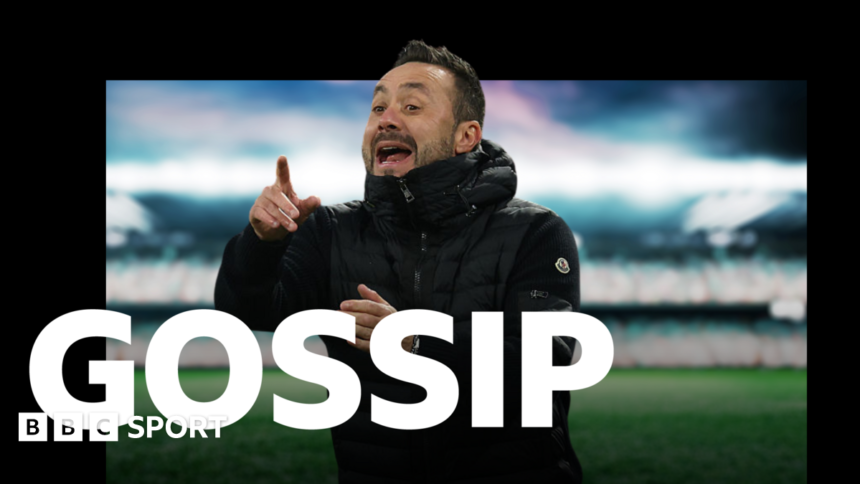
Spurs at a Crossroads: Could De Zerbi’s Philosophy Be the Antidote to Tottenham’s Plight?
The back pages of Britain’s newspapers paint a fragmented picture of the sporting landscape: rising ticket prices at Manchester United, Six Nations drama, and the personal joys of F1 champion Max Verstappen. Yet, nestled among these narratives, one story resonates with a particular, persistent ache for a large section of North London. Tottenham Hotspur’s current plight, a topic dominating outlets like the Sport, is more than a bad run of form; it’s an identity crisis. As the club searches for a path forward, a compelling name continues to surface in the rumour mill: Brighton’s Roberto De Zerbi. Could the Italian’s brand of football be the radical solution Spurs require?
The Anatomy of a Plight: More Than Just Results
To understand why a move for De Zerbi is being mooted, one must first diagnose the illness. Tottenham’s issues, as highlighted in recent coverage, run deeper than the league table. The Spurs plight is characterized by a perceived lack of consistent identity post-Pochettino, fragile mentality in big moments, and a squad that often seems less than the sum of its expensive parts. This internal concern was underscored by reports from The Mirror, noting striker Dominic Solanke telling his new teammates they “must show fight.” This is a telling intervention from a recent arrival, pointing to a leadership and resilience vacuum on the pitch.
When a team is described as being in a “plight,” it implies a struggle against a threatening situation. For Spurs, the threat is stagnation. The club possesses a world-class stadium and training facility, a huge global fanbase, and the financial muscle to compete. Yet, the feeling persists that they are failing to leverage these assets into tangible, sustained success. The football has often been reactive, lacking a clear, controlling philosophy that can withstand pressure. This is the exact void a coach like De Zerbi promises to fill.
De Zerbi’s Doctrine: Why He Fits the Tottenham Vision
Roberto De Zerbi’s reputation was forged in Italy but polished to a dazzling shine on the South Coast of England. At Brighton, he didn’t just improve results; he implemented a football philosophy so distinct it has its own nickname. His approach is built on several non-negotiable pillars:
- Possession with Purpose: This isn’t sterile, sideways passing. De Zerbi’s teams use possession as a weapon, manipulating opposition presses to create devastating openings.
- Relentless Build-Up from the Back: Goalkeepers and centre-backs are primary playmakers, drawing pressure to break lines and advance the team up the pitch as a cohesive unit.
- Tactical Flexibility: While the principles are fixed, the formations can fluidly shift from a back three to a back four mid-game, a sophistication that outmanoeuvres opponents.
- Youth Development: His work with Brighton’s academy graduates is exemplary, aligning perfectly with Tottenham’s historic emphasis on nurturing young talent.
For Spurs, a club that has long aspired to play “the right way,” De Zerbi offers a modern, elite blueprint. He represents the progressive football that fans crave and that could maximize creative players already at the club. His system demands intelligence, bravery, and technical skill—attributes the Tottenham squad possesses but has struggled to consistently harness.
The Potential Pitfalls: A Marriage of Necessity or True Synergy?
While the tactical fit seems compelling, a potential union is not without its significant challenges. De Zerbi’s high-risk, high-reward strategy requires near-total buy-in from the entire squad. It demands players comfortable on the ball under extreme pressure—a weakness that has plagued Spurs in recent years. The initial transition could be painful, potentially featuring a series of high-profile errors as players adapt to the intense demands.
Furthermore, De Zerbi is a perfectionist, known for his intense passion on the touchline. He would require unwavering support from the board, particularly in the transfer market, to recruit players specifically suited to his complex system. Would Tottenham’s hierarchy grant him the same level of control and patience he enjoyed at Brighton? The club’s recent managerial history suggests a appetite for quick fixes, while De Zerbi’s project is a fundamental rebuild from the grass roots of the team’s playing style upwards.
There is also the question of whether De Zerbi would view Tottenham as the ideal next step. His stock is incredibly high, and he may favour a club with established Champions League football or a clearer, existing structure that matches his ideology.
Predictions and Pathways: What’s Next for Spurs?
The gossip linking De Zerbi to Tottenham is more than just speculative filler; it’s a reflection of the strategic crossroads at which the club finds itself. The coming months will be decisive.
If Tottenham are serious about breaking their cycle of false dawns, they must commit to a long-term vision. Appointing a manager of De Zerbi’s ilk would be a powerful statement of intent, signalling a shift from short-term managerial appointments to a holistic club culture project. It would be a bold, attacking move that captures the imagination.
However, the alternative path is well-trodden: opt for a safer, more pragmatic manager to secure top-four finishes, but risk perpetuating the cycle of stylistic inconsistency and ultimate disappointment. The Solanke-inspired “fight” is a short-term necessity, but the long-term solution requires more than grit; it requires a grand design.
Conclusion: A Gamble Worth Taking?
As other sports stories dominate headlines—from rugby fortunes to ticket prices and personal milestones—Tottenham’s search for a new direction remains a compelling saga. The potential appointment of Roberto De Zerbi represents the most philosophically exciting option available. It is a gamble, undoubtedly. His brand of football could initially expose the squad’s frailties and test the patience of a fanbase weary of waiting.
Yet, in a modern football landscape where identity is currency, De Zerbi offers a chance for Tottenham to finally define who they are in the post-Pochettino era. It would be a commitment to beauty, bravery, and a distinct footballing vision. For a club languishing in a “plight,” the safest option may actually be the boldest one. Turning to De Zerbi wouldn’t just be hiring a manager; it would be adopting a footballing religion. And for Spurs, that leap of faith might be the only way to truly resurrect their fortunes.
Source: Based on news from BBC Sport.