Ireland’s Triple Crown Triumph: A Masterclass in Dublin Keeps Grand Slam Hopes Alive
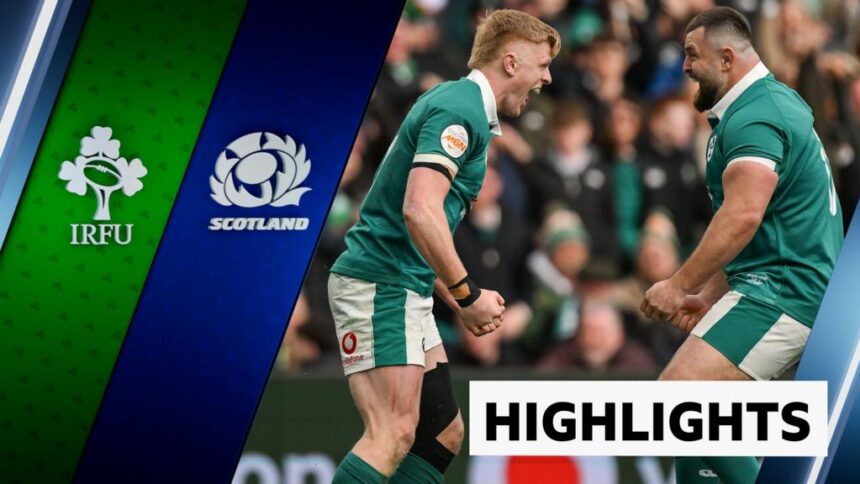
In a thunderous Aviva Stadium, under the weight of championship expectation, Ireland delivered a performance of stunning clarity and power to dismantle Scotland 43-21 and reclaim the Triple Crown. On a pivotal Super Saturday, Andy Farrell’s men didn’t just win; they made a resounding statement. While the ultimate Six Nations title hinges on events elsewhere, Ireland’s display was a potent reminder of their pedigree, blending brutal forward dominance with backline brilliance to keep their dream of wresting the championship from France fiercely alive.
A Dublin Onslaught: Ireland’s First-Half Blitz Settles the Contest
The match was effectively won in a devastating opening forty minutes. Ireland came out with a point to prove, their intensity at the breakdown and speed of ball presentation leaving Scotland scrambling from the off. The set-piece supremacy was absolute. The Irish lineout functioned as a ruthless attacking platform, while the scrum, anchored by a monumental Tadhg Furlong, systematically broke Scottish resolve. This foundation allowed the half-back duo of Jamison Gibson-Park and Jack Crowley to orchestrate proceedings with chilling efficiency. Crowley’s game management was exemplary, his boot pinning Scotland back and his distribution releasing a dangerous outside backline. Tries flowed from both precision strikes and individual moments of magic, with the relentless James Lowe and the omnipresent Caelan Doris crossing the whitewash. By halftime, the scoreboard read a commanding 31-7, the Triple Crown already shimmering on the horizon.
Key Battles and Turning Points: Where the Game Was Won
While the scoreline suggests a procession, key individual duels shaped the narrative of Ireland’s victory.
- The Breakdown Battle: Led by the peerless Josh van der Flier, Ireland’s jackalers slowed or stole Scottish ball with relentless consistency. This disruption shattered Scotland’s attacking rhythm and provided a stream of turnover possession for Ireland to launch their own assaults.
- Midfield Mismatch: The centre partnership of Bundee Aki and Garry Ringrose proved utterly indefensible. Aki’s trademark gain-line busts were complemented by Ringrose’s silky distribution and defensive reads, cutting off Scotland’s most potent threats before they could develop.
- The Bench Impact: True to modern Test rugby, Ireland’s finishers accelerated the victory. The introduction of fresh legs like Ronan Kelleher and Ryan Baird in the second half maintained the ferocious physical tempo, ensuring Scotland could never muster a sustained comeback.
Scotland’s moments came in fleeting bursts, with Duhan van der Merwe’s spectacular solo try a stark reminder of his individual threat. However, their inability to secure primary possession and build phases against Ireland’s organized, aggressive defense was the story of their afternoon.
Analysis: What This Performance Means for Ireland’s Trajectory
This was more than just a Triple Crown win. It was a definitive response to any questions about this team’s mentality and evolution. After the heartbreak of a narrow World Cup quarter-final exit, some wondered if this cycle would bring a period of recalibration. Instead, under Farrell, Ireland have reloaded. The integration of new faces alongside seasoned campaigners has been seamless. The tactical flexibility on show—kicking to the corners when needed, playing with width when the opportunity arose—speaks to a squad of high rugby intelligence and deep confidence.
Critically, the victory keeps the pressure squarely on France. By securing a try-scoring bonus point and a significant points difference boost, Ireland have done all they can. They now await the final fixture, having placed the onus on Les Bleus to respond. This psychological positioning is not insignificant. Ireland have finished their campaign on a high, with a trophy secured and a performance that will resonate across the rugby world.
Looking Ahead: Championship Destiny and World Cup Echoes
The immediate focus is on the Six Nations title outcome. While the destiny of the championship is out of their hands, Ireland have proven they remain the benchmark for consistency and quality in the Northern Hemisphere. The Super Saturday spectacle has set the stage for a dramatic conclusion to the tournament.
Beyond 2026, this performance sends a clear message for the next World Cup cycle. The blend of experienced leaders like Peter O’Mahony, whose emotional lifting of the Triple Crown symbolized the day, and the emerging generation is potent. The systems are robust, the squad depth is growing, and the hunger is palpable. This Irish team is not in a period of transition; it is in a period of reaffirmation, building on its strengths while adding new layers to its game.
Conclusion: A Crown Earned, A Statement Made
Ireland’s 43-21 victory over Scotland was a comprehensive exhibition of modern Test rugby. It was built on set-piece supremacy, defensive grit, and clinical finishing. The Triple Crown is a cherished reward, a tangible symbol of dominance over their closest rivals. But the performance itself may be the greater prize. On a day of high stakes, Ireland played with a clarity and force that marks them as true contenders, regardless of the final championship standings.
They have kept the dream alive in the most impressive fashion possible. As the Aviva Stadium celebrated, the echoes of this win will linger long after the final whistle of the 2026 Six Nations is blown. Ireland are not just back; they are arguably better, hungrier, and more determined than ever. The crown is theirs, and the message to the rugby world is unequivocal: this Irish era is far from over.
Source: Based on news from BBC Sport.