Max Verstappen’s Sleepless Night: The Champion’s Lonely War Against F1’s 2026 “Mario Kart” Era
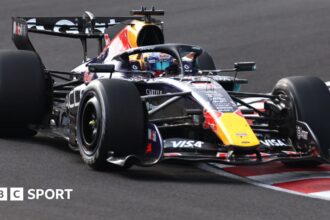
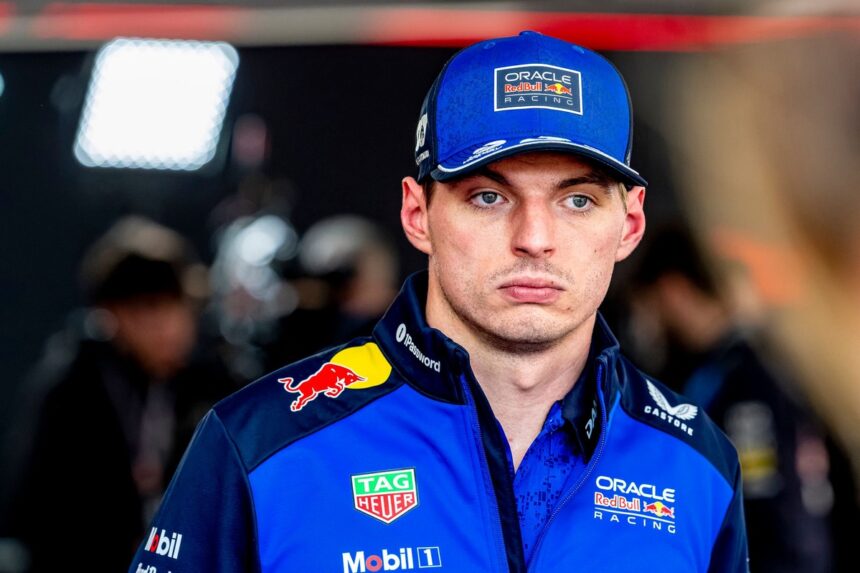
The Shanghai International Circuit was bathed in the glow of another victory ceremony, but for Max Verstappen, the taste was unmistakably bitter. The Red Bull driver had just secured a dominant win, a familiar script in his era of supremacy. Yet, in the post-race media pen, a single, seemingly innocuous comment about the racing feeling less “artificial” and energizing the fans became the spark for a thermonuclear critique. Verstappen’s response wasn’t just frustration; it was a declaration of war on Formula 1’s future. And as the paddock packed for the next race, one question lingered: who slept worst last night? The answer, undoubtedly, was the four-time world champion, staring at a ceiling haunted by the specter of what he believes is the sport’s impending ruin.
A Champion’s Fury: The “Mario Kart” Broadside
The moment was as revealing as it was explosive. When a journalist suggested the 2026-spec racing had fans cheering, Verstappen’s composure shattered. “It’s terrible,” he fired back. “If someone likes this, then you really don’t know what racing is about. It’s not fun at all. It’s playing Mario Kart. This is not racing.” This wasn’t the typical driver grumbling about balance or tires. This was a fundamental rejection of the sport’s new identity. For Verstappen, a purist forged in the crucible of karting and junior formulae, the 2026 rules—with their heavy reliance on overtake-assist systems, complex battery deployment zones, and what he perceives as artificial racecraft—represent an unforgivable sin. They have, in his view, stripped away the essence of skill, turning Grand Prix racing into a glorified, high-tech video game where driver input is secondary to system management and strategic button-pushing.
The Accumulating Indignities of the 2026 Season
Verstappen’s fury is not born in a vacuum. The 2026 season, despite his continued presence at the sharp end, has been a cascade of professional irritants for the champion. His pre-season warnings about the new technical regulations being a “complete bust” were dismissed by some as resistance to change. Then, reality bit. A rare mistake saw him crash in qualifying for the season opener, an unforced error perhaps subconsciously influenced by wrestling with an unpredictable car. The race itself compounded the issues, as he became one of several drivers victimized by the new power unit complexities, staggering away from the lights with a depleted battery. For a driver whose success is built on relentless perfection and machine-like consistency, these systemic gremlins are a profound annoyance. Each incident validates his bleak prophecy, turning every victory into a fraught battle against his own equipment as much as his rivals.
The core of his discontent lies in several key changes:
- Over-reliance on Overtake Assist: The system has become too pivotal, making passes feel pre-ordained rather than earned through daring or superior racecraft.
- Energy Management Chaos: Drivers are now engineers on the fly, managing complex battery deployment windows that can punish even minor miscalculations with catastrophic performance loss.
- The “Artificial” Spectacle: In Verstappen’s eyes, the created drama—cars yo-yoing in performance based on battery charge—manufactures a false competition, undermining the purity of a flat-out fight.
The Purist vs. The Product: A Clash of Philosophies
This conflict exposes the eternal tension at the heart of modern Formula 1. On one side stands the purist’s perspective, embodied by Verstappen and a cadre of older fans and drivers. They believe racing is the ultimate test of man and machine, where the best driver in the best car should win, and overtaking should be a rare, skill-based art form. On the other side is the commercial reality of a global entertainment product. Liberty Media, F1’s owners, have a mandate to grow the audience. This often means prioritizing wheel-to-wheel action, unpredictable results, and a “show” that can captivate casual viewers. The 2026 rules are the ultimate expression of this philosophy. Verstappen’s “Mario Kart” jab is the purist’s recoil against a sport being engineered for maximum engagement, not just sporting purity.
Who is right? The truth, as ever, lies in the middle. Grandstands are fuller than ever, and television audiences are booming, suggesting the overall product is resonating. Yet, the vocal dismay of the sport’s most dominant current talent cannot be ignored. It risks creating a schism between the spectacle and the sport’s soul.
Predictions: A Stormy Road Ahead for Verstappen and F1
Where does this lead? The trajectory points toward continued turbulence. Verstappen is not a driver who will quietly acquiesce. We can expect:
- Escalating Rhetoric: More blistering critiques, especially after races where technicalities overshadow driving.
- A Motivational Quandary: Could his disdain for the machinery actually erode his legendary focus? Winning in a formula he despises may feel hollow.
- Contractual Tremors: While locked in long-term, his happiness is paramount. If the “Mario Kart” feeling persists, the unthinkable—an early exit from F1—becomes a faint but real possibility.
- Manufacturer Pressure: His public statements are a direct challenge to the FIA and F1’s rule-makers. If viewership dips or fan sentiment sours, the governing bodies may be forced into quicker-than-anticipated revisions.
Conclusion: The Sleepless Guardian of a Fading Ideal
Max Verstappen didn’t sleep well last night. He was likely replaying the “artificial” overtakes, the battery management screens, and the cheers for what he considers a bastardized version of his life’s passion. He is trapped in a paradox: the most successful driver of his generation, utterly disillusioned with the environment of that success. His war is not with a rival team or driver, but with the very direction of Formula 1. In calling it “Mario Kart,” he has drawn a line in the asphalt. On one side is the future of global entertainment; on the other is his definition of racing. For now, he stands alone on that line, a champion battling to save the sport from itself, even if that means becoming its most vocal and disruptive critic. The real race is no longer just on Sunday. It’s a philosophical battle for the heart of Formula 1, and Max Verstappen, wide awake and fuming, is right in the middle of it.
Source: Based on news from Yahoo Sports.