Geopolitical Tremors: The Iran-Israel Conflict Threatens F1’s Gulf Ambitions
The high-octane world of Formula 1, a sport built on precision and predictability, is facing an unpredictable and formidable opponent: geopolitics. As the 2025 season approaches its crucial early flyaways, the shadow of the escalating conflict between Iran, Israel, and the United States looms large over the Middle Eastern leg of the calendar. The Bahrain and Saudi Arabian Grands Prix, glittering centerpieces of F1’s expansion and financial might, now find themselves in the crosshairs of regional retaliation, putting their execution in serious doubt. The spectacle of sport is colliding with the stark reality of missile strikes, creating a crisis for the FIA, teams, and the series’ commercial rights holder.
The Frontline: Bahrain and Saudi Arabia in the Crossfire
For over a decade, the Gulf region has been a cornerstone of Formula 1’s global strategy. State-of-the-art facilities, lavish funding, and night races under dazzling lights have redefined the opening acts of the season. However, these very nations are now on the frontline of a dangerous regional escalation. Following US-Israeli airstrikes, Iran launched a significant retaliatory barrage of missiles and drones targeting several Gulf states.
The attacks were not symbolic. Critical infrastructure, including energy facilities and civilian areas, was hit. Notably, hotels and compounds housing American military personnel and contractors in Bahrain and Saudi Arabia were among the targets. This represents a severe escalation from proxy conflicts to direct strikes on the territory of F1 host nations. The Bahrain International Circuit in Sakhir and the Jeddah Corniche Circuit are not isolated bubbles; they are part of nations actively engaged in a volatile security crisis.
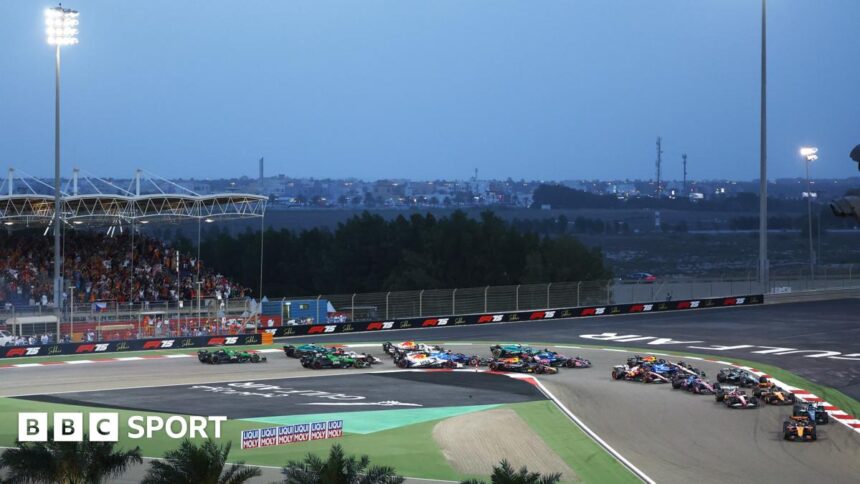
- Bahrain GP: Scheduled for April 10-12, it is set to be the fourth round of the 2025 season.
- Saudi Arabian GP: The fast-paced street circuit in Jeddah is slated for a week later, April 17-19.
- Direct Impact: Attacks have struck within these countries, moving the threat from abstract to immediate.
The F1 Dilemma: Safety, Contracts, and Moral Calculus
Formula 1’s governing body, the FIA, has a paramount and non-negotiable duty: the safety of all competitors, team personnel, and spectators. The official FIA Force Majeure clauses allow for the cancellation of events due to circumstances beyond reasonable control, explicitly including war, civil unrest, and acts of terrorism. The current situation is edging perilously close to invoking such measures.
Beyond the legalities, the sport faces a profound moral and reputational calculation. Can it justify bringing thousands of staff, drivers, and international fans into a potential conflict zone? The memory of the 2011 Bahrain Grand Prix cancellation due to civil unrest is still fresh. Team principals are notoriously risk-averse when it comes to their personnel and multi-hundred-million dollar assets. The logistical nightmare of last-minute cancellation is secondary to the potential human cost.
Furthermore, the sport’s “sportswashing” narrative, long leveled at its Gulf partnerships, would reach a fever pitch. Competing in nations under active missile threat would draw fierce criticism, regardless of the substantial security guarantees host governments would promise. The balance between commercial imperative and ethical responsibility has never been so stark.
Expert Analysis: Contingency Plans and Ripple Effects
Speaking to sources within the paddock, the mood is one of “concerned watchfulness.” Security briefings from F1 and the FIA have undoubtedly intensified. “The teams will follow FIA guidance, but no one wants to be the guinea pig,” a senior team engineer, speaking on condition of anonymity, noted. “The freight is already being prepared, but there are whispers about holding patterns.”
Contingency planning will be in overdrive. The most likely scenario, should either race be canceled, is a double-header at another circuit. Australia, which typically precedes Bahrain, or China, which follows, could be candidates for extended events. However, slotting in an entirely new venue at such short notice is virtually impossible. The financial ramifications are colossal. Hosting fees from Bahrain and Saudi Arabia, estimated to be among the highest on the calendar, would be in jeopardy, triggering complex insurance claims.
The sporting impact is equally significant. These circuits provide specific challenges that set the early development trajectory for cars. McLaren’s Oscar Piastri, who secured a breakthrough victory at last year’s Bahrain Grand Prix, would be denied a chance to defend his win on the same tarmac. The loss of these races would compress the season and alter the competitive rhythm entirely.
Predictions: A Season on a Knife-Edge
Forecasting the geopolitical landscape is even trickier than predicting a wet-weather race winner. However, several likely outcomes emerge based on current trajectories:
- High-Alert Proceeding: If a tense ceasefire holds, F1 will likely proceed under unprecedented security. Races would feel like fortresses, with a muted atmosphere, overshadowed by the threat. This is F1’s preferred, but riskiest, outcome.
- Postponement & Rescheduling: A more plausible option may be a last-minute postponement, hoping for a calmer window later in the year. This disrupts the entire logistics chain but preserves the commercial relationships.
- Outright Cancellation: A significant new attack or intelligence of a direct threat to the event would force the FIA’s hand. Cancellation becomes inevitable. This is the worst-case scenario for organizers and the sport’s regional strategy.
The decision will not be made in a vacuum. Western governments will issue travel advisories; corporate sponsors and broadcast partners will exert pressure. The final call, expected in the weeks leading up to the freight shipments, will be one of the most consequential in modern F1 history.
Conclusion: A Pivotal Moment for the Sport’s Future
The threat to the Bahrain and Saudi Arabian Grands Prix is more than a scheduling headache. It is a stress test for Formula 1’s globalized business model. The sport has eagerly embraced regions offering growth and investment, but it now confronts the inherent instability that can accompany such partnerships. The gleaming paddock hubs and futuristic tracks are vulnerable to the ancient tides of regional conflict.
Whether the lights go out on schedule in Sakhir and Jeddah will depend on the volatile calculus of Middle Eastern politics. More than that, it will reveal how Formula 1 values its own people and principles against the immense financial and political weight of its host nations. The roar of engines may yet be silenced by the whistle of missiles, forcing the sport to confront the very real world beyond its carefully curated confines. The 2025 season, and perhaps the future direction of F1’s expansion, now hinges on events far beyond the racetrack.
Source: Based on news from BBC Sport.