Has the Aston Martin Newey Experiment Already Stalled? F1’s Bold Gamble Under the Microscope
As Formula 1 packs for Suzuka, a circuit that separates the contenders from the pretenders, the grid’s narrative is split. At the front, Mercedes’ silver arrows are flying, with George Russell and the sensational rookie Kimi Antonelli trading wins. In the midfield, however, a more perplexing story unfolds. It’s the tale of Aston Martin’s high-stakes, headline-grabbing project: installing the legendary designer Adrian Newey not just as a technical figurehead, but as its de facto team principal. With the season’s third round upon us and a looming five-week break—a consequence of the cancelled Middle Eastern races—the question is becoming urgent: has this audacious structural experiment already failed to launch?
The Grand Vision: A Newey-Led Renaissance
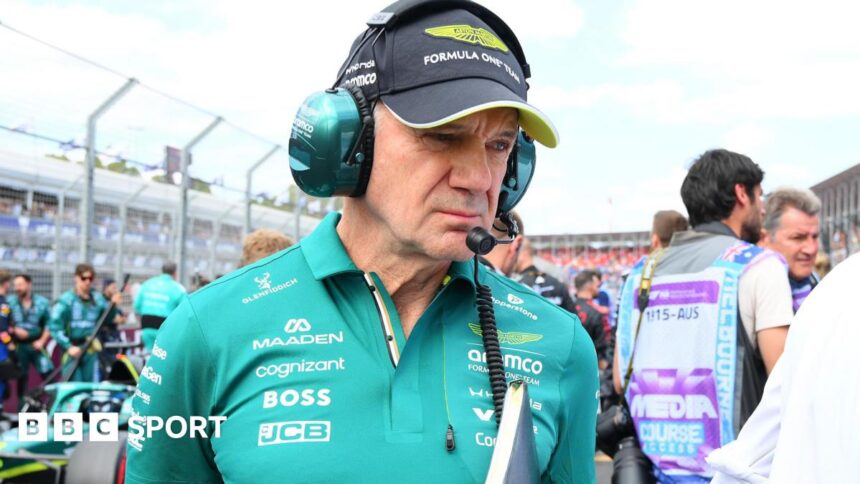
When Aston Martin secured the signature of Adrian Newey in March last year, the paddock shuddered. This was the sport’s most coveted mind, the architect of championship-winning cars for Williams, McLaren, and Red Bull, moving to a team with podium aspirations but no recent history of regular wins. The vision was clear and revolutionary. Rather than slotting Newey into a pure technical director role, the team embarked on a radical path. Following the repositioning of former team principal Andy Cowell, Newey assumed overarching leadership.
The theory was seductive. Newey’s genius would not be confined to the wind tunnel or drawing board; it would permeate every strategic and operational decision. This was a bid to create a seamless, performance-driven culture from the garage floor to the boardroom, all filtered through the mind of F1’s most successful designer. It promised a holistic approach to climbing the grid, breaking down the traditional silos between technical and sporting leadership.
The Suzuka Stress Test: Reality Bites on the Track
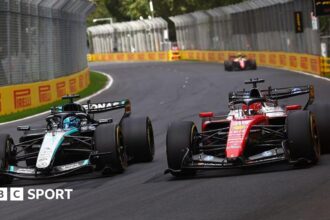
Fast forward to the present, and the 2026 season’s early results present a stark contrast. While Mercedes celebrates a one-two finish in Melbourne and Antonelli’s fairy-tale maiden win in Shanghai, Aston Martin’s performance has been anaemic. The AMR-06, the first car conceived entirely under Newey’s broad oversight, lacks the promised transformative edge. Key issues have emerged:
- Qualifying Deficit: The cars have struggled to escape Q2, leaving them mired in traffic and vulnerable on race day.
- Race Pace Inconsistency: Even when strategy offers opportunity, the car’s performance fluctuates dramatically, suggesting unresolved aerodynamic or setup windows.
- Operational Hesitancy Pit stops and in-race calls have lacked the razor-sharp decisiveness characteristic of top teams, raising questions about track-side command.
This weekend’s Japanese Grand Prix at the demanding, high-speed Suzuka circuit will be a particularly brutal litmus test. The track punishes any aerodynamic imbalance and rewards stable, predictable cars. A poor showing here would be a damning indictment of the car’s fundamental design and the team’s ability to optimize it—the very areas Newey was hired to mastermind.
Expert Insight: The Burden of Dual Roles
As BBC F1 correspondent Andrew Benson often highlights, the role of a modern F1 team principal is a monstrous undertaking. It encompasses media scrutiny, driver management, strategic oversight, and political warfare within the FIA. It is a full-time job of immense pressure. The concern among insiders, a view Benson’s analysis would likely echo, is that by asking Newey to shoulder this burden alongside his technical duties, Aston Martin may have diluted his unique value.
Is Newey, a man whose brilliance is born from deep, focused contemplation of aerodynamic surfaces and mechanical linkages, now too distracted by sponsor commitments, driver contract rumours, and press conference obligations? The early evidence suggests the hybrid role may be creating the worst of both worlds: a team principal without the singular, ruthless focus of a Toto Wolff or a Fred Vasseur, and a technical lead without the uninterrupted space to perform his magic. The structural experiment, designed for synergy, may be causing friction.
The Looming Shadow: Mercedes’ Benchmark and a Defining Break
Aston Martin’s struggles are magnified by the blistering form of their power unit supplier, Mercedes. The Brackley squad has hit the ground running in the new regulatory era, proving the engine’s competitiveness and showcasing a well-oiled, traditional leadership structure. For Aston Martin, every finish behind a Mercedes customer team is a painful reminder of the performance gap that leadership, not just hardware, must bridge.
Furthermore, the upcoming five-week hiatus after Suzuka—an extended pause forced by geopolitical realities—creates a critical juncture. This is not a normal break for development; it is a forced period of reflection and potential recalibration. It will be a test of the Newey-led team’s ability to react, redesign, and reorganize. Will they emerge with substantial upgrades and a clearer operational hierarchy, or will the extended time merely cement the early-season doubts?
Predictions for the Road Ahead
The trajectory of the Aston Martin project is at a precipice. Several scenarios could unfold:
- Course Correction: The most likely outcome is a quiet but significant reshuffle. Newey’s title may remain, but a strengthened, day-to-day sporting director could be appointed to handle the operational load, freeing Newey to do what he does best. This would be an admission the original model was flawed but could salvage the long-term investment.
- Patience and Evolution: The team, and owner Lawrence Stroll, may double down, arguing that the new car’s concept needs time and that the cultural shift Newey is engineering cannot be measured in a handful of races. This is a high-risk strategy that requires unwavering faith.
- Irrelevance: The danger is that the team falls into a vortex of mediocrity. With resources stretched and leadership stretched thinner, they could be overtaken by the recovering midfield pack, making the Newey era a costly, confusing footnote.
Conclusion: A Visionary Bet Not Yet Lost
To declare the Aston Martin “Newey project” a definitive failure after two races is premature in a marathon season. The scale of the ambition—to fuse technical and sporting genius into one role—was always a monumental risk. The early returns, however, are undeniably worrying. The car is not a pacesetter, and the team’s operations seem unsettled.
The true test begins this Sunday at Suzuka and extends through the enforced break. This period will reveal if this is merely the painful birth pangs of a revolutionary structure or a fundamental misallocation of the sport’s greatest technical resource. One thing is certain: the F1 world is watching, waiting to see if a legend’s legacy can adapt to the sport’s most brutal role, or if Aston Martin’s boldest gamble needs a swift and strategic pit stop. The project may not have failed, but its success is now on the clock.
Source: Based on news from BBC Sport.