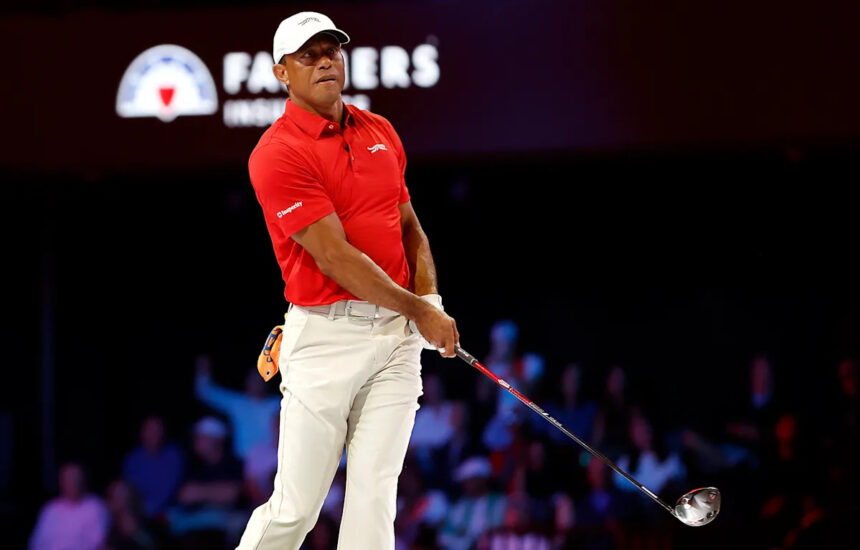
Tiger Woods Returns to Competitive Golf: A Birdie Putt, A Team Loss, and A New Chapter
The roar was simulated, the green was hydraulic, and the arena was in Palm Beach Gardens, not Augusta. But the moment was unmistakably, undeniably Tiger. With 614 days since his last PGA Tour shot and a body rebuilt through Achilles and back surgeries, Tiger Woods stood over a 25-foot birdie putt in a competitive setting. His first stroke back? A putt that tracked the hole with intent, dying a heartbreaking inch short. In that solitary, silent roll of a golf ball on a moving surface, the entire saga of Tiger Woods’ modern career was encapsulated: the breathtaking skill, the agonizing near-misses, and the relentless, defiant will to simply be back.
On Tuesday night, Woods, captain of the TGL’s Jupiter Links Golf Club, returned to action in the tech-forward league’s championship series. While his team ultimately fell short, losing the best-of-three series to the LA Golf Club, the narrative transcended the scoreboard. This was not about a trophy; it was about a testament.
More Than a Simulator: The Significance of Tiger’s TGL Return
To dismiss the TGL as mere “simulator golf” is to miss the forest for the virtual trees. For Tiger Woods, this arena represented a controlled, yet intensely competitive, gateway. The competitive fire that defines him cannot be switched on for a casual round. It requires stakes, an audience, and teammates relying on him.
“I’ve been a cheerleader all these matches, and I want to contribute,” Woods told ESPN before the match, revealing he decided to play only the day prior. This statement is a window into his current mindset. The team dynamic of TGL provides a new motivation—a shared burden and a collective pursuit that differs from the solitary grind of the PGA Tour. For an athlete whose body may no longer permit a full schedule, this league offers a structured, condensed format to scratch the competitive itch that has driven him for decades.
His return also strategically reboots the TGL viewership and legitimacy. His presence transforms the product from a novel experiment into a must-see event, proving the league’s value as a platform for golf’s biggest stars to compete in an innovative format.
Anatomy of a Comeback: From Surgeries to Short Game
The timeline since Woods’ last official PGA Tour start at the 2024 Open Championship is a medical ledger:
- March 2024: Underwent surgery to repair a torn Achilles tendon.
- October 2024: Underwent a follow-up procedure to address lingering back issues.
- December 2024: Made a familial return, playing alongside son Charlie at the PNC Championship.
- Early 2025: Participated in early-season TGL matches before stepping back.
This sequence underscores the monumental challenge. Each surgery requires not just physical rehabilitation, but a recalibration of the entire golf swing. The fact that he returned to hit drivers into a screen and navigate tricky short-game shots on a 3,800-square-foot short-game complex—the “SoFi Short Court”—shows a focused recovery. His swing, while carefully measured, retained its iconic sequencing. Most telling was his short game; the touch on chips and the feel on those knee-knocking putts demonstrated that his genius, the computational hand-eye coordination, remains intact even when the body is in maintenance mode.
Jupiter Links vs. LA Golf: A Championship Series Breakdown
The championship pitted Woods’ Jupiter Links (with Max Homa and Tom Kim) against the formidable LA Golf Club, captained by Justin Rose and featuring Tommy Fleetwood and Sahith Theegala. Losing the first match on Monday put Jupiter Links in a must-win situation for Tuesday’s showdown.
Key moments defined the night:
Woods’ pairing with Max Homa in the alternate-shot session showed flashes of brilliance but also the inevitable rust of partnership play. The format is brutally exposing, and the lack of reps together was apparent against the more cohesive LA Golf duo. Tom Kim’s energetic play provided sparks, but the consistency of Rose, Fleetwood, and Theegala—a group with more shared competitive experience—ultimately prevailed.
The loss, however, does little to dim the spotlight on Woods’ personal milestone. The TGL championship result was a secondary storyline to the primary headline: Tiger Woods, against a cascade of physical setbacks, stood over a golf shot that mattered again. He contributed, he competed, and he reminded the world that his presence alters the atmosphere of any golf competition, regardless of the venue.
What’s Next for Tiger? Predictions for 2025 and Beyond
With this competitive bridge crossed, the question now turns to the roadmap ahead. Based on his TGL return and recent history, we can forecast a cautious, highly selective schedule:
- The Masters 2025: All signs point to an appearance at Augusta National. The walkable, familiar terrain and the major that rewards guile over pure power is his most likely PGA Tour destination.
- Limited PGA Tour Starts: Expect one, perhaps two, other major appearances (likely the PGA Championship and The Open). Regular Tour events seem increasingly unlikely.
- TGL Season 2: He will be a centerpiece of the league’s second season, likely with a goal of returning Jupiter Links to the championship.
- Captaincy Role: His leadership as a playing captain will only grow, mentoring younger stars like Kim and leveraging Homa’s elite ball-striking in a more practiced tandem.
The era of Tiger Woods chasing a full FedExCup schedule is over. The new phase is one of strategic event selection and legacy curation. His competitive outlets will be bifurcated: the hallowed grounds of majors, and the innovative, team-based arena of TGL.
Conclusion: A New Definition of “Back”
Tiger Woods’ return to competitive golf did not end with a trophy lift. It ended with a team loss in a high-tech arena. Yet, to judge it by that metric alone is to fundamentally misunderstand the man and the moment. The victory was in the preparation, in the willingness to subject a rebuilt body to the pressure of a must-win match, and in the simple, powerful act of hitting that first putt.
The 25-foot birdie putt that came up short is the perfect metaphor. It didn’t drop, but it was on line. It had the right speed, the right read, and the right intention. For Tiger Woods, in this chapter of his legendary career, that is what being “back” looks like. It’s not about dominance; it’s about defiance. It’s about contributing to the team, embracing new formats, and reminding us that while the canvas may have changed—from pine straw to pixelated screens—the artist’s desire to create something memorable remains utterly unchanged.
Source: Based on news from Yahoo Sports.