Trump’s Defense of Tiger Woods Spotlights Golfer’s Pain and Pills Found in DUI Aftermath
The intersection of sports, politics, and personal struggle rarely produces a moment as stark as the one unfolding around Tiger Woods. Following the golf legend’s recent single-vehicle crash and DUI arrest in Jupiter, Florida, a surprising voice of public support emerged from former President Donald Trump. In an exclusive interview with the New York Post, Trump framed Woods’ ordeal not as a lapse in judgment, but as a consequence of a “life of pain.” This defense, juxtaposed against the cold facts of the police affidavit revealing prescription pills in Woods’ vehicle, opens a complex dialogue about fame, physical agony, and the precarious road to recovery.
The Crash, The Arrest, and The Presidential Phone Call
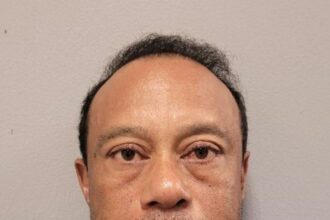
In the early hours of a Friday morning, Tiger Woods was found asleep at the wheel of his parked, but running, Mercedes-Benz, which had sustained significant damage from an apparent rollover. Police reports indicated he was disoriented and allegedly admitted to taking several prescription medications. Crucially, a breathalyzer test showed a 0.00% blood alcohol concentration, immediately shifting the narrative from alcohol to pharmaceuticals. The arrest affidavit later confirmed officers discovered multiple pill bottles in the vehicle, though no illegal substances were listed.
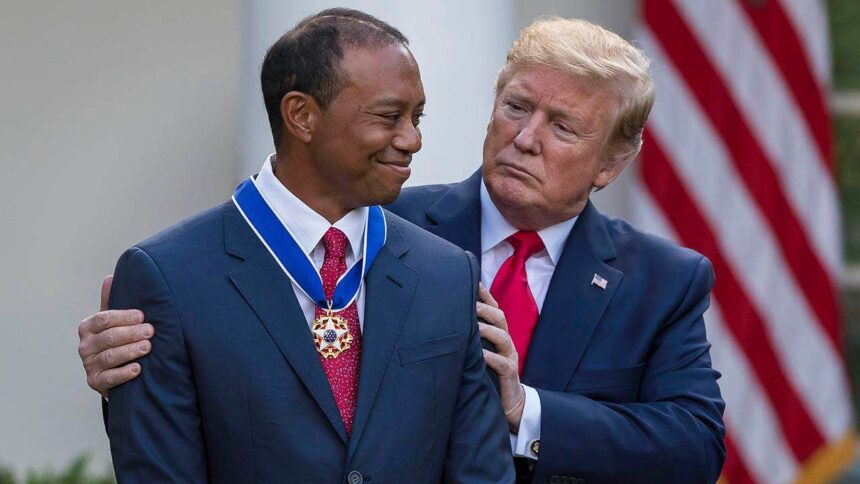
Amid the media storm, Donald Trump revealed he had personally spoken to Woods. “I think he’s doing great, he’s doing good,” Trump told the Post, emphasizing Woods’ physical burdens. “He tested negative for alcohol, as you know, and he is under a tremendous physical pressure from his various ailments, you know, the back and the leg.” This private gesture and public commentary from a former president adds a unique political dimension to a sports scandal, reframing it through a lens of empathy for Woods’ well-documented physical struggles and surgeries.
Deconstructing “A Life of Pain”: The Physical Toll on Tiger Woods
Trump’s characterization, while politically charged, is rooted in medical reality. Tiger Woods’ body is a catalog of high-performance trauma. His chronic back issues led to multiple spinal fusion surgeries, a last-ditch effort to salvage his career and quality of life. The severe leg injuries sustained in his 2021 Los Angeles car crash—compound fractures and a shattered ankle—required extensive surgery and rehabilitation. The cocktail of medications often prescribed for such conditions—painkillers, anti-inflammatories, muscle relaxants—can have powerful side effects and severe interactions.
- Multiple Spinal Surgeries: From microdiscectomies to a transformative spinal fusion, Woods’ back has been a primary source of debilitating pain.
- Legacy of Knee Operations: Years of torque on the course led to multiple ACL reconstructions and other knee procedures long before the 2021 crash.
- 2021 Crash Aftermath: The catastrophic leg injuries threatened not just his golf, but his ability to walk normally, contributing to an immense, ongoing physical and psychological burden.
This context is critical. It does not excuse driving under impairment, but it explains the environment in which such an incident can occur. The “life of pain” is not metaphorical; it is a daily management of discomfort, medication schedules, and the psychological weight of a body that has repeatedly failed its owner.
The Legal and Professional Crossroads
While Trump’s support offers a sympathetic narrative, Woods faces concrete legal and professional ramifications. Florida law is clear on DUI, and the presence of prescription drugs does not provide immunity if they impair driving ability. Woods was charged with DUI “impaired to the slightest degree,” a charge later dropped as he agreed to enter a diversion program focusing on education and treatment. This is a standard outcome for a first-time offender under these circumstances, but the reputational damage is less easily resolved.
From a professional standpoint, the incident casts a shadow over his already-limited competitive future. Golf analysts are now questioning not just his physical capability to withstand tournament play, but the focus and stability required at the highest level. His role as a course designer and figurehead for the PGA Tour’s strategic initiatives remains, but the sheen of invincibility is further tarnished. The narrative is shifting from “will he win again?” to “how is he managing his health and life beyond the fairways?”
Predictions: The Long Road Ahead for Tiger Woods
Looking forward, the path for Tiger Woods is one of careful, private management. We can anticipate several key developments:
- Strict Medical Management: A likely overhaul of his pain management protocol, potentially under stricter supervision to prevent any future incidents.
- Limited Public Appearances: Woods will become even more guarded, with public outings likely reserved for major tournaments he can play, like The Masters, or his own foundation events.
- Legacy Evolution: His legacy is secure, but its final chapters are being rewritten. He will be celebrated as much for his historic comeback wins as for his very public human struggles with injury and personal crisis.
- Endorsement Resilience: While some brands may distance themselves, his core partners, understanding his medical history, are likely to stand by him, framing his story as one of resilience.
The most significant prediction is that this incident will force a broader conversation in sports about the management of chronic pain and the use of prescription medication among athletes long after their competitive peaks.
Conclusion: Beyond the Headlines, a Human Story
The image of a disoriented Tiger Woods and the pill bottles listed in a police affidavit are jarring contrasts to the champion in the red shirt on a Sunday back nine. Donald Trump’s decision to voice support, labeling Woods’ existence a “life of pain,” however calculated, serves to highlight an uncomfortable truth often glossed over in sports hero worship. The machine that produces legendary athletic feats often leaves behind a broken body. This incident is less a scandal of vice and more a tragic symptom of a relentless physical decline. Tiger Woods’ greatest battle is no longer against Jack Nicklaus’ record or a field of young rivals; it is a daily, private match against the accumulated toll of a lifetime spent pushing the human body to its absolute limit. His future, and his peace, depend on winning that most personal of matches.
Source: Based on news from Fox Sports.