Beyond the Fairway: Paige Spiranac’s Compassionate Plea for Tiger Woods Amid Personal Crisis
The world of golf was rocked this week not by a record-breaking score or a major championship triumph, but by the somber news of Tiger Woods stepping away from the game to seek treatment. This decision follows his not-guilty plea and request for a jury trial related to a DUI arrest stemming from a harrowing single-car rollover crash in Jupiter Island, Florida. In the ensuing media storm, a voice of unexpected empathy rose above the usual cacophony of hot takes and judgment. Golf influencer and social media powerhouse Paige Spiranac shared a poignant message of encouragement for Woods, framing the conversation not around legacy or sport, but around humanity and healing.
A Statement of Struggle and a Reaction of Compassion
Tiger Woods’ public statement was a stark admission of a personal battle. The 15-time major champion, whose physical resilience has been documented for years following multiple back surgeries and a catastrophic leg injury, shifted the focus to his internal well-being. By pleading not guilty and seeking a jury trial, the legal process begins its course. Yet, his parallel commitment to “seek treatment” signaled a profound acknowledgment of a need for help beyond the physical.
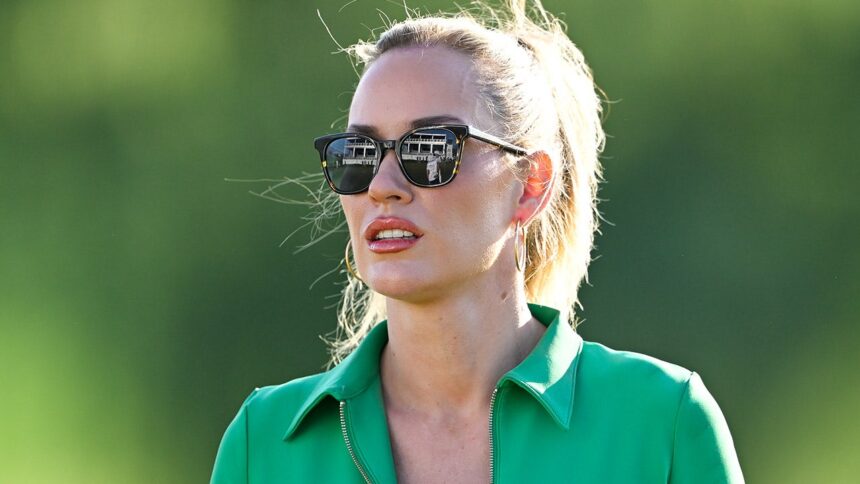
Into this fragile moment stepped Paige Spiranac. Known for her vibrant online presence and candid discussions about golf and the pressures of public life, Spiranac’s reaction on X (formerly Twitter) was a masterclass in measured compassion. She wrote: “I think we are all rooting for Tiger. Not as a golfer but more importantly as a person. None of us can fathom what he’s been through both emotionally and physically. Not excusing any behavior, but I hope he’s able to get the help he needs in peace without the whole world dog piling on him in a very difficult situation.”
This statement is significant for several reasons:
- It separates the icon from the individual, urging support for the man behind the myth.
- It acknowledges unparalleled trauma, both from his very public personal collapses and his severe, career-altering injuries.
- It maintains accountability while advocating for empathy, a nuanced position often lost in today’s digital discourse.
- It highlights the corrosive nature of the “dog pile” effect in modern media, where scandal triggers an overwhelming and often counterproductive cycle of public shaming.
The Unfathomable Pressure: Analyzing Tiger’s Dual Burden
To understand the weight of Spiranac’s words, one must consider the unique and immense burdens Tiger Woods has carried for nearly three decades. His has been a life lived under a microscope of unprecedented intensity.
The Physical Gauntlet: Woods’ physical trials are the stuff of medical journals. From multiple knee surgeries to a fused spine and the recent leg injury that threatened amputation, his body has withstood brutal punishment. Chronic pain is a relentless companion, often a gateway to prescription medication and a profound psychological toll. The struggle to simply move without pain, let alone compete at the highest level, is a battle few can comprehend.
The Emotional Crucible: Parallel to his physical journey has been a very public emotional rollercoaster. His fall from grace in 2009, the dissolution of his family, and the constant scrutiny of every move have played out on a global stage. He has been deified, vilified, pitied, and celebrated in extreme cycles. As Spiranac alluded to, this emotional whiplash—coupled with the pressure to always be “Tiger Woods”—creates a psychic weight that can fracture even the strongest minds.
Spiranac, herself no stranger to the dark side of internet fame and public judgment, speaks from a place of relatable experience. Her call for peace and space for healing recognizes that recovery cannot happen authentically under the blinding glare of a billion hot takes.
What Comes Next? Predictions for Woods and the Golf World
The road ahead for Tiger Woods is bifurcated into two parallel paths: one legal, one personal. Their intersection will define his future.
The Legal Path: With a not-guilty plea entered and a jury trial sought, the case will proceed through the Florida legal system. This will be a protracted process, ensuring the incident remains in the news cycle. The details revealed in court will inevitably fuel further media coverage, testing Spiranac’s hope for a peaceful recovery environment.
The Personal and Professional Path: This is the greater unknown. Woods’ commitment to treatment is the most critical step. Predictions here are delicate, but several scenarios are possible:
- A Focused, Private Recovery: The ideal scenario. Woods fully retreats from public life to address his health, leveraging his resources for top-tier care. This aligns with Spiranac’s plea for peace.
- A Hybrid Model: He may remain largely out of sight but use his TGR Ventures and course design work as a therapeutic, low-pressure connection to the game he loves.
- The Competitive Crossroads: His competitive future is now deeply in doubt. The physical hurdles were already immense; this personal crisis adds a monumental layer. A return to the PGA Tour seems increasingly distant. A more likely role, eventually, is that of a ceremonial figure—a future Ryder Cup captain, an elder statesman appearing at the Masters—but only after significant and sustained personal recovery.
The golf world will, of course, continue. Tournaments will be played, new stars will rise. But Woods’ absence now carries a different tone—one of concern rather than mere speculation about a comeback. The sport is forced to contemplate the well-being of its most transformative figure.
A Lesson in Humanity for the Digital Age
Paige Spiranac’s intervention in the Tiger Woods saga is more than just a supportive tweet. It is a mirror held up to our collective behavior as consumers of fame and tragedy. In an era where engagement is driven by outrage and schadenfreude, her message advocates for a more mature, humane response.
She reminds us that public figures are not monolithic entities but complex individuals carrying invisible wounds. Her statement challenges the “all-or-nothing” narrative—that one must either condemn utterly or excuse completely. Instead, she offers a third way: compassionate accountability. We can hold space for someone’s struggle without endorsing their mistakes. We can wish for someone’s healing while respecting the legal process.
For Tiger Woods, the journey ahead is perhaps the most important of his life. It is no longer about chasing Jack Nicklaus or winning tournaments. It is about reclaiming peace and health. As the legal proceedings unfold and he steps away from the spotlight to seek treatment, the world would do well to heed the wisdom in Spiranac’s words. We are witnessing not just a legal case or a sports story, but a human story of pain, fallibility, and the hope for redemption. Sometimes, the most supportive thing we can do for a legend is to see him simply as a person, and to allow him the quiet he needs to heal.
Source: Based on news from Fox Sports.