World Cup Rail Robbery: How Fans Are Being Fleeced by $150 Train Tickets to MetLife
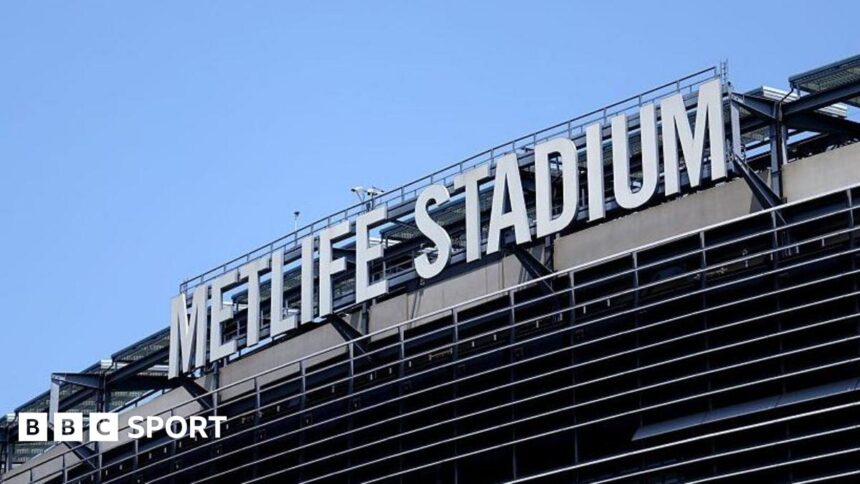
The beautiful game is coming to the United States in 2026, promising a festival of football and a celebration of global unity. Yet, for fans hoping to witness the action at New Jersey’s MetLife Stadium, the first major shock of the tournament has already been delivered—not on the pitch, but at the ticket terminal. A stunning announcement has revealed that a standard 30-minute train journey from Manhattan to the stadium will cost a staggering $150 (£111) per person, with no concessions for children or seniors. This isn’t just a premium; it’s what the Football Supporters’ Association (FSA) is bluntly calling a “fleecing,” a price gouge that threatens to undermine the very accessibility and spirit of the World Cup.
The Sticker Shock: A Journey from Penn Station to Price Exploitation
For context, the normal round-trip fare on NJ Transit from New York’s Penn Station to the MetLife Stadium stop at Secaucus Junction is approximately $12.90 (£9.50). The World Cup fare represents an eye-watering markup of over 1,100%. There is no new high-speed rail service, no luxury amenities, and no radical reduction in travel time. It is the same infrastructure, the same carriages, and the same 18-mile route. The only difference is the event being served.
This move sets a dangerous and exploitative precedent. Consider a family of four attending a match. Before they’ve bought a match ticket, paid for accommodation, or purchased a single slice of stadium pizza, they are looking at a mandatory $600 outlay simply to get from midtown Manhattan to the stadium gates. The alternative, an official shuttle bus, is priced at $80 (£59)—still a monumental increase on typical event-day shuttle costs. The FSA’s condemnation is unequivocal, accusing organizers of treating loyal supporters as mere revenue streams to be “gouged” without remorse.
- Standard Fare: $12.90 round-trip.
- 2026 World Cup Fare: $150 round-trip.
- Markup: 1,062% increase.
- Family of Four Transport Cost: $600 minimum.
- No Concessions: Children and seniors pay full price.
Expert Analysis: The Economics of Fan Exploitation
From a logistical and economic standpoint, event pricing is nothing new. However, sports economists and fan advocacy groups see this as an egregious case that crosses the line from smart revenue capture to pure opportunism. “This is a captive audience strategy at its most naked,” explains Dr. Liam Carter, a professor of sports business. “Fans traveling from abroad or other U.S. cities are functionally locked into using this specific transit link on a specific day. Organizers and transit authorities see this not as a public service integral to the event’s success, but as a separate profit center.”
The absence of concessionary pricing is particularly jarring. Major sporting events, and public transit systems in general, almost universally offer reduced fares for youth and seniors. Its elimination for the World Cup signals a deliberate choice to maximize revenue from every single attendee, regardless of circumstance. This prioritizes profit over inclusivity, potentially pricing out the next generation of fans and the elderly supporters who have followed the game for decades.
Furthermore, this pricing model risks creating significant public safety and congestion issues. Faced with a $150 train ticket, thousands of fans will inevitably seek alternatives: driving, leading to nightmarish traffic and parking chaos; using ride-share apps, causing surge pricing and gridlock; or seeking unofficial and potentially unsafe transit options. The streamlined efficiency that dedicated event transport is supposed to provide is utterly undermined by prohibitive costs.
Predictions: Fallout, Fan Backlash, and Possible Reversals
The backlash to this announcement is only beginning. We can predict several likely consequences and pressure points that may emerge as 2026 approaches.
First, organized fan boycotts of official transport. Supporters’ groups, both domestic and international, are likely to mobilize to find and share alternative travel methods. This could include coordinated bus charters from other locations, carpool networks, and “walk-and-ride” strategies from more distant transit stops. The official $80 shuttle may see low uptake if fans can organize cheaper options themselves.
Second, intense scrutiny on FIFA and local organizing committees. While the transit pricing may be set by local authorities and NJ Transit, the buck ultimately stops with FIFA and the host cities. They have sold the World Cup as an event for all. This transport fiasco directly contradicts that marketing. Sustained negative press and fan outrage could force behind-the-scenes negotiations for a subsidy or a partial price reduction, especially if corporate sponsors grow nervous about association with fan exploitation.
Third, a lasting stain on the tournament’s legacy. The narrative around the MetLife games risks being dominated by travel horror stories and financial gripes rather than the football. For a tournament aiming to grow the sport in the U.S., first impressions matter. Gouging fans before they even reach the stadium is a catastrophic first impression that could damage the fan experience narrative for the entire North American hosting venture.
The Final Whistle: A Test of Values for the Modern Game
The $150 train ticket is more than a pricing error; it is a profound test of values. It asks whether the World Cup is truly a global celebration for the many, or an exclusive spectacle for the wealthy few. It challenges the notion that host cities should welcome fans as guests, not treat them as marks. The beautiful game is built on the passion of its supporters—the atmosphere, the color, the unwavering loyalty. That loyalty is not an inexhaustible resource to be mined until the vein runs dry.
There is still time for a correction. Public pressure, media spotlight, and the sheer weight of logic can prevail. Organizers could introduce dynamic pricing tiers, family packages, or bundle transport with match tickets at a reasonable rate. To do otherwise is to embrace short-term greed over long-term goodwill. The 2026 World Cup promises unforgettable moments on the field. It would be a tragedy if those moments are preceded by an unforgivable one at the train station—where fans, the lifeblood of the sport, were told their presence comes at an unconscionable price. The beautiful game deserves a better journey.
Source: Based on news from BBC Sport.