Will Changes to Rules Make a Noticeable Difference in Miami? F1 Q&A
The Formula 1 circus finally roars back to life this weekend after a grueling five-week hiatus, landing in the neon-lit, humidity-soaked streets of Miami for the 2025 Miami Grand Prix. It has been a strange start to the season. We have seen three races, two different winners, and a shock at the top of the standings: Mercedes’ 19-year-old Italian sensation Kimi Antonelli leads the drivers’ championship ahead of his vastly more experienced teammate, George Russell.
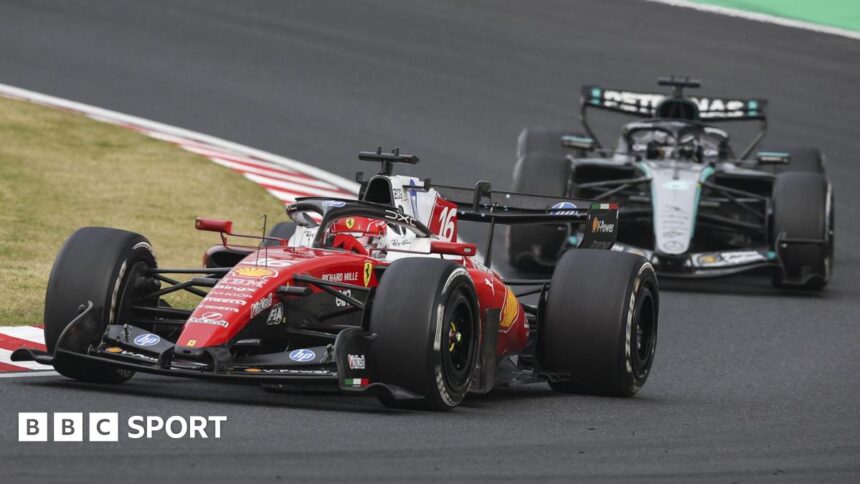
But the narrative heading into Round 4 is not just about the young pretender or the battle between Ferrari’s Charles Leclerc (who finished a solid third in Japan) and Mercedes’ George Russell (who took fourth in Suzuka). The biggest story is the raft of rule changes that have been fast-tracked into effect for this weekend. These changes are a direct response to growing concerns about the new engine regulations that debuted this year. The question on every fan’s mind: Will these tweaks actually fix the racing, or is Miami just a band-aid on a broken engine formula?
BBC F1 correspondent Andrew Benson has been fielding your questions. Here is the definitive analysis of what is changing, why it matters, and whether the Miami heat will expose the real pecking order.
What Exactly Are the Rule Changes for Miami?
To understand the drama, we have to go back to the pre-season. The 2025 engine regulations were supposed to usher in a golden era of closer racing. Instead, they produced a nightmare: overheating power units, unpredictable energy recovery, and a “party mode” loophole that allowed some teams to gain massive straight-line speed for a single lap before their batteries died.
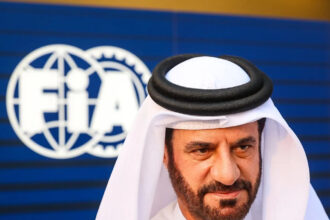
The FIA stepped in. The changes for Miami are not cosmetic. They are technical. Here is the breakdown:
- Revised Energy Deployment Limits: The maximum energy release per lap from the battery has been capped more aggressively. Previously, teams could “harvest” energy under braking and dump it all into a single overtaking zone. Now, the deployment must be more linear across the lap. This targets the Red Bull and Mercedes power units, which were exploiting this the most.
- Cooling Duct Mandates: A new mandatory cooling duct geometry has been introduced. This is huge. In Japan, we saw cars—particularly the Ferrari and Aston Martin—struggling with engine temperatures in the dirty air. The new ducts force a minimum airflow to the electronics, which should prevent the “engine derating” that plagued the midfield. This means drivers can follow closer without their engine automatically cutting power.
- Fuel Flow Restrictions at Low Speed: A subtle but critical change. The fuel flow rate has been reduced by 2% in corners below 100 km/h. This directly addresses the “throttle lag” complaint drivers had in Australia and China. Cars will now have more predictable power delivery out of slow corners like Turn 5 and Turn 11 in Miami.
Andrew Benson notes: “The FIA has moved with unusual speed. They realized the 2025 engines were creating a ‘train effect’ where cars in dirty air lost two seconds a lap simply due to overheating. Miami, with its high temperatures and stop-start nature, is the perfect torture test for these new rules.”
How Will These Changes Affect the Championship Fight?
The championship picture is surprisingly fluid. Kimi Antonelli leads, but his advantage is built on consistency rather than raw pace. George Russell is just a few points behind, and Charles Leclerc is lurking after a strong, damage-limitation drive in Japan.
The rule changes could reshuffle the deck entirely. Let’s look at the key players:
Mercedes (Antonelli & Russell): Mercedes has been the big winner of the engine regulation changes so far. Their power unit is torquey and reliable. However, the new energy deployment limits could hurt them. They were masters of the “qualifying boost” mode. If that is neutered, their one-lap pace advantage shrinks. Russell will likely cope better than Antonelli, as the young Italian relies heavily on that initial burst of speed to make up for his lack of race craft in traffic.
Ferrari (Leclerc & Hamilton): This is the team that should benefit most. Ferrari’s SF-25 has a brilliant chassis but a fragile engine that overheats easily. The new cooling duct mandates are a lifeline for Leclerc. In Japan, he was forced to manage his engine temperature from Lap 10, which cost him a shot at Verstappen. In Miami, with the new ducts, he can push harder for longer. Lewis Hamilton, still adapting to the Ferrari, will also find the car more predictable under braking thanks to the fuel flow tweaks.
Red Bull (Verstappen): The defending champions have been silent, which is usually bad news for the rest. Max Verstappen won the season opener but has been hit-or-miss since. The energy deployment cap is a direct attack on their powertrain philosophy. However, Red Bull has the best aerodynamic efficiency on the grid. They might lose a tenth on the straights but gain it back in the high-speed corners of the Miami track.
Andrew Benson’s verdict: “I expect Ferrari to close the gap to Mercedes significantly in Miami. The cooling changes are tailor-made for their car. If Leclerc can qualify on the front row, he has a real shot at winning. The question is whether Antonelli can adapt his aggressive driving style to the new, more restrained engine mapping.”
Will the Racing Actually Improve? The Miami Track Test
Miami is not Suzuka. It is a street circuit carved out of a parking lot and a golf course. It features long straights, heavy braking zones, and a notoriously bumpy surface. This layout will brutally expose any flaws in the new rules.
The key metric will be following distance. In the first three races, a car within 0.8 seconds of the car ahead would lose downforce and engine power simultaneously. The new rules aim to push that threshold to 0.5 seconds.
Here is what to watch for during the Grand Prix:
- Turn 11 (The Hairpin): This is the best overtaking spot. With the new fuel flow restrictions, drivers should be able to get on the power earlier out of the turn without the rear stepping out. This should lead to more side-by-side racing into Turn 16.
- The Back Straight (Turns 7-8): DRS will still be powerful here, but the energy deployment cap means cars will not have a “second boost” halfway down the straight. Overtakes will need to be decisive on the first move, not a drag race.
- Engine Derating: If we see cars suddenly losing 0.5 seconds on a single lap due to overheating, it means the cooling duct changes are not working. The FIA will be watching the telemetry from Ferrari and Haas closely.
The weather is also a factor. Miami in May is hot and humid. Ambient temperatures could hit 35°C. This is exactly the scenario that caused the engine overheating crisis in pre-season testing. If the new cooling ducts fail, we will see drivers nursing their cars home from Lap 15, turning the race into a fuel-saving procession.
Predictions and the Bigger Picture for 2025
So, will the changes make a noticeable difference? The short answer is yes—but not in the way fans might hope.
I do not expect a sudden explosion of overtakes. Miami has never been a classic overtaking circuit. What I do expect is a compression of the field. The midfield teams—Williams, Haas, and Alpine—have been suffering the most from engine overheating. With the new cooling rules, they can run their engines at full power for longer. This means we might see a surprise Q3 appearance from a team like Haas, who have a strong chassis but a weak power unit.
My bold prediction for the weekend: Charles Leclerc wins. The Ferrari will finally unlock its full potential in the race trim. The new rules take away Mercedes’ qualifying edge and give Ferrari a fighting chance in the heat. George Russell will finish second, but Kimi Antonelli will struggle. The young Italian has never faced a race where he cannot simply “send it” on the straights. He will drop to P4 or P5, behind Max Verstappen.
Andrew Benson concludes: “These rule changes are a necessary correction, not a revolution. They will make the racing in Miami closer, but they will not solve the fundamental problem of the 2025 cars being too long and too heavy. The real test will come in Monaco and Silverstone. If the cars can follow closely in Miami’s slow corners, the FIA will consider this a win. If we see the same ‘train’ effect, we are looking at a full engine regulation overhaul for 2026.”
Conclusion: A Pivotal Weekend for F1’s Future
The Miami Grand Prix is more than just a glitzy return to racing. It is a referendum on the sport’s direction. The rule changes were born from panic, but they have been implemented with precision. If they work, we will see a more dynamic, strategic race where driver skill in managing energy matters more than raw engine power.
If they fail, the narrative will shift from “Kimi Antonelli’s championship lead” to “Is F1 broken?” The teams have had five weeks to prepare. The engineers have run millions of simulations. Now, the rubber hits the road—literally—in the Florida heat.
One thing is certain: the 2025 Miami Grand Prix will tell us if the sport’s decision-makers have saved the season, or merely delayed the inevitable. Buckle up. It is going to be a scorcher.
Source: Based on news from BBC Sport.