Afghanistan Women’s Football: A Symbol of Resilience Returns to the Global Stage
In a landmark decision that transcends the boundaries of sport, the Afghanistan women’s national football team has been given the green light to return to international competition. The ruling, passed by FIFA’s council in Vancouver on Tuesday, amends governance regulations to allow the team to compete under “exceptional circumstances.” For former captain Khalida Popal, this is more than a rule change—it is a declaration that Afghan women will not be silenced. “We will become a symbol of resilience,” Popal declared, speaking exclusively to our team. This article explores the seismic shift in policy, the harrowing journey of the players, and what this means for the future of women’s sport in Afghanistan.
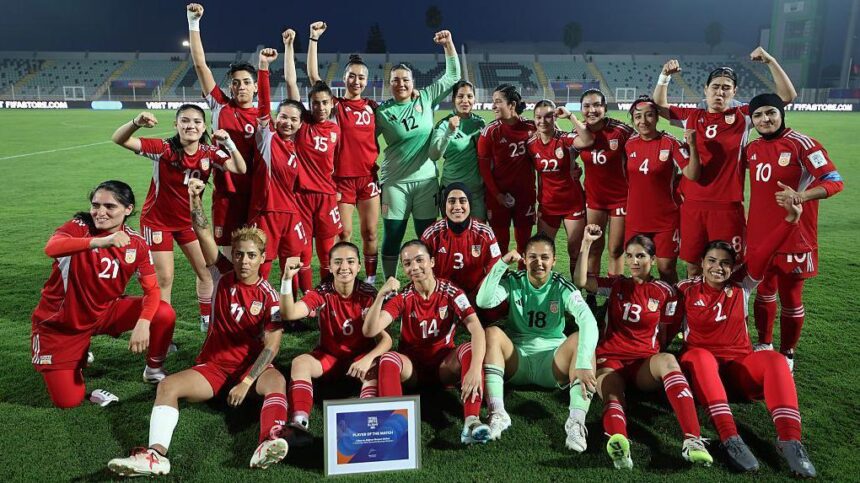
The decision ends a near six-year competitive drought for the squad, who last played an official international match in December 2018. Since the Taliban’s return to power in 2021, women’s sports have been effectively banned, forcing players into exile and asylum overseas. Yet, through the fog of political oppression, this ruling offers a rare beacon of hope—and a powerful legal precedent for athletes worldwide.
The Legal Breakthrough: How FIFA’s Amendment Changes the Game
Previously, FIFA’s governance regulations mandated that a national team could only be officially recognized if it was sanctioned by its member association—in this case, the Afghanistan Football Federation (AFF). This created an impossible deadlock. The AFF, operating under Taliban oversight, has refused to acknowledge women’s football, effectively stranding the players in a bureaucratic no-man’s land.
The amendment approved in Vancouver shatters that barrier. Under the new clause, FIFA can now approve the registration of a national or representative team “under exceptional circumstances.” The key criterion: ensuring players are not prevented from playing international football due to “situations beyond their control.” This is a direct reference to the political and human rights crisis in Afghanistan.
- Bold Precedent: The ruling sets a global benchmark for how governing bodies can intervene when member associations violate basic human rights.
- Operational Independence: The team will likely operate under a special FIFA-appointed committee, bypassing the Taliban-controlled AFF entirely.
- Player Safety: Matches will be played on neutral territory, with all logistical and security costs covered by FIFA’s solidarity fund.
This is not merely a procedural tweak. It is a structural overhaul that prioritizes the safety and dignity of athletes over political recognition. As one FIFA council member noted privately, “We cannot ask women to choose between their sport and their life.”
The Human Cost: From Exile to the Pitch
To understand the weight of this decision, one must look at the players who have been waiting in limbo. Since August 2021, dozens of members of the Afghanistan women’s team have been scattered across Australia, the United Kingdom, Germany, and the United States. Many fled in the chaotic final days of the U.S. withdrawal, leaving behind families, homes, and careers.
Former captain Khalida Popal has been the relentless voice of this diaspora. “We lost everything—our stadiums, our jerseys, our national identity,” she told us in an emotional interview. “But we never lost our dream to play again. This ruling says that the world sees us. We are not forgotten.”
The psychological toll has been immense. Players who once trained in Kabul’s national stadium now work as Uber drivers, retail assistants, or refugees waiting for asylum paperwork. Yet, they have continued to train in secret, organizing friendly matches in rented fields in Melbourne and London. Their fitness and tactical cohesion remain intact, driven by an unyielding desire to represent their homeland.
Expert Analysis: Dr. Amina Karimi, a sports sociologist at the University of Oslo, explains the deeper significance: “This team is a living archive of resistance. Every time they step onto the pitch, they are challenging the Taliban’s narrative that women belong only in the home. The psychological impact on girls inside Afghanistan cannot be overstated. They will see the jersey and know that their dreams are still valid.”
Predictions: What the Return to Competition Looks Like
While the immediate future is cautiously optimistic, several logistical hurdles remain. The team will likely be registered under a temporary FIFA banner—similar to the “Refugee Olympic Team”—until a permanent governance structure is established. Here is what experts predict for the next 12 months:
- First Match Timeline: A showcase friendly is expected within 90 days, likely against a neutral European or Asian side. Potential opponents include the Wales women’s team or a FIFA All-Star XI, given the high-profile nature of the story.
- Competitive Debut: The team is targeting the 2026 Asian Games or the 2027 FIFA Women’s World Cup qualifiers. However, qualification pathways will need to be negotiated with the Asian Football Confederation (AFC).
- Roster Challenges: The squad will initially draw from the diaspora, but there are plans to scout Afghan women living in Iran and Pakistan. A dedicated talent identification program, funded by FIFA’s Forward Program, is already in preliminary talks.
- Security Protocol: All matches will be played in countries with robust security guarantees. Turkey, Qatar, and the UAE are frontrunners to host home games.
Bold Prediction: I believe this team will not just compete—they will win. The hunger, the unity, and the sheer emotional force behind this squad will make them dangerous opponents. Do not be surprised if they climb 50 places in the FIFA World Rankings within three years. They have a core of players who have been training in competitive European leagues as part of their asylum process. Their technical level is higher than their current ranking suggests.
The Ripple Effect: A Global Standard for Human Rights in Sport
Beyond Afghanistan, this ruling could reshape how international sports bodies handle political oppression. FIFA has long been criticized for turning a blind eye to human rights abuses in exchange for hosting rights. This amendment signals a shift toward a more proactive, interventionist stance.
For the Taliban, the decision is a diplomatic blow. They have consistently argued that women’s football is “un-Islamic” and that the AFF is the sole legitimate representative of Afghan football. By bypassing the federation, FIFA has effectively declared that the Taliban’s policies are incompatible with the global sporting community. This could lead to further isolation, including potential suspension of the men’s national team from World Cup qualifying.
Khalida Popal, however, remains focused on the field. “We do not want to be a political weapon,” she says. “We want to be footballers. We want to hear the whistle, feel the grass, and hear the crowd chant ‘Afghanistan.’ That is our victory.”
Conclusion: The Unbreakable Spirit of Afghan Women
FIFA’s decision is a masterstroke of governance and humanity. It recognizes that sport cannot exist in a vacuum, divorced from the reality of oppression. The Afghanistan women’s team is not just playing for a trophy—they are playing for the right to exist in public space, to be seen, and to be celebrated.
As the players lace up their boots for the first time in nearly six years, they carry the weight of a nation’s hopes. They are daughters of a country that has been torn apart by war, yet they stand as a testament to the fact that the human spirit cannot be legislated away. The Taliban can ban the game, but they cannot ban the dream.
Final word from Khalida Popal: “To every girl in Afghanistan watching from behind a window: We are playing for you. One day, you will join us. Until then, keep your ball hidden. Keep your heart strong. We are coming back.”
The world will be watching. And for the first time in a long time, the story of Afghanistan women’s football is one of hope, not heartbreak.
Source: Based on news from Yahoo Sports.