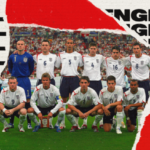
How the ‘WAGs’ Came to Define England’s 2006 World Cup Campaign
In the pantheon of English football heartbreaks, the 2006 World Cup in Germany holds a uniquely bittersweet position. It was the tournament of the so-called “Golden Generation” – a squad brimming with Premier League royalty like David Beckham, Steven Gerrard, Frank Lampard, and Rio Ferdinand. Yet, for all the on-pitch talent, the narrative that truly captivated the global media wasn’t the tactical battle between Sven-Göran Eriksson and his opponents. It was a cultural tsunami that washed over the quaint German spa town of Baden-Baden. It was the era of the WAGs.
To understand why England’s 2006 campaign is remembered as much for the wives and girlfriends as the football, you have to look beyond the scorelines. The story of the WAGs is a story of media saturation, shifting social dynamics, and a perfect storm of celebrity culture colliding with international sport. As we look back, it’s clear that this phenomenon didn’t just define the tournament; it fundamentally changed how the world viewed English footballers and their families. To play this video you need to enable JavaScript in your browser, but the visual legacy of that summer is already burned into the collective memory.
The Baden-Baden Bubble: Where Football Met Fashion
The epicentre of this cultural earthquake was the Brenner’s Park Hotel in Baden-Baden, a luxury spa resort that became the unofficial headquarters for the England players’ partners. While the squad trained and played in the nearby town of Bühl, the WAGs – led by the formidable trio of Victoria Beckham, Cheryl Tweedy, and Coleen Rooney – turned the spa town into a catwalk.
This wasn’t a case of a few partners quietly supporting from the sidelines. This was a daily media event. Paparazzi, who had previously stalked these women on the streets of London, now had them contained in a single, photogenic location. The result was a frenzy. Every trip to a boutique, every coffee on a terrace, and every designer handbag was captured, analysed, and syndicated worldwide.
The key elements that created this perfect storm included:
- The “Big Three”: Victoria Beckham (Posh Spice), Cheryl Tweedy (Girls Aloud), and Coleen Rooney (then girlfriend of Wayne Rooney) were celebrities in their own right, drawing a level of attention that dwarfed the footballers themselves.
- The Spending Spree: Reports of the WAGs spending thousands of pounds on shopping trips became legendary. The media loved the contrast between the disciplined, stoic German locals and the flamboyant, champagne-fueled English entourage.
- The “WAG” Label: The acronym itself became a global brand. It was a term that had existed in tabloid shorthand, but in 2006, it exploded into the mainstream lexicon, used to describe a new type of celebrity: the footballer’s partner.
For the players, this created a strange duality. On one hand, it was a welcome distraction from the immense pressure of representing England. On the other, it created a “bubble” – a luxurious, insulated environment that critics argued detached the team from the reality of a gruelling tournament. The focus shifted from set pieces and penalty shootouts to which handbag Victoria was carrying that day.
Media Frenzy: The 24/7 News Cycle and the “Curse” of the WAGs
The British tabloids, already masters of hyperbole, found their ultimate subject in the WAGs. The coverage was relentless. Every day brought a new headline: “WAGs Spent £50,000 on Designer Dresses!” or “Coleen’s Tears Over Wayne’s Injury!” The narrative was simple: the women were a distraction, a “curse” that was preventing the Golden Generation from winning the World Cup.
This was a classic case of correlation versus causation. England did underperform, exiting in the quarter-finals once again via a penalty shootout against Portugal. But blaming the WAGs for a lack of tactical discipline, a misfiring midfield (Gerrard and Lampard famously struggled to play together), and Wayne Rooney’s petulant red card is a lazy analysis. Yet, the media narrative stuck. The WAGs became the scapegoat.
Expert analysis suggests the real issue was the media management. Eriksson, a famously relaxed manager, allowed the partners to stay in the same hotel complex. In contrast, previous England managers like Glenn Hoddle had kept families at a distance. The result was a logistical nightmare for the FA. The players had to navigate a minefield of photographers just to see their wives, while the women themselves were under constant surveillance.
The frenzy reached its peak during the group stage. After a 1-0 win over Paraguay, the WAGs were pictured celebrating in a local bar. The next day, the headlines screamed “WAGs Party While England Struggle.” The reality was they had a few glasses of wine after a victory, but the narrative was already set. The WAGs were the story, and the football was the subplot.
Cultural Impact: The Birth of a Celebrity Sub-Genre
The 2006 World Cup did not just define a tournament; it launched a new era of celebrity. Before 2006, the term “WAG” was niche. After 2006, it was a career. The women who were part of this group – Abigail Clancy, Elsie Rigg, Melanie Slade – became household names. They landed magazine covers, reality TV shows, and lucrative modelling contracts.
This cultural shift had profound implications:
- Commercialisation of the Player’s Image: Players realised their partners were a marketable asset. David and Victoria Beckham became the ultimate power couple, leveraging their joint fame into a global fashion and fragrance empire.
- Changing Gender Dynamics: The WAGs were not just silent supporters. They were powerful, wealthy, and independent. Victoria Beckham was a former Spice Girl with her own fortune. Cheryl Tweedy was a chart-topping singer. This challenged the traditional “footballer’s wife” stereotype.
- The Reality TV Blueprint: The WAGs phenomenon directly paved the way for shows like Made in Chelsea and The Only Way is Essex, which thrive on the intersection of wealth, glamour, and manufactured drama.
However, the legacy is double-edged. The term “WAG” became a pejorative, often used to dismiss women as frivolous or materialistic. The intense scrutiny also took a toll. Coleen Rooney, then just 20 years old, faced relentless pressure as Wayne Rooney’s girlfriend, a pressure that would later explode into the infamous “Wagatha Christie” trial. The 2006 tournament created a template for how the media covers footballers’ families – a template that is often invasive, sexist, and damaging.
Expert Predictions: How 2006 Changed the Modern Game
Looking back from 2025, the 2006 WAGs phenomenon feels like a relic of a bygone era. The modern England team, under Gareth Southgate, actively cultivated a different culture. Families are still present, but the media access is strictly controlled. Players use social media to manage their own narratives, bypassing the tabloid gatekeepers.
My prediction is that we will never see a repeat of 2006. Here’s why:
- Social Media Control: Today, players and their partners control their own image. A paparazzi photo of a WAG shopping is less valuable when the person posts a curated version on Instagram.
- Professionalism: Modern footballers are more aware of the “distraction” narrative. They are coached on media management from a young age. The “lads’ holiday” culture has been replaced by a focus on nutrition, sleep, and recovery.
- The End of the “Golden Generation” Myth: The 2006 team was overhyped. The current generation (Kane, Bellingham, Foden) has actually delivered results, reaching a World Cup semi-final and a European Championship final. Success silences the noise.
But the cultural footprint remains. The 2006 WAGs were the first to truly commodify the relationship between a footballer and their partner. They were trailblazers, albeit unintentionally, in the world of influencer culture. They proved that the personal lives of athletes are a billion-dollar industry.
Conclusion: More Than a Sideshow
To dismiss the WAGs of 2006 as merely a “sideshow” is to miss the point. They were the story because the football failed to deliver. The Golden Generation, for all its individual brilliance, never gelled as a team. The penalty shootout loss to Portugal in the quarter-finals was a fittingly anti-climactic end to a campaign that was defined by style over substance.
The WAGs gave the world a spectacle. They provided the colour, the drama, and the human interest that a sterile, tactical tournament often lacks. They were vilified, celebrated, and scrutinised in equal measure. And while the football history books will record England’s 2006 campaign as another “what if,” the cultural history books will remember it as the summer the WAGs took over the world.
For a deeper dive into this fascinating period, watch England 2006: The Golden Generation on BBC iPlayer. It’s a masterclass in how sport, celebrity, and media collided to create a phenomenon that still resonates today. The WAGs didn’t just define the campaign; they defined an era.
Source: Based on news from BBC Sport.