Liverpool Owners Face Dilemma: Stick or Twist with Arne Slot?
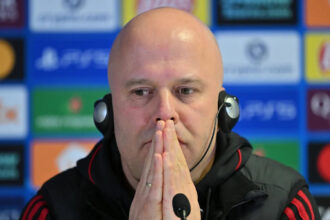
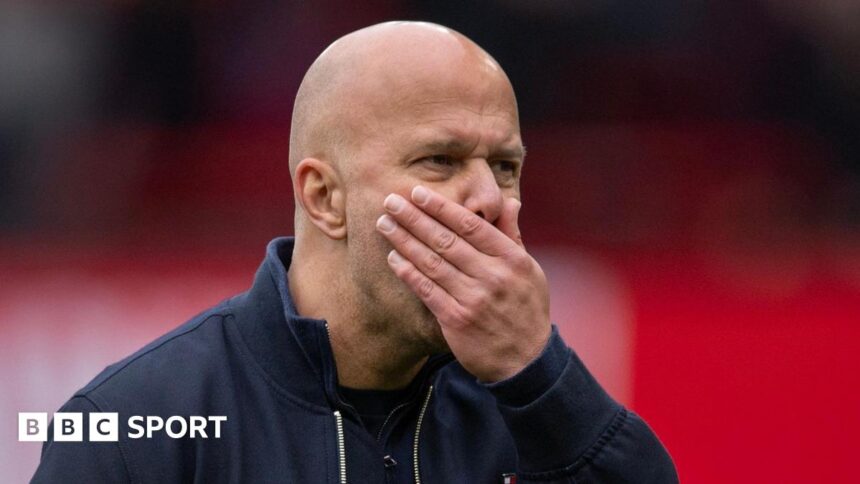
The euphoria of a Premier League title triumph feels like a distant memory at Anfield. Just one year after Arne Slot guided Liverpool to glory in his debut season, the landscape has shifted dramatically. The reigning champions are in a tailspin, fan discontent is reaching a fever pitch, and the owners, Fenway Sports Group (FSG), are staring down a familiar, agonizing crossroads. The question echoing through the Kop and the boardroom is stark: do they stick with Slot, or do they twist and sack him?
It is a dilemma that has defined FSG’s tenure before. In 2015, Brendan Rodgers, a manager who almost delivered the title in 2014, saw the faith evaporate after a disastrous sixth-place finish capped by a 6-1 humiliation at Stoke City. History appears to be repeating itself, but with a crucial difference: Arne Slot has far more credit in the bank. He is the man who ended Liverpool’s league drought. Yet, as the results worsen and the performances stagnate, that credit is being rapidly withdrawn.
The Alarming Decline of the Champions
To understand the pressure on Slot, you must look at the numbers. Liverpool’s title defense has crumbled into a battle for a top-four spot. The fluid, high-octane football that defined their championship campaign has been replaced by a disjointed, error-prone style. Defensive solidity has vanished, the midfield lacks creativity, and the attack, once lethal, now looks blunt. The fans, who chanted Slot’s name last May, are now voicing their frustration in the stands and online.
- Results slide: A run of five defeats in eight league games has seen Liverpool drop from first to fifth.
- Defensive collapse: The team has conceded 18 goals in their last 10 matches, a shocking statistic for a Slot-coached side.
- Fan unrest: Protests outside Anfield and a noticeable drop in atmosphere inside the ground signal a loss of faith.
Former Liverpool and England midfielder Danny Murphy has been blunt in his assessment. Speaking to BBC Sport, Murphy stated that the current conundrum “will end with the Dutchman’s departure within months.” He added, “The relationship between the fans and the manager has fractured at an alarming rate. Last season’s title buys you time, but not an infinite amount. The performances are getting worse, not better.”
The comparison to Rodgers is inevitable. In 2015, FSG kept faith with the Northern Irishman, but only after stripping him of key backroom staff and demanding a cultural reset. The question is whether Slot, who is more tactically rigid than Rodgers, can accept a similar intervention. The owners, led by John W. Henry and Tom Werner, are known for their data-driven, long-term approach. They despise sacking managers mid-season. But they also despise losing revenue and relevance.
FSG’s History: The Art of Sticking or Twisting
FSG’s track record with managerial decisions is mixed. They showed immense patience with Jurgen Klopp, allowing him to rebuild after a sixth-place finish in his first full season. That patience paid off spectacularly. But with Rodgers, they hesitated. After almost winning the title in 2014, they kept him on despite a summer of poor recruitment and a disastrous 2014-15 campaign. The 6-1 loss at Stoke was the final nail, but the coffin had been built months earlier.
Slot’s situation is different because of the title-winning capital he earned. However, the underlying data is troubling. Liverpool’s expected goals (xG) differential has plummeted. Their pressing intensity, a hallmark of Slot’s philosophy, has dropped from elite to mid-table levels. This is not a blip; it is a systemic decline. The owners must ask themselves: is this a temporary slump that Slot can fix with a January transfer window and a tactical tweak, or is it a fundamental loss of the dressing room?
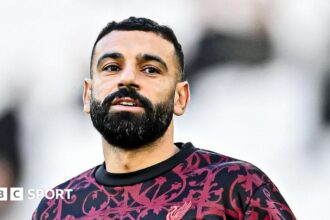
There are whispers of player discontent. Key figures like Virgil van Dijk and Mohamed Salah, both entering the twilight of their careers, have looked disengaged. The midfield, rebuilt with expensive signings, has failed to gel. Slot’s insistence on a high defensive line, without the pace to recover, has been ruthlessly exposed. The tactical inflexibility that was praised as “conviction” last season is now being labeled as “stubbornness.”
Expert Analysis: The Case for Sticking with Slot
Despite the doom and gloom, there is a compelling argument for keeping Slot. First, his track record. He won the Premier League in his first season. That is not a fluke. He implemented a system that worked brilliantly for 38 games. The question is whether the system is broken, or the players have stopped executing it. History shows that champions often suffer a hangover. Manchester City did in 2020 after their centurion season. Liverpool themselves did in 2021 after their 2020 title win, finishing third.
Secondly, FSG’s philosophy is built on stability. They have only sacked one manager mid-season in their entire tenure (Roy Hodgson in 2011). They believe in giving a coach time to correct course. Sacking Slot now would be an admission that last season was an anomaly, which would devalue their own project. It would also cost them a significant compensation package, and finding a top-tier replacement in January is nearly impossible.
The “stick” strategy would involve a clear reset: a strong January transfer window to address defensive frailties, a change in assistant coaches to bring fresh ideas, and a public vote of confidence from Henry and Werner. Slot would need to show tactical flexibility, perhaps dropping the high line or switching to a more pragmatic 4-3-3. The goal would be to stabilize the season, secure Champions League football, and rebuild in the summer.
Expert Analysis: The Case for Twisting and Sacking Slot
On the other side of the coin, the “twist” argument is growing louder. The most dangerous thing in football is a manager who has lost the dressing room and the fanbase simultaneously. Slot appears to be on the verge of that. The body language of the players on the pitch is concerning. There is no spark. There is no fight. When a team defends poorly and attacks without ideas, the responsibility ultimately falls on the head coach.
Furthermore, the Premier League is ruthless. Waiting too long can see a team slide from fifth to tenth. The gap to the top four is already widening. If Liverpool miss out on the Champions League, the financial hit is enormous. That would directly impact FSG’s ability to spend in future windows. Danny Murphy’s warning is not just media noise; it is a reflection of the mood in the stands. The fans who celebrated Slot last year are now calling for his head on social media and during matches.
There is also the question of squad management. Slot has been criticized for overplaying key players and not integrating younger talents. His substitutions are often reactive, not proactive. The tactical adjustments that were praised last season are now seen as predictable. If a manager cannot evolve, he becomes a liability. The owners must decide if Slot has the capacity to adapt, or if he is a one-season wonder who has been found out.
The Verdict: What Should FSG Do?
The dilemma is real and nuanced. FSG has a choice between two high-risk paths. Sticking with Slot risks a complete meltdown and a finish outside the European places. Twisting risks destabilizing the club further and admitting that last season’s title was built on sand rather than a sustainable system.
My analysis leans towards a middle ground, but with a clear bias toward sticking—for now. The owners should not pull the trigger in the middle of the season. They should give Slot until the end of the campaign, but with strict conditions. He must immediately drop the failing high line. He must rotate the squad more effectively. And FSG must back him in the January window with at least one top-class defender and a creative midfielder.
If by March the results have not improved, the decision will be made for them. But sacking a title-winning manager in November is a panic move that FSG has historically avoided. The Brendan Rodgers lesson is instructive, but so is the Jurgen Klopp one. Klopp needed time to fix a broken team. Slot needs time to fix a broken system.
Conclusion: A Defining Moment for Liverpool’s Future
Liverpool are at a tipping point. The owners, FSG, have a reputation for being cold and calculating. That cold calculation must now be applied to Arne Slot. The fans have lost faith, but the data is not yet conclusive. The title win was real. The decline is real. The solution is unclear.
Stick or twist? The smart money is on a temporary stick—a vote of confidence, a tactical reset, and a January window that defines the season. If that fails, the twist will come in the summer. For now, Arne Slot gets the chance to prove that last season was not a one-off. But the clock is ticking, and Anfield is running out of patience. The next five games will likely decide his fate, and perhaps the direction of Liverpool Football Club for the next decade.
Source: Based on news from BBC Sport.