From Istanbul Euphoria to a “Box of Frogs”: The Night Steven Gerrard’s Love Affair with Liverpool Nearly Ended
For any footballer, the pinnacle of their career is often defined by a single, transformative moment. For Steven Gerrard, that moment came on a balmy night in Istanbul, May 25, 2005. It was the night he lifted the Champions League trophy, completing a comeback so miraculous it defied logic. He has called it, without hesitation, “the best night of my life.”
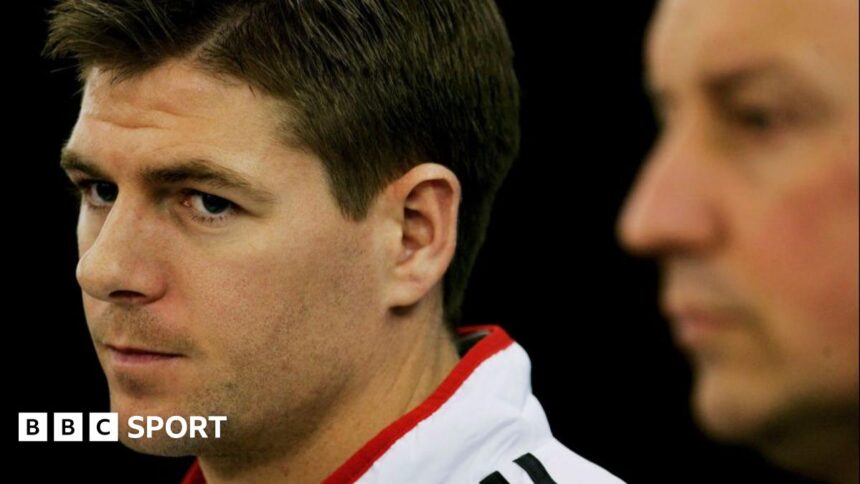
Yet, in a stunning paradox that reveals the brutal psychology of elite sport, that very same night nearly became his epitaph at Anfield. Just two months after hoisting the European Cup, Gerrard sat in a hotel room, his head “like a box of frogs,” preparing to walk away from the club he had bled for. The catalyst? The man who had just delivered him to glory: manager Rafael Benitez.
This is the untold emotional fallout of Istanbul. It’s a story not of triumph, but of the fragile relationship between a local hero and a meticulous manager, a relationship that fractured so deeply it almost ended the most iconic one-club career in modern football.
The “Best Night” and the Morning After
Let’s set the scene. Gerrard’s performance in the 2005 final was legendary. Trailing 3-0 to AC Milan at halftime, he single-handedly dragged Liverpool back from the dead. His header in the 54th minute sparked a six-minute blitz that leveled the score, culminating in a penalty shootout victory. It was raw, visceral, and perfect.
In the Netflix documentary The Greatest Night in Football History, Gerrard reflects on the immediate aftermath. “It was the best night of my life,” he states. But the documentary also peels back the curtain on the darkness that followed. The euphoria, it turns out, was a temporary anesthetic.
Why? Because the relationship with his manager was already fractured. Benitez, a tactical genius obsessed with systems and discipline, viewed Gerrard not as an untouchable icon, but as a high-value asset to be managed. The Spanish coach had a habit of criticizing his captain publicly and privately, focusing on tactical discipline rather than celebrating the captain’s heroic instincts.
- The Public Critique: Benitez often questioned Gerrard’s positional sense, preferring him in a central role rather than the free-roaming “Gerrard role” that made him a phenomenon.
- The Personal Tension: Gerrard has revealed that Benitez’s constant criticism made him feel “unwanted” and “unappreciated,” despite the Champions League victory.
- The Contract Stalemate: Contract negotiations stalled. Gerrard felt the club, under Benitez’s influence, was undervaluing his contribution.
The result? A man who had just achieved the impossible was emotionally bankrupt. The “best night of his life” was followed by the most confusing summer of his life.
“A Box of Frogs”: The Mental Collapse of a Captain
Gerrard’s choice of words is striking. “My head was like a box of frogs,” he admitted. This isn’t the language of a man celebrating a contract extension. It’s the language of someone in a deep psychological crisis.
Expert Analysis: From a sports psychology perspective, Gerrard was suffering from a classic case of “post-triumph depression.” High achievers often experience a crushing void after reaching a monumental goal. The adrenaline of the final wore off, and the reality of his strained relationship with his manager crashed down on him.
He felt trapped. He was the local boy, the captain, the hero. But he was also a player who felt his manager didn’t trust him. The pressure was immense. Chelsea, under Jose Mourinho, was circling. They offered a new challenge, a fresh start, and a manager who openly adored him.
On July 5, 2005, Gerrard made the decision. He announced he was leaving Liverpool. The club released a statement. The city of Liverpool went into mourning. It looked like the end of a fairytale.
Key Factors in the Breakdown:
- Lack of Emotional Validation: Gerrard needed to feel loved. Benitez offered tactical instructions.
- The “System vs. Star” Conflict: Benitez’s rotation policy and tactical rigidity clashed with Gerrard’s instinctive, emotional style of play.
- External Temptation: Chelsea’s offer was a psychological escape route from a manager he couldn’t please.
The Overnight U-Turn: What Changed?
This is where the story turns from tragedy to redemption. Gerrard’s announcement sent shockwaves through Merseyside. His phone didn’t stop ringing. Teammates, family, and fans begged him to reconsider. But the real turning point was a private, emotional conversation.
Gerrard has since revealed that he spent a sleepless night, pacing his hotel room. The “box of frogs” was spinning out of control. He realized that walking away from Liverpool wasn’t just a career move; it was an identity suicide. He was Steven Gerrard of Liverpool. Without that, who was he?
By the next morning, the decision was reversed. He met with club officials and withdrew his transfer request. The deal with Chelsea was dead. He signed a new contract, committing his future to the club.
What really happened? It wasn’t a change in Benitez’s management style. Benitez remained the same demanding, critical coach. What changed was Gerrard’s internal calculation. He chose the burden of love over the freedom of escape. He recognized that the criticism from Benitez, while painful, was part of a process that had just won him a Champions League.
Prediction for Modern Football: This scenario is a cautionary tale for modern clubs. The “Gerrard-Benitez” dynamic is a microcosm of the tension between player power and managerial authority. In today’s game, a player of Gerrard’s stature would likely force the manager out. But in 2005, Gerrard’s loyalty to the badge trumped his frustration with the boss. We are unlikely to see this again. The modern superstar, like Kylian Mbappé or Erling Haaland, operates with far more leverage. The “box of frogs” moment would likely end in a transfer request being honored, not reversed.
Legacy of the “Box of Frogs” Moment
Looking back, the 2005 summer was the crucible that forged Gerrard’s ultimate legacy. Had he left for Chelsea, he would have been a traitor. He would have won more Premier League titles (likely), but he would have lost his soul.
Instead, he stayed. He played another decade at Anfield. He won the FA Cup, the League Cup, and came agonizingly close to the Premier League title in 2014. He never won the league, but he became the embodiment of loyalty in an era of mercenaries.
The irony is thick. Benitez’s criticism, which nearly drove him away, also hardened him. Gerrard learned to play under a microscope. He learned that validation cannot come from a manager’s praise alone. It must come from within.
In the end, the “best night of his life” was almost the final chapter. But the “box of frogs” morning was the one that defined his character. It proved that even heroes have breaking points, and the greatest act of courage is sometimes choosing to stay and fight, even when your head is screaming at you to run.
Conclusion: Steven Gerrard’s story is not just about a goal or a trophy. It is about the mental health of athletes, the fragile ego of a leader, and the toxic potential of a dysfunctional manager-player relationship. The 2005 Champions League win was the peak of his career. The 48 hours that followed were the deepest valley. And the fact that he climbed out of that valley, with his head still full of frogs, and stayed loyal to Liverpool, is why he will forever be a legend. He didn’t just survive the fall; he owned it.
Source: Based on news from BBC Sport.