Was Scott McTominay Robbed? The SPOTY Snub Dividing Football Fans
The annual BBC Sports Personality of the Year shortlist is a tradition as British as the trophy itself: a celebration of achievement, a spark for debate, and, invariably, a source of passionate contention. The 2025 nominee list, featuring stellar names like Rory McIlroy, Lando Norris, and Luke Littler, is no different. But one glaring omission has ignited a firestorm north of the border and among football purists: the absence of Scott McTominay. The Scottish midfielder, enjoying a career-defining season with Italian giants Napoli, finds himself on the outside looking in. The question now echoing from the San Paolo to the Scottish Highlands is a simple one: was McTominay desperately unlucky, or does his snub reveal a deeper bias in one of the nation’s most cherished sports awards?
The Case for the Defence: McTominay’s Unquestionable Impact
To understand the outrage, one must first appreciate the scale of Scott McTominay’s transformation and achievement. After a steady career at Manchester United, his move to Napoli in the summer was seen as a gamble. What has followed is nothing short of a revelation.
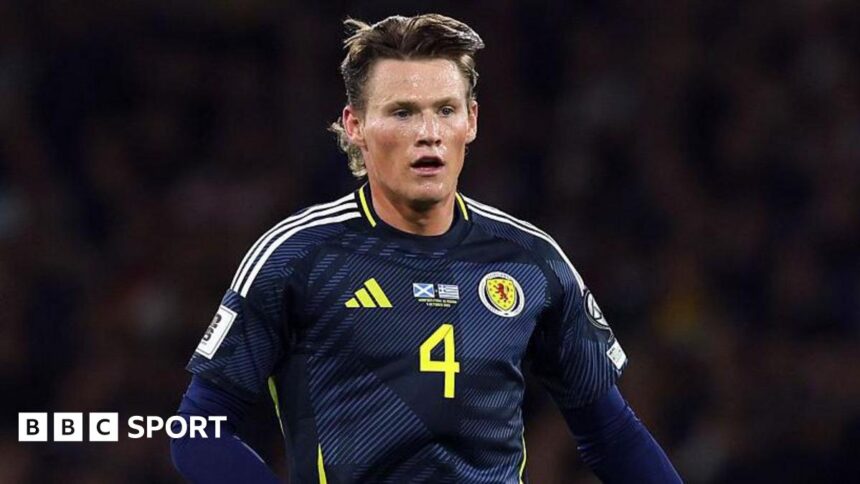
Deployed in a more advanced, box-crashing role, McTominay has become a goal-scoring midfield force in Serie A. His six league goals for a club of Napoli’s stature is a significant return, contributing crucial points in a ferocious Scudetto race. But his impact transcends statistics. He has become a cult hero in Naples, embodying the grit and passion the city demands, while showcasing a technical refinement many critics claimed he lacked. He has been instrumental in Scotland’s continued resurgence on the international stage, a consistent leader and match-winner. This isn’t just a player having a good season; it’s a player redefining his career at the highest level, succeeding in one of the world’s most tactically demanding leagues, and becoming a pivotal figure for both club and country.
Dissecting the SPOTY Shortlist: A Question of Criteria?
The nominated six are, without doubt, exceptional athletes. Yet, the criteria for SPOTY have always been nebulous—a blend of sporting achievement, personality, and that intangible “year-defining” quality. This ambiguity is where the McTominay debate finds fertile ground.
Let’s examine the contenders. Luke Littler maintained his meteoric darts dominance. Lando Norris secured his maiden Formula 1 World Championship. Rory McIlroy ended his major drought. These are clear, headline-grabbing, ultimate achievements in their sports. The nominations of England footballers Hannah Hampton and Chloe Kelly, and rugby’s Ellie Kildunne, follow a monumental year for women’s team sports, likely celebrating collective success (a Euros win, a Grand Slam) channeled through individual stars.
Against this, McTominay’s case is one of brilliant consistency and transformative influence, rather than a single, silverware-laden moment. Has the SPOTY panel, perhaps subconsciously, prioritized trophy lifts and world titles over a story of profound personal and sporting evolution? The omission suggests a possible bias towards either:
- Discrete, televised pinnacle events (a Grand Prix win, a major Sunday, a darts final).
- Association with a home-nation team triumph (the Lionesses’ success).
- The established, global superstar status of a McIlroy or Norris.
McTominay’s campaign, spread across weekly Serie A fixtures and Scotland qualifiers, may lack that singular, crystallizing SPOTY “moment,” despite being arguably a more complete year-long sporting narrative.
A Bone of Contention: The Scottish and Football Perspective
This is where the snub stings most acutely. For Scotland fans, McTominay isn’t just a player; he’s a symbol of a golden generation. His goals have been the difference in crucial matches, fueling a national pride not felt in decades. His success in Italy is a point of immense cultural pride, proving Scottish talent can excel in the most glamorous foreign leagues. His omission feels, to many, like a dismissal of Scottish football’s resurgence and a continuation of a London-centric, Anglo-focused media bias.
From a wider football lens, the lack of any representative from the men’s game—the UK’s most popular sport—is startling. While the women’s nominees are fully deserved, McTominay presented a compelling, cross-border story. He is a British player excelling as a key man for a legendary foreign club, carrying his national team. It’s a narrative that bridges club and international football, the UK and Europe. Ignoring it suggests SPOTY may be struggling to contextualize achievements outside traditional British sporting circuits or without a readily available BBC highlights package.
SPOTY’s Future: Relevance in a Changing Sporting Landscape
The McTominay controversy highlights a growing challenge for the SPOTY award. In an era of globalized sport, where British athletes are stars worldwide in competitions not always on terrestrial TV, how does the award maintain its relevance and authority?
The 2025 shortlist is safe. It features immense talents known to a mainstream BBC audience. But in playing it safe, does it risk becoming parochial? Celebrating McTominay would have been a bold, modern choice—an acknowledgment that a British footballer can be a transformative figure in Serie A, that success isn’t solely defined by medals won in UK-centric sports. It would have engaged a massive, often-ignored Scottish demographic and shown an understanding of football’s global theatre.
Predictions for the show on Thursday, 18 December are now dominated by the Norris-McIlroy-Littler triumvirate. Yet, the most lasting conversation may not be about who wins, but about who wasn’t even invited to the party. This snub could accelerate calls for a transparent nomination criteria or a larger shortlist to better reflect the diversity of British sporting excellence.
Verdict: More Than Unlucky—A Missed Opportunity
So, was Scott McTominay unlucky? The answer is a resounding yes, but his absence is more significant than mere misfortune. It is a missed opportunity for the BBC Sports Personality of the Year award itself.
McTominay’s 2025 story is the stuff of sports personality lore: the underdog who reinvented himself, conquered a new country, and became a national talisman. His snub feels like a failure of imagination from the selection committee, an inability to recognize a great sporting story when it doesn’t arrive wrapped in a Union Jack or atop a podium. It has, predictably, become a bone of contention for Scotland fans, but also for anyone who values narratives of resilience and adaptation over sheer trophy count.
While Gabby Logan, Alex Scott, and Clare Balding prepare to host a celebration of fantastic athletes from MediaCityUK, a significant portion of the sporting public will be left wondering what might have been. Scott McTominay’s year deserved recognition. That it didn’t get it says less about his performances in the blue of Napoli or Scotland, and more about the increasingly narrow lens through which British sporting personality is now judged. The real loser in this scenario may not be McTominay, whose stock continues to soar, but the credibility of an award struggling to keep pace with the stories it was created to celebrate.
Source: Based on news from BBC Sport.