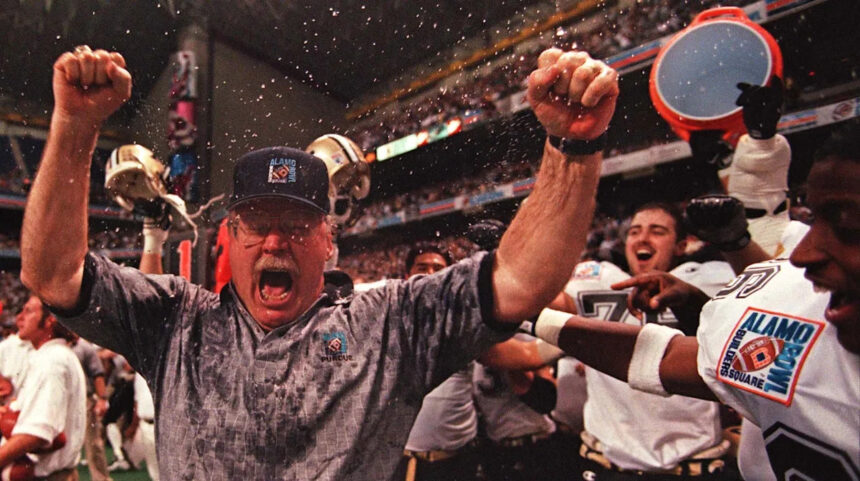
The Secret Rose Bowl Trip: How Joe Tiller’s 1998 USC Surprise Forged Purdue’s 2000 Champions
The date was September 13, 2025. As the Purdue Boilermakers prepared to host the USC Trojans at Ross-Ade Stadium, a unique reunion was unfolding in the stands and on the sidelines. Scattered throughout the crowd were members of Purdue’s 2000 Big Ten Championship team, men now in their 40s and 50s, watching a rivalry renewed. For them, this wasn’t just another non-conference game. It was the closing of a circle that began 27 years earlier, not with a victory, but with a secret field trip that would become the stuff of program legend—a clandestine visit to the Rose Bowl that planted a seed for Purdue’s future glory.
The Loss That Launched a Legend
Rewind to August 29, 1998. Purdue, in its second year under the innovative Joe Tiller, traveled to Los Angeles to face a traditional powerhouse in USC. The game itself was a hard-fought battle, resulting in a 27-17 Trojans victory. For most teams, the narrative ends there: a respectable road loss to open the season, a learning experience, move on to the next opponent.
But Joe Tiller, the architect of “Basketball on Grass,” was not most coaches. He was a psychologist, a builder of culture, and a man who understood the power of visual goals. As the team licked its wounds that night in a Los Angeles hotel, the players assumed a normal travel day awaited: wake up, fly home, dissect the film. They had no idea their head coach had orchestrated a detour that would change the trajectory of Purdue football.
The morning after the loss, instead of heading to LAX, the Boilermakers boarded their buses for a mysterious destination. Quarterback Drew Brees, linebacker Willie Burrell, defensive back Adrian Beasley, and the rest of the roster were left to wonder. The speculation ended as the buses rolled into the hallowed grounds of Pasadena and pulled into the tunnel of the Rose Bowl Stadium.
A Vision Planted in the Quiet of an Empty Stadium
Tiller, ever the pragmatist with a purpose, had arranged for his team to walk onto the field of the “Granddaddy of Them All.” The iconic venue was silent, empty of over 100,000 fans, but buzzing with the potential energy of a dream. This was no celebratory visit. This was a mission statement.
“He wanted us to see it, to feel it, to walk on that grass,” recalled a member of that 1998 team. “It wasn’t a speech about how great it would be to play here. It was more powerful than that. He just let the stadium do the talking.”
Tiller’s genius lay in this tangible goal-setting. In the Big Ten, the conference champion’s reward is a trip to Pasadena. For a program like Purdue, which hadn’t won a conference title in over three decades, the Rose Bowl could feel like a mythical, unreachable place. Tiller made it real. He transformed it from an abstract concept on a TV screen into a physical destination—grass under their cleats, the sweep of the Arroyo Seco in view, the famous San Gabriel Mountains as a backdrop.
The psychological impact was immediate and profound:
- Tangible Goal-Setting: The Rose Bowl was no longer just a trophy at the end of a season; it was a specific field they had now stood upon.
- Elevated Standard: The trip silently communicated that Tiller’s ambitions for Purdue were not modest. They were aiming for the pinnacle of the Big Ten.
- Unity of Purpose: Every drill, every film session, every weight room rep for the next two seasons could now be mentally connected to a return trip to that exact spot.
From Pasadena Field Trip to Big Ten Champions
The 1998 season ended with a bowl win and momentum. The 1999 season saw further growth. But it was in the 2000 season that the seeds planted in Pasadena truly bore fruit. Led by Heisman-finalist Drew Brees, a relentless receiving corps, and an opportunistic defense, the Boilermakers engineered one of the most memorable seasons in school history.
Every close win, every clutch play, was fueled by a shared vision. The team navigated a challenging schedule, knowing exactly what awaited them at the finish line. When Purdue defeated Indiana in the regular-season finale to clinch a share of the Big Ten title, the celebration was about more than a trophy. It was about fulfilling a promise made two years prior on a quiet morning in California.
On January 1, 2001, the Purdue Boilermakers returned to the Rose Bowl Stadium. This time, the buses arrived not for a quiet walk, but for a showdown with the Washington Huskies. The stadium was packed, the noise deafening. The 2000 Big Ten championship team had completed the journey from visitors to participants, turning Coach Tiller’s visionary field trip into glorious reality.
The 2025 Reunion: A Legacy Comes Full Circle
This brings us back to September 13, 2025. As USC returned to West Lafayette for the first time since that fateful 1998 opener, the occasion served as a living tribute to Tiller’s legacy. The members of the 2000 team in attendance weren’t just reminiscing about their own glory days; they were witnessing the enduring culture of a program that once dared to visualize the highest achievement.
The modern Boilermakers, perhaps unaware of the specific history, carry the burden and privilege of a program that knows it can reach the summit. Games like the 2025 USC matchup are the building blocks for the next great Purdue team, the next unexpected run. The question for today’s program is: What is the modern equivalent of the Rose Bowl field trip? What vision are current coaches painting for their players to chase?
Expert analysis suggests the core lesson from Tiller’s maneuver is timeless: championship cultures are built on shared, vivid experiences that make monumental goals feel attainable. It’s not enough to say “win the conference.” You must show them, in an unforgettable way, exactly what that means.
Prediction: The Power of the Tangible Dream
Looking forward, Purdue’s success will hinge on its ability to create new versions of that 1998 moment. In the era of the expanded College Football Playoff, the goalposts have literally moved. The ultimate vision is no longer a single stadium in Pasadena, but a spot in a 12-team bracket. The smartest programs will find ways to make that abstract playoff feel as real to their players as the Rose Bowl grass felt to Drew Brees.
Perhaps it’s a visit to a playoff host stadium, or an immersive look at the national championship trophy. The method may change, but the psychological principle remains identical. Joe Tiller understood that before you can win a championship, you must first be able to see yourself there. He gave his team the sightline.
The 1998 secret Rose Bowl trip was more than a clever coaching tactic; it was an act of architectural genius. Joe Tiller didn’t just build an offensive scheme; he built a belief system. He provided the blueprint for a dream and then, two seasons later, watched his team construct it into reality. The 2025 reunion against USC was not merely a nostalgic glance backward. It was a testament to the enduring power of a vision made tangible—a reminder that sometimes, the most important victory on a road trip doesn’t happen on the scheduled game day, but on the quiet morning after, when a coach shows his team exactly where they’re destined to go.
Source: Based on news from Yahoo Sports.