The 2025-26 NBA Season’s Biggest Financial Anchors: A Look at the Worst Contracts
As the 2025-26 NBA regular season winds down, the playoff picture clarifies and the draft lottery odds crystallize. For front offices, however, the ledger is just as important as the standings. In a league governed by a hard salary cap, every dollar misallocated is a dollar that can’t be spent on a championship-caliber supporting cast. Last week, we celebrated the league’s most valuable bargains. Now, we turn to the other end of the spectrum: the contracts that have become financial millstones, crippling roster flexibility and offering diminishing returns on massive investments. Using a framework inspired by Seth Partnow’s analytical principles in “The Midrange Theory,” we look beyond raw stats to assess value, fit, and the harsh reality of paying for past performance instead of future production.
The Methodology: More Than Just Box Score Watching
Identifying a “bad” contract isn’t as simple as pointing to a high-paid player having a down year. Context is king. Our analysis considers several key factors: age-related decline versus the length of the deal, a player’s positional value and defensive impact, the opportunity cost of their salary slot, and perhaps most crucially, the team context and competitive timeline. A max contract on a title contender can be justified; the same deal on a rebuilding team is a catastrophe. With that lens, we examine the deals that are actively holding their franchises back from progress.
The Unmovable Pillars: When Supermax Deals Go Sour
These are the contracts that dominate a team’s cap sheet, awarded to players expected to be franchise cornerstones. When they underperform, there is virtually no path to improvement.
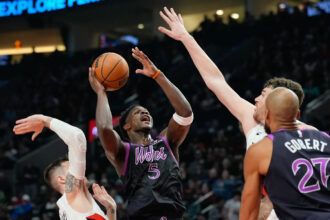
- Karl-Anthony Towns, Minnesota Timberwolves: Signed through 2028 at a supermax rate, Towns remains a phenomenal offensive talent. Yet, the Wolves’ financial reckoning has arrived. With Anthony Edwards on a max deal and Rudy Gobert’s massive contract finally expiring, Towns’ $50M+ annual figure is suffocating. His inconsistent defense and playoff struggles make him a luxury the Wolves can no longer afford, yet his contract makes him nearly impossible to trade without attaching precious draft capital. He is the definition of a negative-value asset on his current deal.
- Zach LaVine, Chicago Bulls: A cautionary tale of paying for empty-calorie stats. LaVine’s max contract, with two years and roughly $90 million remaining after this season, is arguably the most toxic in the league. His scoring efficiency has dipped, his defense remains a liability, and his injury history is lengthy. For a Bulls team stuck in mediocrity, LaVine’s deal is the primary barrier to a necessary rebuild. The Bulls would likely have to attach assets to move him, a brutal position for a front office to occupy.
The Aging Legends: Paying for the Name on the Back
This is the most delicate category, involving players who have defined the sport. The business of basketball, however, is unforgiving.
LeBron James, Los Angeles Lakers: This inclusion requires immediate nuance. On the court, even at 41, LeBron remains a top-20 player, a breathtaking feat. The problem is purely financial and contextual. His one-year, $50 million+ deal for 2025-26, signed last summer, is a cap-space killer for the Lakers. It commits them to an all-in, win-now approach around an aging core with limited trade assets. While he delivers value in a vacuum, the contract’s structure prevents the Lakers from executing a flexible team-building strategy, locking them into a costly and ultimately limited ceiling. You are paying for the legend, not a championship cornerstone.
Chris Paul, Phoenix Suns (via sign-and-trade): The final year of Paul’s deal, negotiated in the 2024 offseason, is a stark example of a “thank you” contract that backfired. Now 40, Paul’s minutes are carefully managed and his playmaking genius is sporadic. The Suns, buried deep in the second apron of the luxury tax, are paying a premium for a backup point guard. The deal, which hamstrung their ability to add depth, is a painful reminder of the cost of sentimentality in a hard-cap system.
The Missed Evaluations: Betting on Potential That Never Arrived
These contracts were handed out based on projected growth that simply didn’t materialize, leaving teams anchored to players who are replacement-level at best.
- Ben Simmons, Brooklyn Nets: Though his massive five-year max extension feels like a relic from a bygone era, it finally expires after the 2024-25 season. However, the Nets’ decision to take him on and his subsequent inability to stay on the court or provide any offensive threat will be studied for years as a masterclass in dead money impact. It completely derailed a franchise’s trajectory.
- Duncan Robinson, Miami Heat: Robinson’s early-career shooting earned him a $90 million deal. While he has evolved into a more complete player, his contract remains an overpay for a specialist. In today’s NBA, elite shooters are vital, but paying one like a core starter limits Miami’s flexibility. He’s a good player on a deal that is just a few million per year too rich, a subtle but impactful cap clog.
Predictions and Ripple Effects
The fallout from these contracts will define the 2026 offseason. Look for the Timberwolves to explore desperate, asset-shedding trades involving Towns, potentially accepting pennies on the dollar. The Chicago Bulls may finally bite the bullet and attach a first-round pick to dump LaVine’s contract, fully embracing a rebuild. The Lakers will face their annual existential crisis once LeBron’s deal concludes, with his cap hold potentially complicating matters further.
These deals also serve as a warning for the summer of 2026. Teams will be extremely wary of handing a full max to players like Jayson Tatum or Luka Doncic who are already on supermax trajectories, fearing the back end of those deals. The league is shifting towards more team-friendly, incentive-laden structures for stars in their 30s.
Conclusion: The Cost of Getting It Wrong
In the NBA, capital isn’t just draft picks and young talent; it’s financial. A single bad contract can eliminate a team from contention for half a decade, creating a cycle of mediocrity that is hard to escape. The contracts highlighted here are more than just overpays; they are strategic failures that limit possibilities, waste prime years of other stars, and force franchises into reactive, often losing, maneuvers. As the 2025-26 season concludes, the front offices burdened with these deals aren’t just planning for the draft—they’re plotting how to surgically remove a financial anchor without sinking the entire ship. In the modern NBA, that is the ultimate front-office test.
Source: Based on news from Yahoo Sports.