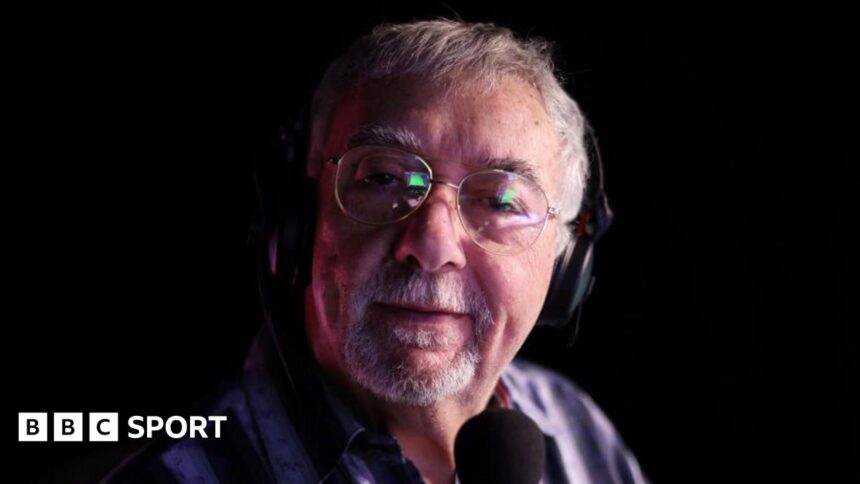
John Virgo Obituary: The ‘Mr Perfection’ of Snooker Who Became a Beloved TV Star
The world of snooker has lost one of its most distinctive and beloved voices. John Virgo, who passed away at the age of 78, was a bridge between two eras: a player of genuine class in the 1970s and 80s, and the warm, witty, and instantly recognisable television personality who brought the game into millions of living rooms for decades. His journey from the bomb sites of post-war Salford to the commentary box of the Crucible Theatre is a story of talent, timing, and an irrepressible charm that made him a household name far beyond the baize.
From Bomb Sites to the Baize: A Salford Boy’s Sporting Crossroads
Born in March 1946, John Virgo’s childhood was shaped by the austere landscape of a nation rebuilding. His first sporting passion was forged on the green grass—or more accurately, the bomb-hit wastegrounds—of his hometown, where he played football with friends, dreaming of emulating his heroes, the Busby Babes of Manchester United. That boyhood love for the Red Devils never left him, but fate had a different arena in mind.
The pivotal moment came at age 12. Searching for his footballing mates, he was directed by a friend’s mother to a snooker club off Trafford Road. Stepping inside, the young Virgo was mesmerized. The sight of the green baize, the soft click of the balls, and the focused silence of the players sparked an immediate fascination. Football’s muddy pitches were suddenly replaced by the precise, geometric world of the snooker table. It was here, in that unassuming club, that a future champion and commentator found his true calling.
‘Mr Perfection’: The Player Behind the Personality
Before the catchphrases and the laughter, there was a formidable snooker player. Turning professional in the 1970s, Virgo competed in the sport’s golden age, locking cues with legends like Ray Reardon, Steve Davis, and a young Alex Higgins. His dedication to technique earned him the nickname ‘Mr Perfection’, a testament to his meticulous approach to the game’s fundamentals. He was a student of snooker’s mechanics, believing flawless cue action was the bedrock of success.
His crowning achievement came in 1979 when he won the prestigious UK Championship, defeating Terry Griffiths in the final. This victory was no fluke; it was the culmination of his perfectionist ethos. Yet, it was perhaps his role in one of snooker’s most legendary moments that cemented his place in its folklore. In the 1982 World Championship, he executed a breathtaking 147 maximum break in the very first frame of his match against Cliff Thorburn—a stunning feat of skill and nerve that announced his talent on the grandest stage.
Virgo was, as they say, old school. He understood the game’s traditions and its psychological duels. His playing style was steady, thoughtful, and built for the marathon matches of the era. While he would not add another major title, his respect within the playing fraternity was immense, forming the authentic foundation for his second act.
The Voice of the Game: From Player to Unforgettable Broadcaster
As his playing career waned, a new opportunity emerged with the explosive growth of televised snooker. The BBC needed experts who could explain the game’s nuances. Virgo, with his deep knowledge, easy manner, and that rich Salford accent, was a natural. He didn’t just commentate; he entertained and educated.
He became famous for his string of one-liners and his deep mine of anecdotes, ready to roll out at any given moment. Who could forget his playful exasperation on Big Break with Jim Davidson, or his iconic “Where’s the cue ball going?” during dramatic clearances? He had a sureness of just how fortunate he had been to stumble on snooker, and that genuine gratitude and joy translated through the screen.
- Master of Impressions: His spot-on impersonations of fellow players, especially Alex “The Hurricane” Higgins, became a legendary part of snooker’s entertainment.
- Commentary Box Chemistry: His partnerships with commentators like Clive Everton and Dennis Taylor were masterclasses in balance—technical insight served with warmth and humour.
- Big Break Legacy: The show made him a mainstream TV star, blending snooker challenges with light entertainment and showcasing his versatility as a performer.
Virgo’s genius was in demystifying snooker without dumbing it down. He could explain a complex safety exchange or the immense pressure of a colours clearance, making the viewer feel like an insider. He was the friendly guide through snooker’s most dramatic moments for generations of fans.
Legacy and Lasting Impact: More Than Just a Voice
John Virgo’s legacy is multifaceted. He was a crucial figure in snooker’s journey from smoky halls to prime-time television. His passing marks the end of an era defined by characters who were as compelling off the table as they were on it.
Expert Analysis: Virgo’s contribution cannot be overstated. In an age where sports broadcasting can sometimes feel homogenized, he was a unique and authentic voice. His commentary was never just about the shot being played; it was about the story of the match, the history between the players, and the human drama unfolding under the lights. He provided the narrative thread that turned a series of pots into a compelling saga.
Predictions for the Future: While the modern game is blessed with excellent analysts, the Virgo model—the top-level player turned charismatic, anecdote-rich broadcaster—is becoming rarer. The future of snooker media will likely see more specialization, with separate roles for tactical analysts, presentation hosts, and statistical experts. However, the hunger for personality and storytelling that Virgo embodied remains. The challenge for the next generation will be to replicate his unique blend of authority and approachability, his deep respect for the sport’s past coupled with an enthusiasm for its present.
In conclusion, John Virgo was the warm, witty, and wise uncle of snooker. He took us from the bomb-hit wasteground of his youth to the tension of the Crucible theatre, always with a twinkle in his eye and a perfect turn of phrase. He was a champion player, a consummate entertainer, and, above all, the game’s most relatable and beloved ambassador. The click of the balls will sound a little different now, but the echoes of his voice—”Where’s the cue ball going?”—will forever be a part of snooker’s soul. His was a life perfectly played, in every sense.
Source: Based on news from BBC Sport.