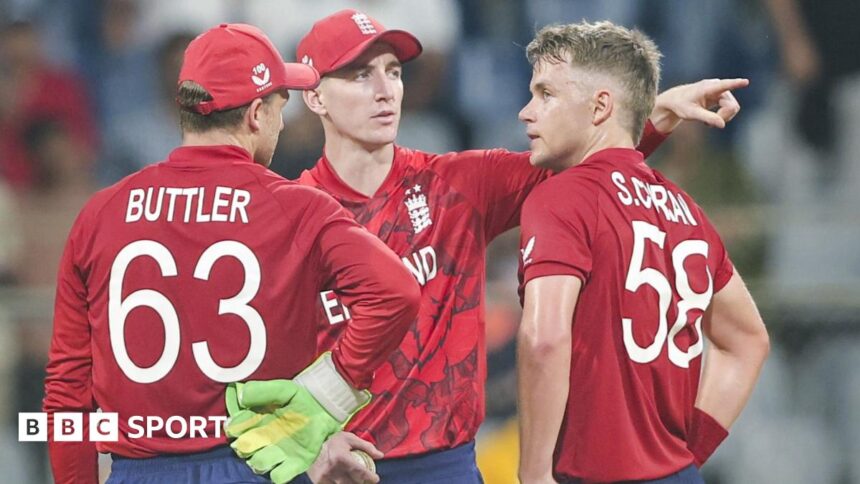
An Almighty Scare: Are England’s World Cup Jitters a Fatal Flaw or a Wake-Up Call?
The roar that erupted from the Wankhede Stadium was not for a home hero. It was a primal, hopeful surge from thousands of Nepalese fans, their flags a sea of crimson, as their team edged, stroke by nerve-shredding stroke, towards the unthinkable. England, the reigning T20 world champions, were not just being challenged; they were one clean hit, one misfield, one boundary away from a seismic World Cup shock. They survived, but the escape was so narrow it felt like a defeat in victory. This is becoming a habit. A deeply concerning, pulse-quickening habit. The question now hangs in the humid Mumbai air: are these almighty scares a sign of a fatal flaw, or the painful, necessary lessons of a champion learning on the job?
A Haunting Ground, A Familiar Script
If England’s cricketing psyche has a haunted house, it is the Wankhede Stadium in Mumbai. The ground is a graveyard of English bowling figures. It is where they produced their statistically worst 50-over bowling performance in history, conceding 418 against India. It is the scene of their heaviest T20 defeat, a 90-run thrashing by the same foe. To return here for a World Cup match was to invite ghosts. Yet, the spectre that appeared was not the expected one of Indian dominance, but of a vibrant, fearless Nepal, embodying the very unpredictability that defines T20 cricket.
This, however, is part of a broader, recent history of hair-raising World Cup starts. Cast your mind back:
- Ahmedabad, 2023: The ODI World Cup defence began with a pummelling by New Zealand, a nine-wicket demolition that set a tone for a disastrous campaign.
- Barbados, 2024: The T20 title defence opened with Scotland smashing England’s bowlers to all parts; only rain intervened to spare them a likely defeat.
The pattern is undeniable. England, for all their white-ball revolution swagger, have developed a chronic case of tournament-stage fright. The Nepal performance was not an anomaly; it was the latest, most dramatic episode in a worrying series.
Dissecting the Scare: Where England Faltered and Fought
Against Nepal, the issues were stark. The top-order fragility resurfaced, with early wickets leaving the innings becalmed. While Phil Salt and Jonny Bairstow found rhythm later, the powerplay was a missed opportunity. The middle order, the engine room of this team, stuttered. But the real alarm bells rang with the ball and in the field.
England’s bowling, lacking the cutting edge of the injured Jofra Archer, looked predictable on a placid deck. Nepal’s openers, Kushal Bhurtel and Aasif Sheikh, played with a freedom that seemed to startle their celebrated opponents. The fielding, usually a hallmark of their intensity, was uncharacteristically sloppy. Misfields, overthrows, and a dropped catch—these were the inches by which the match swung. In a tight group, such profligacy against a so-called ‘lesser’ team could be catastrophic. It highlighted a potential complacency, a slight but fatal dip in the razor-sharp standards required to win global tournaments.
Yet, within the panic, there were flickers of the champion mentality. Reece Topley’s penultimate over, under Everest-like pressure, was a masterclass in death bowling. His yorkers, wide lines, and calm head choked the boundary flow when Nepal needed it most. Adil Rashid, as ever, provided control in the middle. These moments of clutch performance under duress are what saved them. They prove the skill is there, but it is being accessed only when backed against the wall—a dangerous way to live in a World Cup.
Learning or Lurching? The Path Forward for England
So, is this a team learning or merely lurching from one crisis to the next? The optimistic view is that these scares are a brutal but effective alarm clock. The 2022 T20 World Cup-winning campaign itself began with a loss to Ireland and a rained-out escape against Australia. This team, packed with experience, may simply need the tournament furnace to forge its best form. The Nepal game, they will argue, provided invaluable lessons in handling unique pressure, navigating tricky conditions, and the non-negotiable need for fielding excellence—all without the cost of a loss.
Key areas for immediate improvement are clear:
- Powerplay Precision: Both with bat and ball, England must assert dominance early. They cannot keep playing catch-up.
- Middle-Overs Punch: The engine room of Livingstone, Moeen, and Curran must fire, providing the explosive finish that defines them.
- Ruthless Fielding: The standard must return to its peak. In modern T20, a dropped catch is often the difference.
- Handling Expectation: They must shed the weight of the favourites tag against associate nations and play with the fearless identity they created.
The management, led by Matthew Mott and Jos Buttler, now faces its biggest test. Can they use this fright to unify the squad, sharpen focus, and trigger the ruthless switch? Or will the inconsistencies fester?
Verdict: A Warning Heard, But Not Yet Heeded
England’s escape against Nepal was not a great escape; it was a great warning. The fact it occurred at the Wankhede, a place of past English nightmares, only amplifies its symbolic power. This team has the talent, the experience, and the pedigree to defend its crown. The blueprint for success is written in their own recent history.
However, talent alone does not win World Cups. Consistency does. Intensity does. Respect for every opponent does. The almighty scare served by Nepal has exposed the thin line England are walking. They are learning, but in the most perilous way possible—by flirting with disaster. The lesson has been delivered in the most dramatic fashion. The homework must now be done, and it must be perfect. The world champions are on notice, from everyone, including themselves. The next performance will reveal if this was a stumble on the path to glory, or the first crack in a crumbling defence.
Source: Based on news from BBC Sport.