Fortress Breached: As Boos Ring Out at St. James’, Eddie Howe’s Newcastle Face a Defining Moment
The sound was as jarring as the result. Not the roar of the Gallowgate, but a cascade of boos, first at half-time and then, with greater force, at the full-time whistle. It told a story no statistic could: a profound sense of frustration and a breach of faith. For Eddie Howe and his Newcastle United, a damaging defeat at St. James’ Park is no longer an anomaly; it is a worrying pattern. The fortress, so meticulously built on intensity and unity, is showing alarming cracks, and the foundations of a brilliant project are being tested.
The Collapse of a Home Citadel
Just months ago, a trip to Tyneside was the Premier League’s most daunting assignment. St. James’ Park was a cauldron of noise and relentless pressure, a place where opponents were overwhelmed from the first whistle. That aura has evaporated with startling speed. Three home defeats in just four games at their once-impregnable fortress is a statistic that screams of a deeper issue. This isn’t about the quality of the opposition; it’s about a drop in the very standards that defined the Howe era.
The narrative was set up for a classic Newcastle resurgence: a weary side returning after a grueling run of away fixtures against giants like Manchester City, Liverpool, and Paris St-Germain, desperately in need of home comforts. Instead, the familiar vulnerabilities seen on the road—slack defending, midfield bypasses, and a blunt attack—were laid bare on their own turf. The energy that once suffocated visitors was missing, replaced by a palpable anxiety that spread from the pitch to the stands and back again. The home form collapse is the single biggest factor in Newcastle’s stuttering season.
A Night of Uncharacteristic Failings
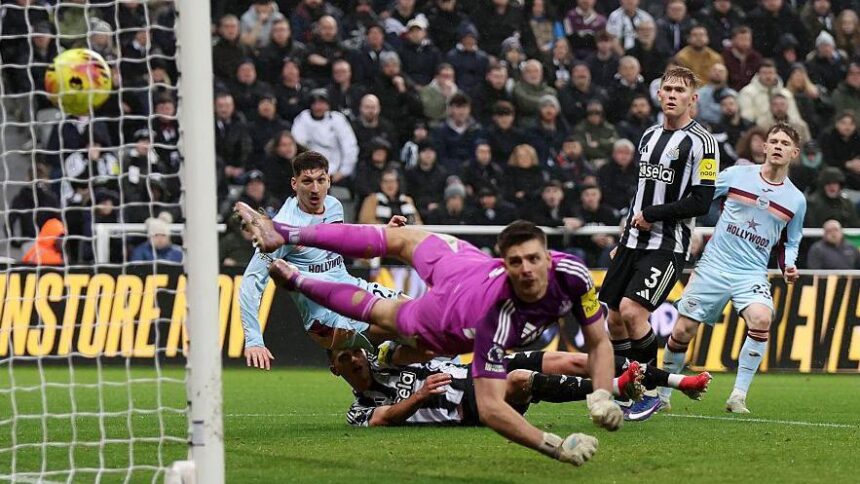
This was not a narrow, unlucky loss. This was a comprehensive breakdown, a performance where Newcastle were found wanting at both ends of the pitch. The attacking fluency that has been their hallmark was absent, with the forward line isolated and service sporadic. Defensively, however, was where the alarms blared loudest.
At the heart of the defensive disarray was an unthinkable struggle for a leader. Kieran Trippier endured a torrid night, systematically exposed by the pace and direct running of Bournemouth’s Dango Ouattara. The veteran full-back, whose set-piece delivery and defensive nous have been cornerstones, was caught catastrophically out of position in the build-up to all three goals. It was a symbolic downfall: the player who epitomizes Howe’s disciplined system becoming its most glaring vulnerability.
The issues extended beyond one player. The defensive unit lacked its usual coordinated press, leaving gaps in the channel that were ruthlessly exploited. The midfield shield, often provided by the immense Bruno Guimarães, was porous. The collective failure manifested in key areas:
- High-line vulnerability: Repeatedly caught by simple balls over the top.
- Transition defense: Slow to recover and shape up after losing possession.
- Individual errors: A sudden rash of mistakes from previously reliable figures.
The Physical and Psychological Toll
To understand the current slump, one must acknowledge the immense physical and mental fatigue gripping the squad. Eddie Howe’s high-octane, physically demanding style is a double-edged sword. It propelled them into the Champions League, but the cumulative toll of that campaign, coupled with a significant injury crisis, is now evident. The players look leg-heavy and mentally drained.
The relentless schedule has robbed Howe of the ability to rotate, forcing key players into a cycle of play, recover, repeat. The intensity that defines their best performances is unsustainable without a deep squad. The result is a team playing at 90% of its capacity—and in the Premier League, that 10% deficit is the difference between Champions League contenders and mid-table also-rans. The psychological blow of exiting Europe and the Carabao Cup has compounded this, stripping the season of its glittering targets and asking serious questions of the squad’s resilience.
What’s Next for Howe and Newcastle?
The immediate future presents a critical juncture. Eddie Howe, the architect of the modern Newcastle, now faces the toughest challenge of his tenure: arresting the slide and rediscovering the team’s identity. The January transfer window offers a chance for reinforcement, but Financial Fair Play constraints are a tight leash. Solutions may need to come from within.
Prediction for the Season Ahead: Newcastle will likely stabilize, but a top-four finish now seems a distant hope. The priority must shift to securing a European place—any European place—to maintain the project’s momentum. Failure to do so would represent a significant setback. The more pressing prediction is a period of intense scrutiny on Howe’s tactical flexibility. Can he adapt his system to better protect a fatigued defense? Can he find a way to win without the ferocious press?
A Defining Test of Leadership
The boos at St. James’ Park were not a call for change at the top; they were a cry of anguish from a fanbase that has seen the summit and is now watching the footholds crumble. This is Eddie Howe’s moment. Great managers are not defined by the project’s upward curve, but by how they navigate the inevitable crises.
The task is clear: he must rebuild the fortress, brick by brick. It requires reinstilling defensive discipline, managing the squad’s fitness with even greater precision, and perhaps most importantly, reconnecting with the emotional engine of the club—the supporters. The damaging defeat to Bournemouth was more than three lost points; it was a stark warning that the Premier League waits for no one. For Newcastle United, the hard work starts now, and it begins at home.
Source: Based on news from Yahoo Sports.